


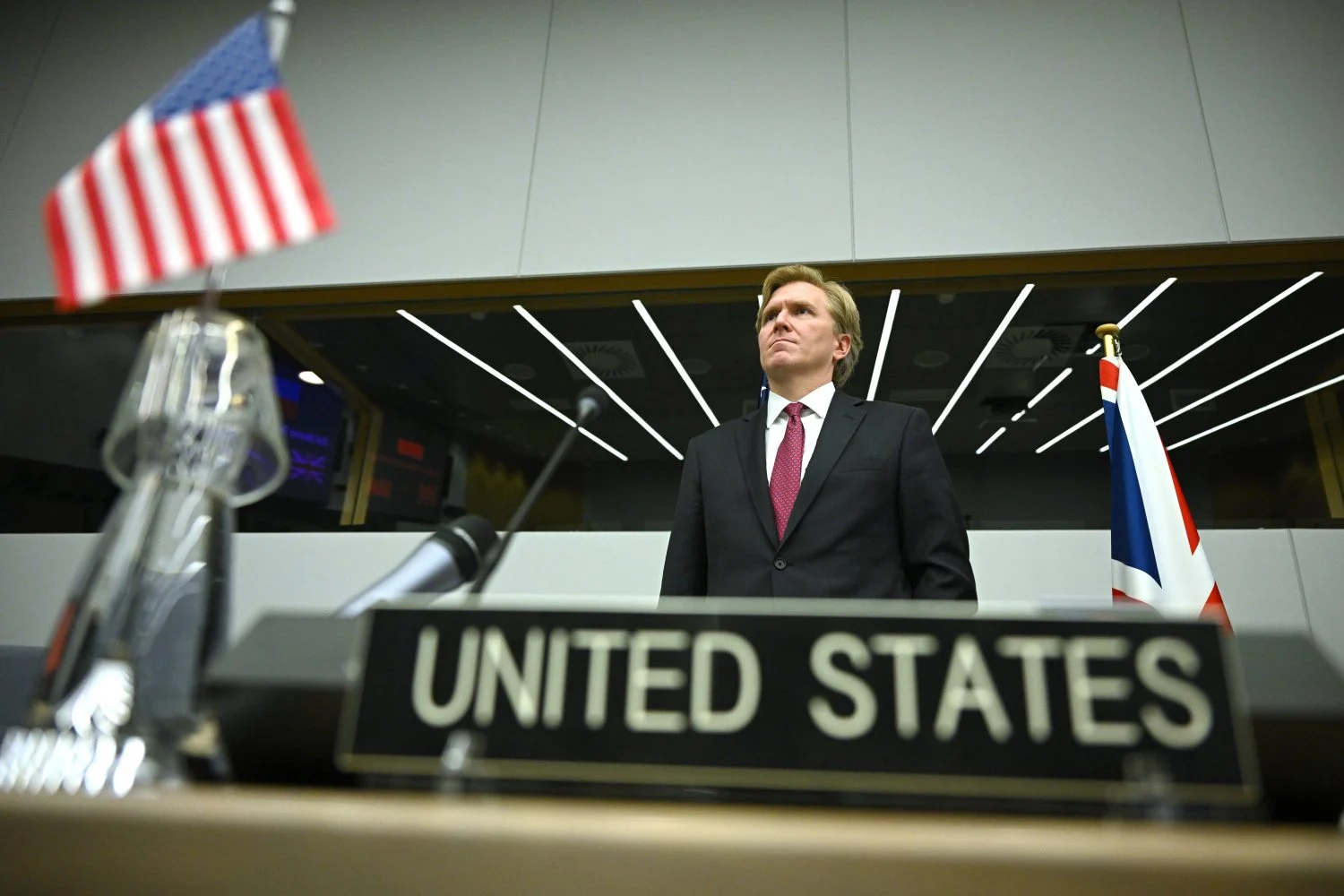
Elbridge Colby, the influential but polarizing U.S. undersecretary of defense for policy, just completed a tour of Southeast Asia where he visited Cambodia, Indonesia, the Philippines, and Thailand. His primary goal was clearly to clarify and promote the Trump administration’s new global defense strategy, underpinned by what it calls “flexible realism,” with U.S. allies and partners in the Indo-Pacific.
In a public speech in Manila, he reiterated the turn in U.S. alliance politics, much of which appears to carry his handwriting. Washington seeks “partners, not protectorates,” to increase burden-sharing while continuing to bolster deterrence by denial against China. Colby also highlighted that, unlike the Biden administration’s Indo-Pacific strategy, the Trump administration prioritizes shared interests over shared values, thus enabling the U.S. to significantly widen the aperture of security cooperation across the entire region. Finally, Colby talked of maintaining a favorable balance of power with China in the Indo-Pacific rather than preserving American primacy—a stark departure from previous administrations, including President Donald Trump’s first, which sought to keep the United States as the predominant global power.
Elbridge Colby, the influential but polarizing U.S. undersecretary of defense for policy, just completed a tour of Southeast Asia where he visited Cambodia, Indonesia, the Philippines, and Thailand. His primary goal was clearly to clarify and promote the Trump administration’s new global defense strategy, underpinned by what it calls “flexible realism,” with U.S. allies and partners in the Indo-Pacific.
In a public speech in Manila, he reiterated the turn in U.S. alliance politics, much of which appears to carry his handwriting. Washington seeks “partners, not protectorates,” to increase burden-sharing while continuing to bolster deterrence by denial against China. Colby also highlighted that, unlike the Biden administration’s Indo-Pacific strategy, the Trump administration prioritizes shared interests over shared values, thus enabling the U.S. to significantly widen the aperture of security cooperation across the entire region. Finally, Colby talked of maintaining a favorable balance of power with China in the Indo-Pacific rather than preserving American primacy—a stark departure from previous administrations, including President Donald Trump’s first, which sought to keep the United States as the predominant global power.
Colby is half-correct. Washington should certainly want to enlist as many partners as possible to counter Beijing, whether democratic or authoritarian. Engaging more with Cambodia, for instance, is geostrategically advantageous to the United States because doing so challenges China within its own backyard. But Colby and the administration are also losing sight of the bigger picture. What looks like strategic flexibility from Washington risks looking like strategic unpredictability for the Indo-Pacific, ultimately making U.S. allies and partners less, rather than more, willing to balance China.
From my routine discussions with interlocutors representing key U.S. allies and partners throughout the Indo-Pacific, the common theme is that they all seek a sustained and predictable U.S. commitment to the region—basically the opposite of Trump’s post on Truth Social this week that suddenly downgraded routine U.S.-South Korea military drills because North Korea was offended. Washington’s friends do not want a strategy based on pure transactionalism, which the Trump administration has turned into a synonym for unpredictability.
Colby himself has described flexible realism as “contextual” because the appropriate U.S. response “depends on the situation”—likely a function of whether the boss changes his mind. For better or worse, a longer-lasting commitment is typically premised on shared values or at least a few shared principles, such as maintaining the rules-based order (a term forbidden in the Trump White House). Without this common understanding, the U.S. network of allies and partners has no glue keeping it together, which risks a quick unraveling if conditions change and Washington’s help is no longer required.
Another problem is that Colby and the administration are demanding substantially higher defense spending from U.S. allies and partners to satisfy Washington’s new burden-sharing requirements. One of the challenges is that many nations, like the Philippines, simply will not be able to meet expectations of dramatically higher spending. Even wealthier states, such as Japan, are struggling mightily to reach only 2 percent of GDP on defense.
Complicating matters further is the fact that Colby, during his speech in Manila, reportedly never once uttered the word “China”—even while describing a defense strategy whose deterrence-by-denial concept is overwhelmingly designed around the Chinese military challenge. The omission comes as Trump prioritizes improving his personal relationship with his Chinese counterpart, Xi Jinping, in hopes of striking some sort of “deal.” How can Washington reasonably expect allies to spend dramatically more against a threat that Washington itself appears increasingly reluctant to identify? They should not, and probably will not, until they receive some reassurances. And so far, Washington has not exactly reassured.
Australia is a case in point. The country signed the AUKUS security pact with Britain and the United States under the Biden administration in 2021 and recently endured a review of the deal led by Colby. Trump assured Canberra that it would be “full steam ahead.” However, in a virtual press conference Colby held during his Southeast Asia trip, he declined to guarantee that Australia would actually receive its first Virginia-class submarine on schedule in 2032. The episode underscores an uncomfortable asymmetry in flexible realism: Washington demands greater commitments and sacrifices from its allies while reserving the right to reconsider its own commitments at any moment.
Because flexible realism prioritizes burden-sharing and fewer U.S. commitments, it is also becoming clearer that the Trump administration is concentrating ever scarcer U.S. military resources on the first island chain at the expense of sustained strategic attention to the Indian Ocean region. Colby believes that the United States should no longer spread its resources too thinly. He has long been a vocal opponent to U.S. military aid to Ukraine amid Russia’s invasion, and he will be well aware of reported munitions shortages and the redeployment of missile defenses and other systems to the Middle East to fight the Iran war.
Although the first Trump administration’s Indo-Pacific concept deliberately broadened Washington’s strategic aperture westward—forcing Beijing to account for New Delhi and the Indian Ocean even while confronting challenges to its east—flexible realism increasingly concentrates scarce U.S. military resources on deterrence by denial along the first island chain. Prioritizing the first island chain militarily is understandable. But what flexible realism means in practice is that India will have to step up and do more on its own. Indeed, when Colby testified to Congress in March, he noted that “allies and partners will have to adapt and take more of a leading role in security in these regions. In South Asia, it will mean India.”
The danger is that reducing attention to South Asia and the Indian Ocean could weaken India’s hand precisely when the United States should be strengthening it. Rather than forcing Beijing to divide its attention between its eastern and western flanks, Washington’s narrower strategic focus could allow China to concentrate more heavily on the very first island chain that Colby considers paramount. Ironically, Colby himself recognized this advantage before he joined the administration, arguing in 2022 that a strong India could force China to confront a “major second-front problem.” Flexible realism now risks relieving Beijing of precisely that problem.
Finally, flexible realism suffers from an even more fundamental problem: It treats what is ultimately a geopolitical competition with China primarily as a military one. Washington’s allies and partners want more than just security collaboration—they want diplomatic and economic support as well. On the economic side in particular, Trump’s trade tariffs have angered and frustrated U.S. friends to the point that they are considering other options, including even closer trade and investment ties to China. Vietnam is a good example. In April of last year, it signed dozens of new economic agreements with Beijing amid Trump’s trade war. India, meanwhile, signed “the mother of all trade deals” with the European Union—a deal that had languished for years—in part to reduce its vulnerability to U.S. trade pressure.
In the end, Colby and the Trump administration’s flexible realism could indeed widen the U.S. network of allies and partners aimed at deterring China, and that would be a good thing. But over the longer term, it will also probably destabilize these same relationships in the process, inadvertently granting Beijing newfound advantages to undermine deterrence. Flexible realism—if it is more than just a euphemism for Washington’s new unpredictability—is a solution in search of a problem America never had.
