


- Conservation cannot succeed if it separates biodiversity from the Indigenous people who have helped sustain it for generations, a new op-ed argues.
- Indigenous food systems are an important facet of this biological stewardship, and these demonstrate that ecological stewardship, cultural continuity and human well-being are deeply interconnected.
- “Indigenous food sovereignty is not simply about preserving the past but, rather, it is a living practice and a proven practical pathway toward a more diverse, resilient and sustainable future the world needs,” the authors write.
- This article is a commentary. The views expressed are those of the authors, not necessarily of Mongabay.
As governments and conservation organizations search for solutions to the interconnected crises of biodiversity loss, climate change and food insecurity, they are overlooking one of the most effective approaches already working on the ground: Indigenous food sovereignty.
Around the world, Indigenous communities manage or hold tenure rights to roughly a quarter of Earth’s land surface, which contains 37% of remaining natural lands worldwide and a third of the planet’s intact forest landscapes. They conserve seeds, maintain diverse farming landscapes, protect forests and rivers and fisheries, and pass ecological knowledge from one generation to the next. Yet these systems are rarely recognized as central to conservation policy, despite their proven contributions to both biodiversity and community resilience.
This needs to change.
The global food system is becoming increasingly uniform. Just three crops — wheat, rice, and maize — provide more than half of the world’s plant-derived calories. Driven by profit, industrial agriculture has transformed vast landscapes into monocultures, contributing to habitat loss, declining soil health, water pollution and the erosion of crop diversity. At the same time, communities everywhere are becoming more vulnerable to climate shocks, market instability and diet-related disease.
In contrast, Indigenous food systems are often built on diversity, reciprocity with the land and the way many Indigenous communities perceive wealth. For one of our communities, for example, the Tharu of Nepal, wealth is found in mutual aid, collective reciprocity, and the sacred relations we maintain with the living world.
Across Indigenous territories, communities continue to cultivate thousands of locally adapted crop varieties alongside wild foods, medicinal plants and traditional livestock breeds. These systems have evolved through generations of observation, experimentation and stewardship, creating resilient relationships between people and the ecosystems they inhabit.
The importance of this diversity cannot be overstated: Biodiversity is not only found in protected areas and national parks. It is also embedded in farms, forests, rivers, wetlands and community-managed landscapes. The diversity of crops, seeds and food species maintained by Indigenous communities represents a living genetic archive, one that is an irreplaceable and invaluable resource for adapting to changing environmental conditions and ensuring future food security.
Examples from Indigenous communities around the world demonstrate what is possible when food sovereignty and biodiversity conservation go hand in hand. Revitalizing and promoting Indigenous food systems is a path toward ensuring that Indigenous worldviews and ways of being continue to thrive. When Indigenous peoples thrive, biodiversity prospers too.

In Taiwan, Indigenous communities are revitalizing traditional millet varieties that were displaced by imported rice and industrial agriculture. The return of millet is not simply about restoring a crop, but also restoring a whole web of complex relationships between people, land, culture and spirituality. By maintaining traditional varieties and cultivation practices, communities are also preserving agricultural biodiversity that might otherwise disappear from the Earth entirely.
In Peru, Indigenous Quechua custodians continue to safeguard more than 1,300 native potato varieties. This genetic library of an extraordinary breadth of diversity provides resilience against pests, diseases and changing climatic conditions, while maintaining cultural traditions and local food systems that have developed over centuries. Each variety also carries centuries of accumulated knowledge about soil, altitude and seasons. This is an inspiring example highlighting that knowledge is held in communities — not only in the laboratory — and underscores that Indigenous knowledge is science.
In the Philippines, Indigenous Manobo communities have worked to recover traditional seeds and food crops after years of dependence on commercial agricultural systems. Their efforts have restored dozens of heirloom varieties and strengthened local control over food production, while also supporting biodiversity recovery.
These stories are not isolated examples. They reflect a broader reality: where Indigenous communities retain control over their territories and food systems, biodiversity thrives too.
Yet Indigenous food systems continue to face severe and escalating pressures. Land dispossession, industrial agriculture, extractive industries and other development projects, assimilation policies, and the undervaluing of Indigenous peoples’ care-based economic models frequently undermine the ecological and cultural foundations that sustain them. When Indigenous communities lose access to their territories, their traditional and culturally relevant foods are often displaced by imported and ultraprocessed food products, contributing to both cultural erosion and declining health.

Too often, Indigenous food practices are viewed as relics of the past rather than sophisticated and adaptive systems of natural resource management refined over thousands of years. This misunderstanding has led policymakers to overlook their potential contribution to addressing contemporary challenges.
Recognizing Indigenous food sovereignty requires more than celebrating traditional foods at the margins of conservation conferences. It demands meaningful and sustained action, consistent with the principles of the United Nations Declaration on the Rights of Indigenous Peoples (UNDRIP) and the Kunming–Montreal Global Biodiversity Framework (KMGBF). This includes upholding Indigenous rights to lands, territories and resources; protecting customary governance systems; strengthening community control over seeds, genetic resources and biodiversity; and ensuring that Indigenous knowledge holders exercise genuine decision-making authority, not merely a consultative role, in shaping the policies and processes that affect their futures. Governments, philanthropies and international institutions must reorient not just their funding but also their power, placing those most affected by the problems at the center of solutions.
Conservation cannot succeed if it separates biodiversity from the people who have helped sustain it for generations. Indigenous food systems demonstrate that ecological stewardship, cultural continuity and human well-being are deeply interconnected.
A short film we at LifeMosaic recently released, Indigenous Food Sovereignty — Recipe of Resilience, in collaboration with Indigenous filmmakers from around the world, brings many of these stories to wider audiences. It highlights communities that are restoring traditional crops, protecting food knowledge and strengthening local food systems in the face of considerable pressure. More importantly, it reminds us that food sovereignty is not only a cultural issue, but also an ecological and political one.
If we are serious about protecting biodiversity and meeting the targets enshrined in the KMGBF, the Paris Agreement, and UNDRIP, we must move beyond seeing Indigenous food systems as marginal or symbolic or interesting footnotes to the main conservation agenda. They are the main agenda. They are living, adaptive systems that continue to sustain both people and nature and deserve the same policy attention we direct toward protected areas, seed banks and green infrastructure.
The future of conservation depends not only on protecting species and landscapes, but also upon supporting the communities whose knowledge systems and stewardship have helped those species and landscapes survive. Indigenous food sovereignty is not simply about preserving the past but, rather, it is a living practice and a proven practical pathway toward a more diverse, resilient and sustainable future the world needs.
The question is not whether we can afford to support it. It is whether we can afford not to.
Gemma Sethsmith co-founded LifeMosaic which produces educational videos for Indigenous peoples, and coordinates their storytelling program. Brijlal Chaudhari is an Indigenous rights activist from the Tharu nation of Nepal who works with LifeMosaic and is also the founder of Global Home for Indigenous Peoples, an organization dedicated to advocating for Indigenous rights, food sovereignty, and climate justice.
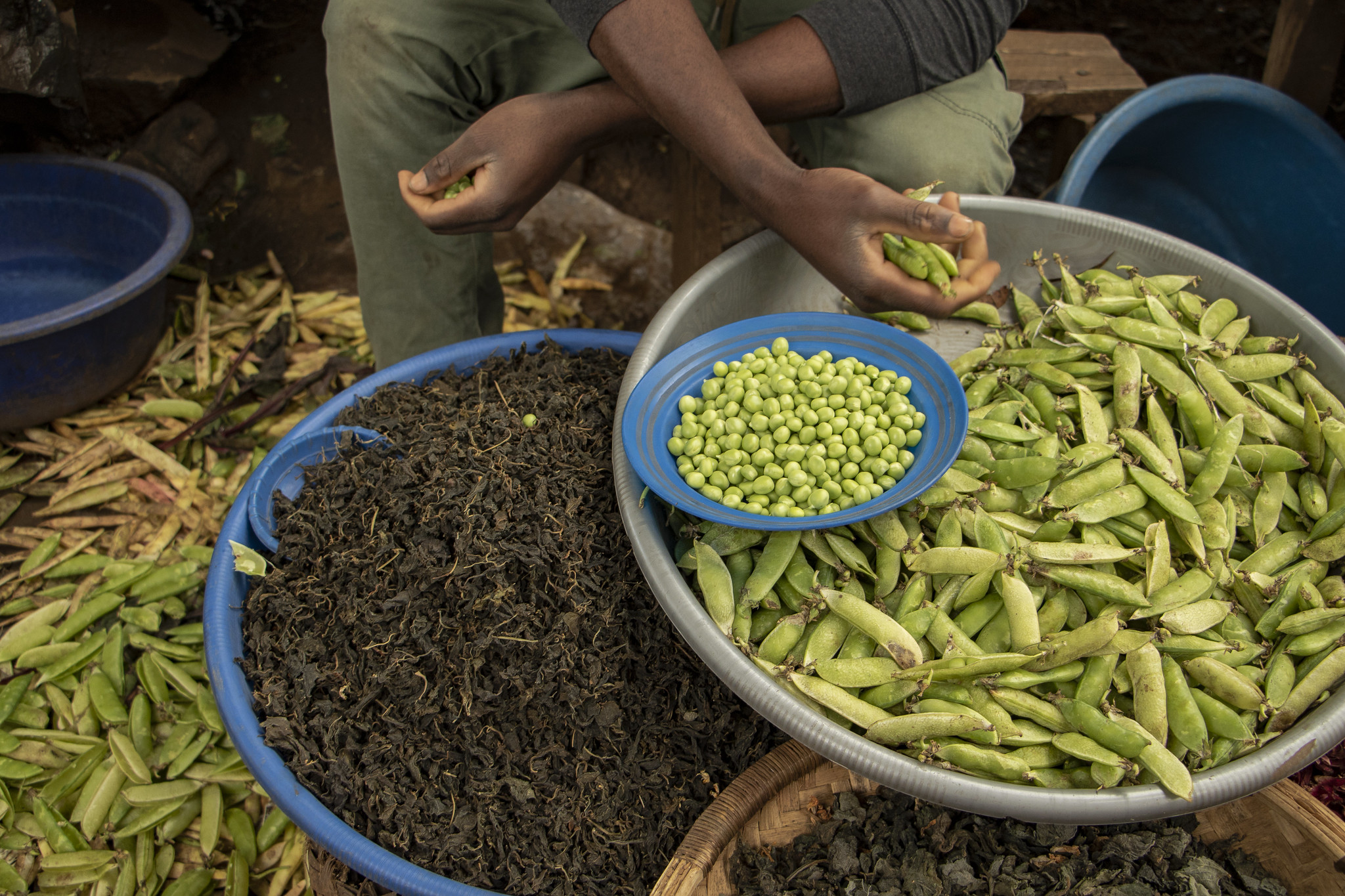
Banner image: Vegetables in a market in Lilongwe, Malawi. Image by Melissa Cooperman/IFPRI via Flickr (CC BY-NC-ND 2.0).
See related coverage:
Vanuatu communities move to protect taro, an ancestral climate-resilient crop (analysis)
A Philippine tribe’s plant-based medical tradition gets its moment
For Costa Rica’s Indigenous Bribri women, agroforestry is an act of resistance and resilience
Citation:
Garnett, S. T., Burgess, N. D., Fa, J. E., Fernández-Llamazares, Á., Molnár, Z., Robinson, C. J., … Leiper, I. (2018). A spatial overview of the global importance of Indigenous lands for conservation. Nature Sustainability, 1(7), 369-374. doi:10.1038/s41893-018-0100-6

