


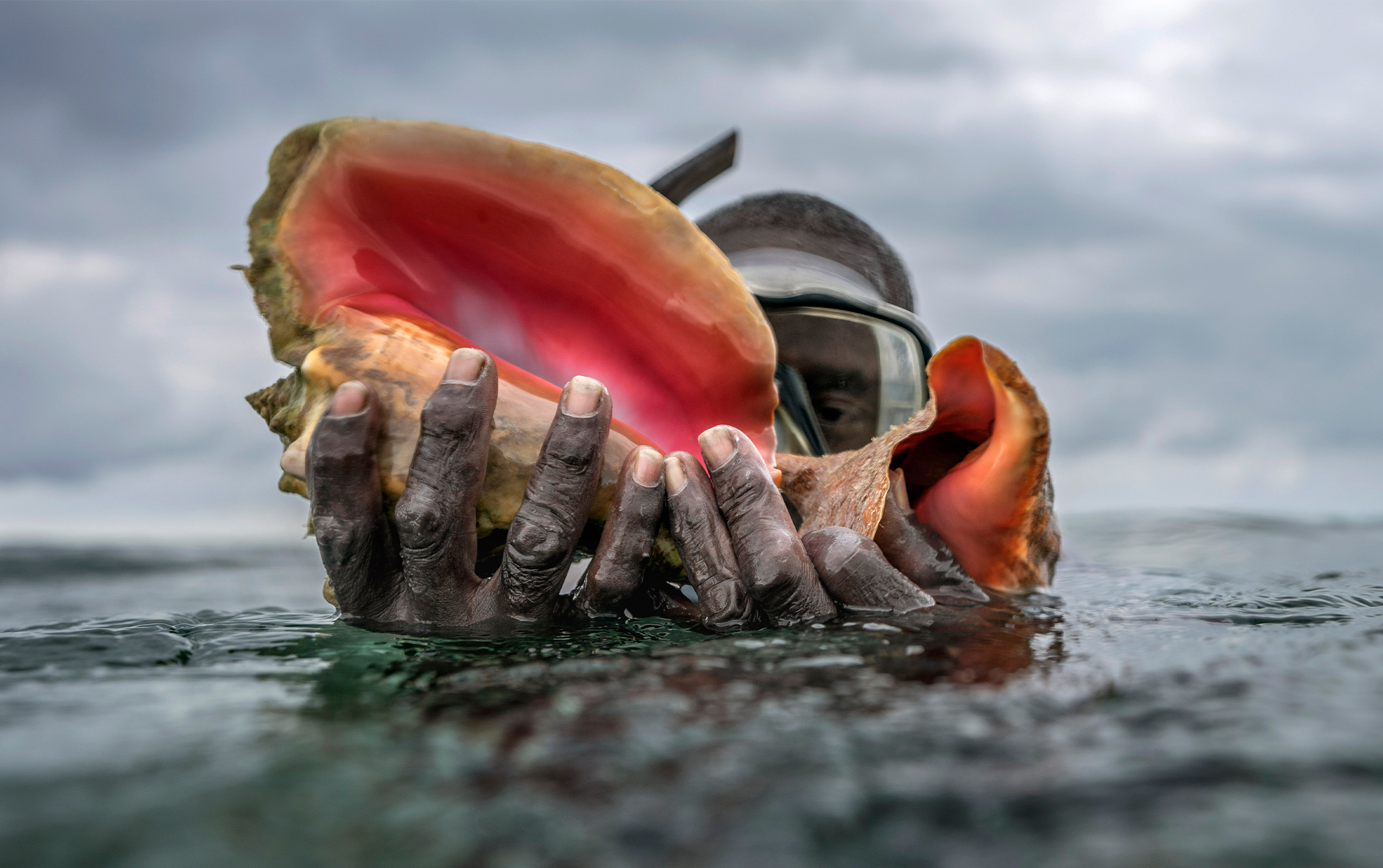
- International demand for queen conch meat and shells has led to severe overharvesting, while habitat degradation, pollution and warming waters add further threats.
- In a bid to slow the decline of the queen conch, researchers are partnering with local conservation organizations across the Caribbean to establish a network of mobile hatcheries aimed at protecting the giant marine snail through its vulnerable early life stages.
- The goal is not only to nurture developing conch, but to create community spaces where local people can learn about the queen conch life cycle and participate in restoration efforts.
- However, some researchers have doubts about whether aquaculture alone can restore wild conch fisheries.
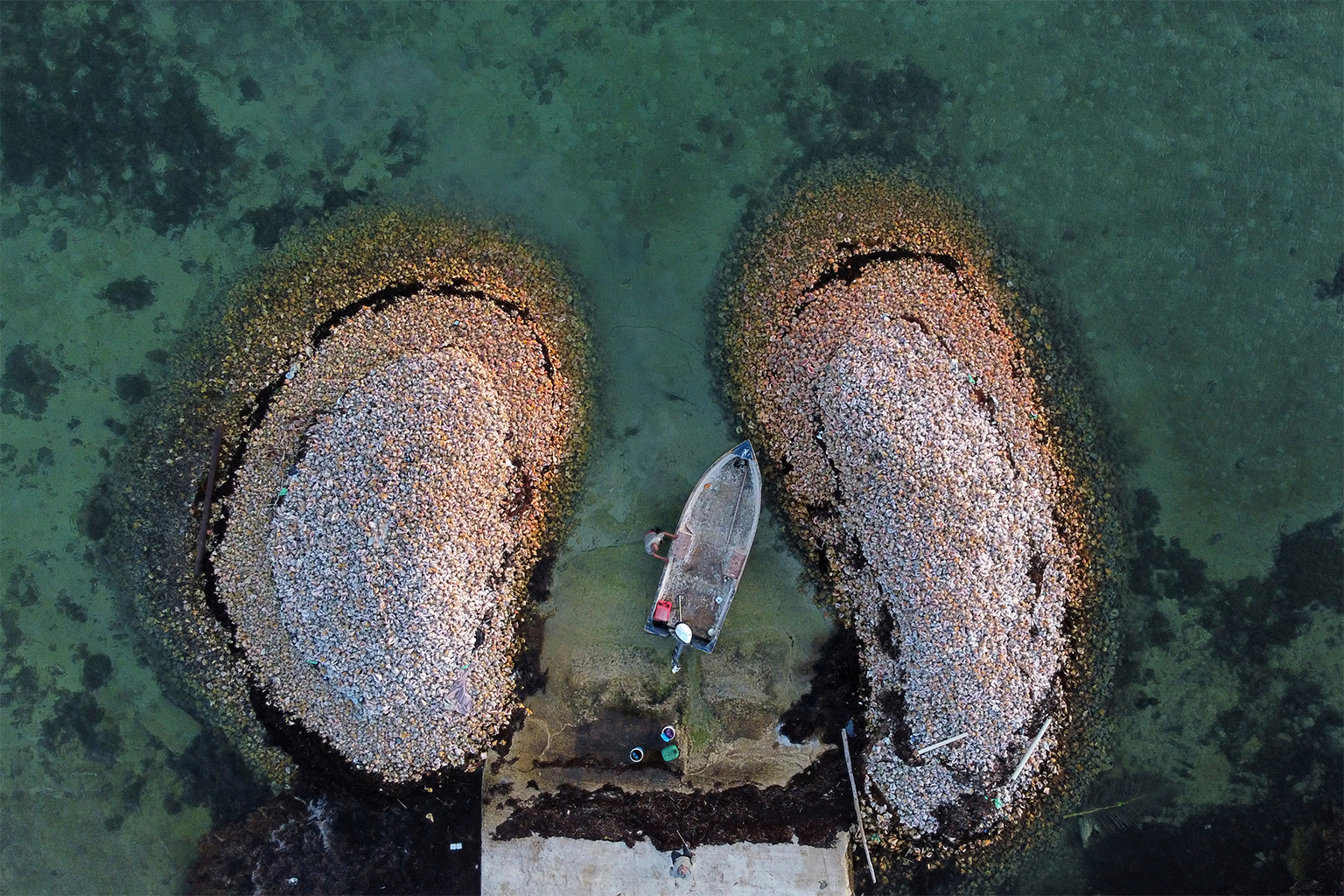
Queen conch were once so abundant that fishers in many parts of the Caribbean could wade into knee-deep waters and gather armfuls of the pink, whorled shells. Today, however, the giant marine snails are in decline across the Gulf of Mexico and the Caribbean Sea, while some populations have already collapsed.
Growing demand for queen conch (Aliger gigas) meat and shells has led to overharvesting; habitat degradation, pollution and warming waters add further threats. Despite a 1992 CITES Appendix II listing to regulate their international trade, seasonal restrictions and bans by several Caribbean countries to address overfishing and juvenile harvesting, and a 2024 designation as a threatened species under the U.S. Endangered Species Act, few queen conch survive to adulthood compared to historical baselines.
In a bid to slow the species’ decline by helping more conch reach reproductive age, scientists are deploying an innovative set of solar-powered mobile hatcheries to shelter them through their vulnerable early life stages. The Queen Conch Lab (QCL), affiliated with Florida Atlantic University (FAU) in the U.S., partners with local conservation organizations to deploy the hatcheries. The aim is not just to build nurseries that will nurture and protect developing conch, but to create community learning spaces where students and other visitors can gain knowledge about the species’ life cycle and participate in restoration efforts, according to Megan Davis, director of the QCL and a research professor at FAU’s Harbor Branch Oceanographic Institute.
“By bridging aquaculture, fishery, conservation and restoration all in one place [at the mobile hatchery], the local community gains an understanding of all the aspects needed for good management of the conch species,” Davis told Mongabay by email.
In June, QCL’s eighth mobile lab, on the island of Eleuthera, Bahamas, celebrated its first hatch and plans to release up to 2,000 juvenile conch per year. That number is large, but a 2022 study published in Fisheries Science & Aquaculture found that only one in 4,000 to 10,000 juveniles typically survives to adulthood, hindering the species’ ability to replenish its numbers. According to the study, predation by other marine animals drives much of the high mortality of juvenile conch, followed by fishing of underage conch and the disturbance of their shallow-water nurseries by environmental and climate-related stressors.
Hatcheries inspiring hope
During spawning season, an adult female queen conch produces an egg mass containing hundreds of thousands of eggs. After fertilization, the larvae undergo a 21-day development cycle, floating in the ocean before metamorphosing into juvenile conch and settling on the sea floor. But surviving through these early life stages is challenging — and that’s where the QLC mobile hatcheries come in.
First, fishers find a female queen conch and collect about a quarter of its total egg mass. Back at the lab, the harvested eggs incubate for four to five days. After hatching, thousands of small veligers — plankton-sized larvae — feed on phytoplankton also grown in the hatchery.
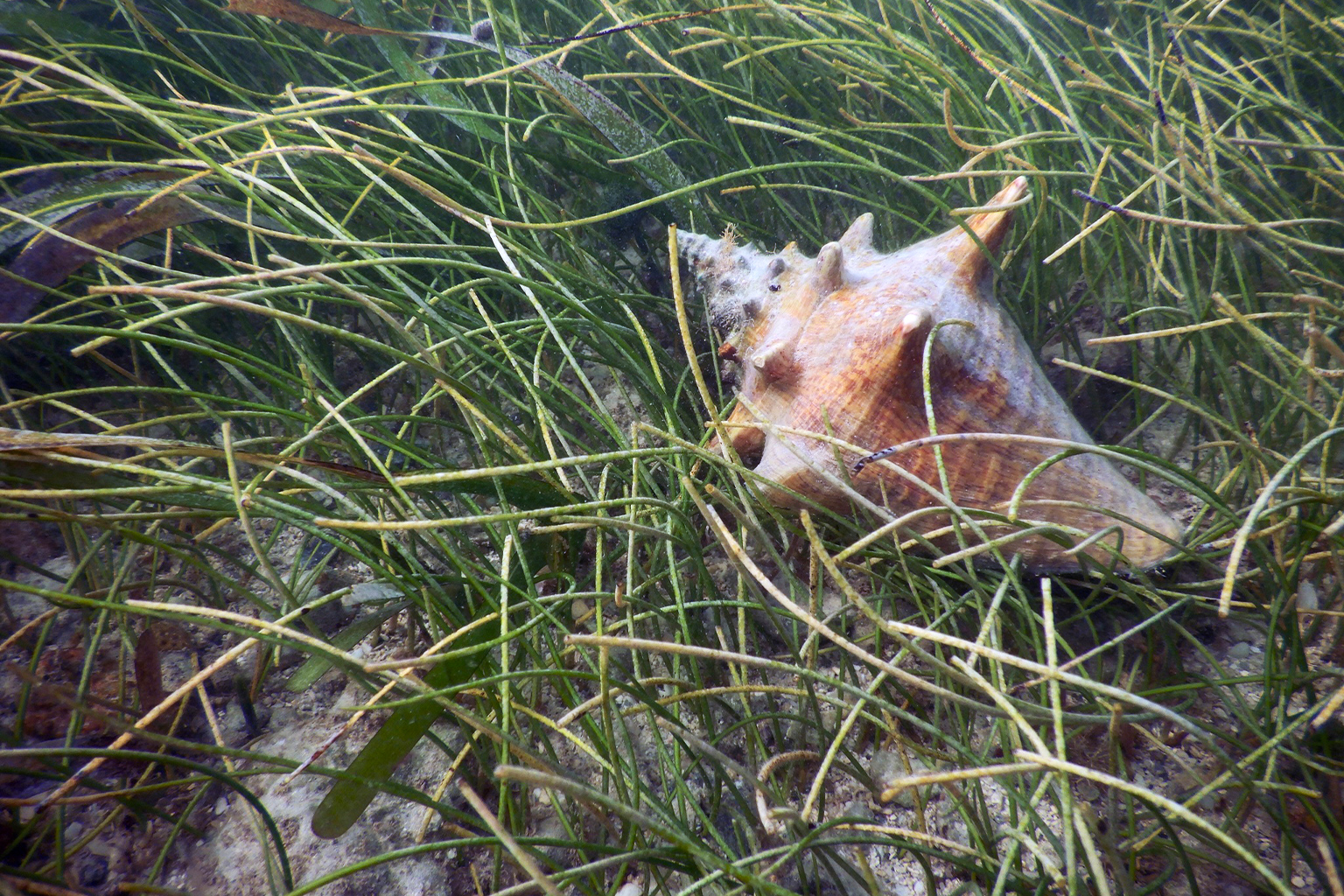
Once ready for metamorphosis, staff place them on trays submerged in seawater with seagrass blades containing diatoms — their favorite food while living on the seafloor — cuing them for transformation from free-swimming larvae to their more recognizable crawling snail form. Two months later, the staff will transfer them to sand-bottom trays to grow another 8-9 centimeters (3-3.5 inches).
At a year old, the juvenile conch are moved out of the lab to protective acclimation pens for one to two months, where they grow accustomed to life back at sea before transferring to a wild conch nursery. It will be another two to three years before they reach adulthood.


Community connections
The mobile nature of the labs, which are about 8 feet wide and 20 feet long (2.4 meters by 6 meters), allows them to be easily shipped from Florida to Caribbean islands or towed to a more secure site in the event of a hurricane or other extreme weather. While the hatcheries utilize solar power, rising sea and air temperatures necessitate connecting to the local power grid during the hottest periods of the year, Davis said. This additional power source enables use of air-conditioning units, along with water chillers that cool the warmer seawater entering the hatchery’s larval tanks.
Since the first mobile lab launched in 2022, communities in Jamaica, Puerto Rico and the Bahamas have worked with the QCL to establish additional hatcheries, with more planned for Cataño, Puerto Rico; Fort Pierce, Florida; and Providenciales, Turks and Caicos Islands. Davis said interest has grown as she and her team showcase the hatcheries on social media and promote their vision for a regional network across the Caribbean.
Each hatchery employs two to three people. Local staff, some trained from scratch with no prior marine biology experience, maintain the labs and grow food for the conch, and manage visiting groups primarily from local schools.
The hatcheries, in Davis’ vision, function as educational resources for communities familiar with conch as a seafood product, but have not had opportunities to learn about the species’ life cycle or threats. “Sharing about the life cycle helps the community members know that a conch takes a long time to grow before it is (should be) fished,” she said.
Education, but not yet restoration
Andrew Kough, a research biologist at the Shedd Aquarium in Chicago, Illinois, in the U.S., and lead author of a 2025 review paper on conch aquaculture’s potential for wild population restoration, agrees that conch aquaculture, including the mobile hatcheries, provides a great opportunity for education and community engagement.
Up to now, though, no peer-reviewed research has supported the idea that aquaculture can substantively repopulate wild conch fisheries, Kough told Mongabay in a Zoom interview.
Kough views conch aquaculture as providing a useful symbol to help people connect with ocean conservation. “However, where that barrier seems to fall off is in the translation from taking that symbol and turning it into repopulation in the wild,” Kough said, adding that more research is needed to determine the impact of conch aquaculture on fisheries replenishment.
Davis, who co-authored a 2023 study with Kough on conch development, agrees on the need for further research. She said she’s hopeful the release of several thousand conch from a stationary hatchery in Curaçao in 2025 — along with a Jamaica mobile hatchery’s planned release of juveniles into protective enclosures later this year — will result in more conch reaching maturity and reproducing in the wild.
But ultimately, Davis contends the success of the mobile hatcheries is best measured by their ability to support community-driven conservation efforts. While the impact of restorative aquaculture efforts remains inconclusive, she said the hatcheries are important in showing that “there will always be a way to grow conch.”
Banner image: Henry Carey holds up shells while diving for conch off the coast of McLean’s Town, Grand Bahama Island, Bahamas, in 2022. Image by AP Photos/David Goldman.
Caribbean startups are turning excess seaweed into an agroecology solution
Citations:
CITES Secretariat … UNEP-WCMC. (2017). Appendices I, II and III. Convention on International Trade in Endangered Species of Wild Fauna and Flora.
Kough, A., Matsuda, S., Appeldoorn, R., Boman, E., Galassini, K., Delgado, G., … Stoner, A. (2024). Queen conch aquaculture remains a conservation symbol and is not yet a fisheries solution. Oryx. 58(6). 700-709. doi:10.1017/S0030605324001443
Medley, P. Monitoring and managing queen conch fisheries: a manual. FAO Fisheries Technical Paper.
Rogers, L. A., Griffin, R., Young, T., Fuller, E., St. Martin, K., … Pinsky, M. L. (2019). Shifting habitats expose fishing communities to risk under climate change. Nature Climate Change, 9(7), 512–516. doi:10.1038/s41558-019-0503-z
Stoner, A.W. … Appledorn, R.S. (2022) Synthesis of research on the reproductive biology of queen conch (Aliger gigas): toward the goals of sustainable fisheries and species conservation. Reviews in Fisheries Science & Aquaculture, 30, 346 –390. doi:10.1080/23308249.2021.1968789
Stoner, A. W., Davis, M., … Kough, A. S. (2023). Relationships between Queen Conch Larval Biology and Recruitment, Connectivity, and Fishery Management. Reviews in Fisheries Science & Aquaculture, 31(4), 535–597. doi:10.1080/23308249.2023.2228905
Feedback: Use this form to send a message to the editor of this post. If you want to post a public comment, you can do that at the bottom of the page.
Cite this article
André Habet (2026). Mobile queen conch hatcheries strive to help the species, engage Caribbean communities. Mongabay Conservation news. DOI: https://doi.org/10.66709/news-326429

