


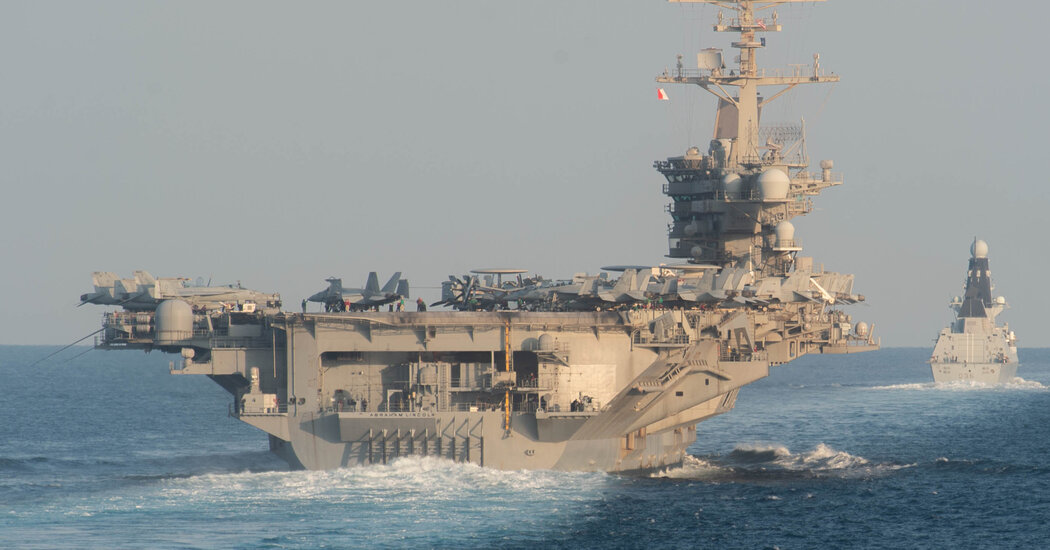
Service at sea “for long periods isn’t for everyone,” the head of United States Central Command said on Sunday, after visiting the beleaguered U.S.S. Abraham Lincoln, the latest American aircraft carrier to report poor living conditions and poor morale after months in the Middle East.
The Lincoln, a San Diego-based carrier with a crew of about 5,000 sailors, is supporting U.S. operations in the Middle East against Iran. Democratic lawmakers have cited reports of shortages of basic supplies, water contamination, plumbing issues and deteriorating mental health aboard the carrier, which has been deployed for almost nine months.
But Admiral Brad Cooper insisted in a statement posted on social media post that “the Lincoln currently has among the lowest number of cases related to mental health” among the Navy’s 11 active aircraft carriers.
“That doesn’t mean that all is perfect,” Admiral Cooper acknowledged a day after his visit to the carrier. He said that a long deployment at sea “is uniquely challenging and tough, and every single one of us, including me, reacts to stressors in different ways.”
The admiral’s comments differed from those of his boss, President Trump, who on Friday dismissed concerns about difficult conditions reported aboard the ship. Asked whether he was concerned about the crew’s mental health and whether he thought the deployment had gone on too long, the president said: “No. No. No.”
He added: “Not nearly long enough.”
Defense Secretary Pete Hegseth also dismissed reports last week about the grim conditions aboard the U.S.S. Lincoln, saying the situation had been “misrepresented.”
Still, the Navy is sending the aircraft carrier George Washington to relieve the Lincoln, according to a U.S. official who spoke on the condition of anonymity. The official was not authorized to speak publicly about ship schedules.
Admiral Cooper’s comments are in line with previous Pentagon officers in past administrations. Gen. Colin Powell, the former chairman of the Joint Chiefs of Staff, often maintained that the first priority of senior leaders is to look after the safety and health of their troops.
“They will never let you down as long as you never let them down,” Mr. Powell wrote in his book, “It Worked For Me: In Life And Leadership.”
