


This story was supported by the Pulitzer Center.
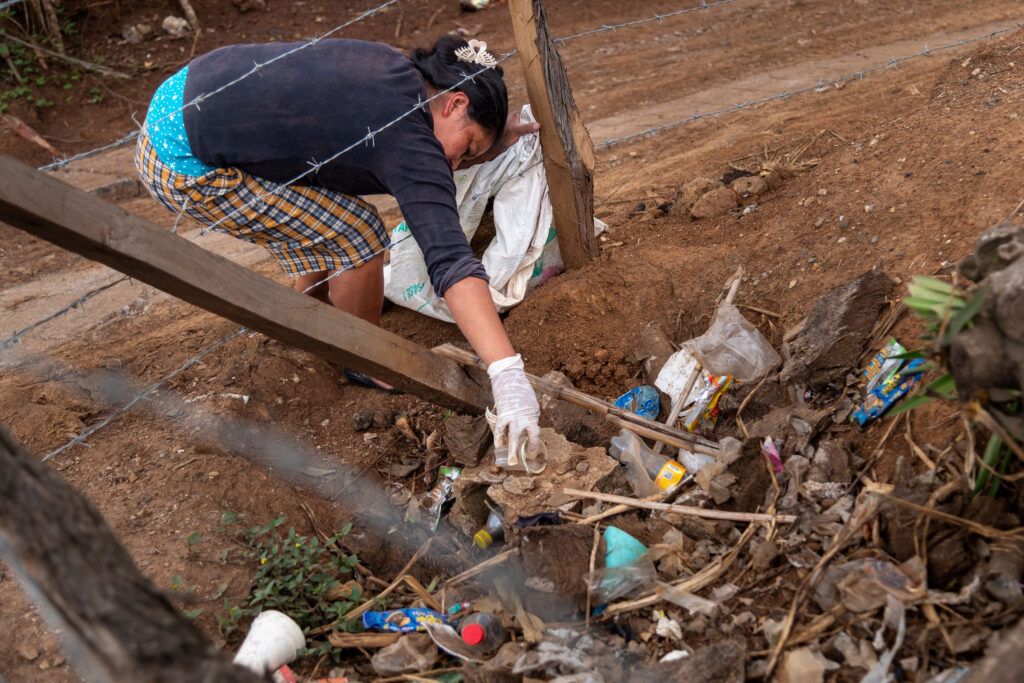
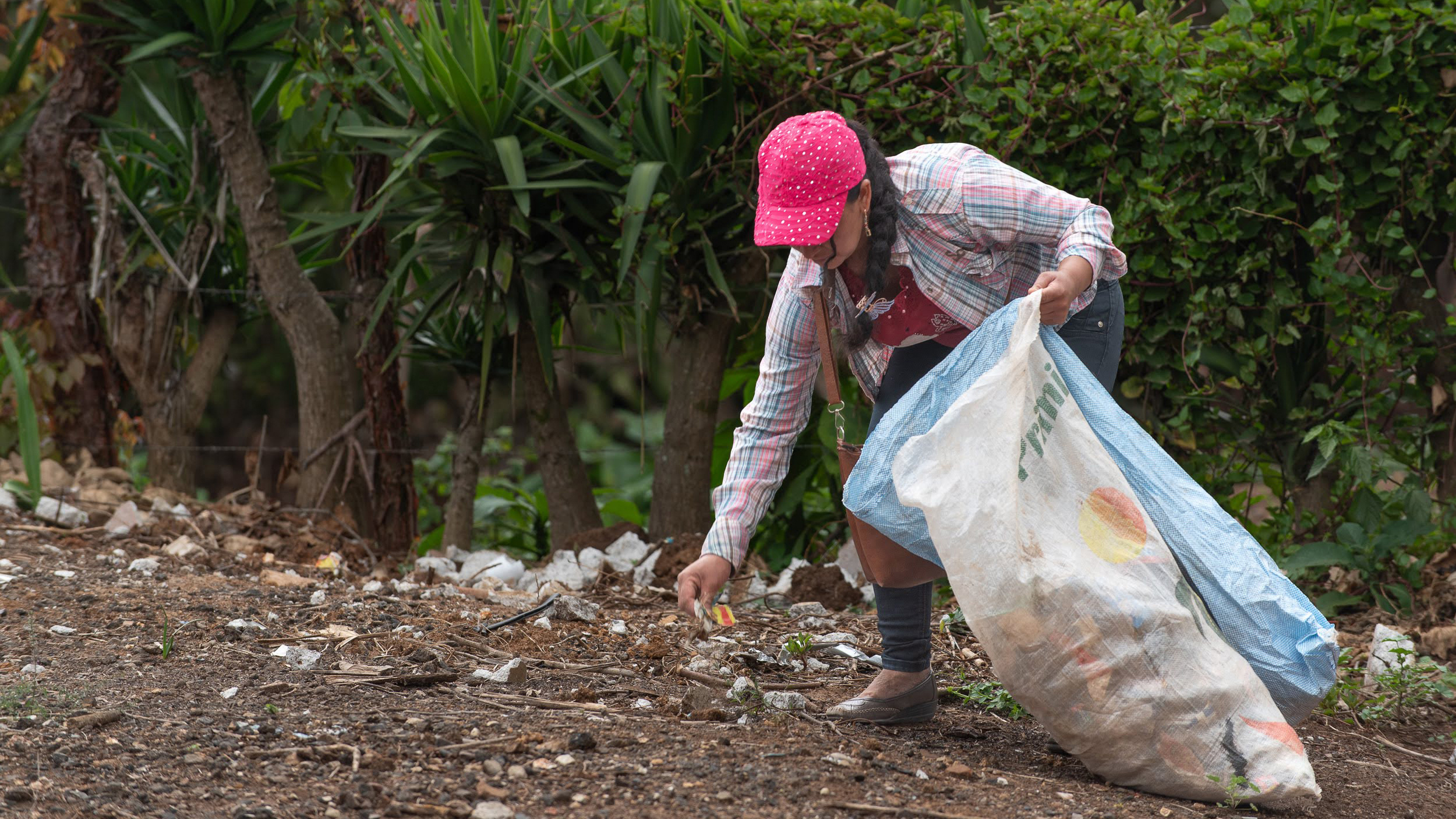
JALAPA, Guatemala—On a hot, muggy afternoon in the small mountain village of El Duraznal, Soila Elizabeth Cruz carefully reached under the slats of a barbed wire fence to retrieve plastic litter stuck in the dirt as trucks whizzed by. The community comes together every three to five months to collect the ubiquitous waste, Cruz said in Spanish as she tossed tattered plastic bottles and packaging into a large garbage bag.
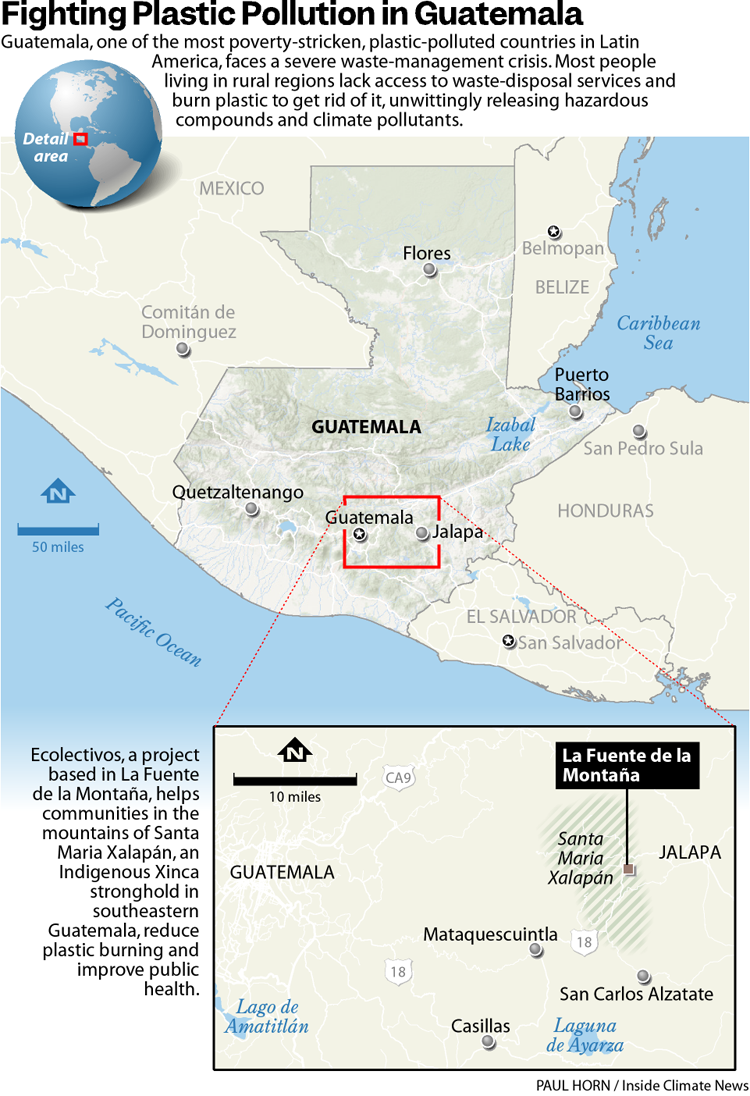
“We’re doing this as a community so it looks clean and organized,” said Cruz, who goes by Betty. She learned the benefits of reducing plastic use and waste from Ecolectivos, a project run by U.S. and Guatemalan researchers who study how burning plastic affects the health of women and children in the Santa María Xalapán mountains.
The project, co-led by Lisa Thompson of the University of California, San Francisco, and Eri Saikawa of Emory University, ran workshops to help residents of rural Indigenous Xinca villages identify feasible long-term plans to reduce plastic waste and combustion.
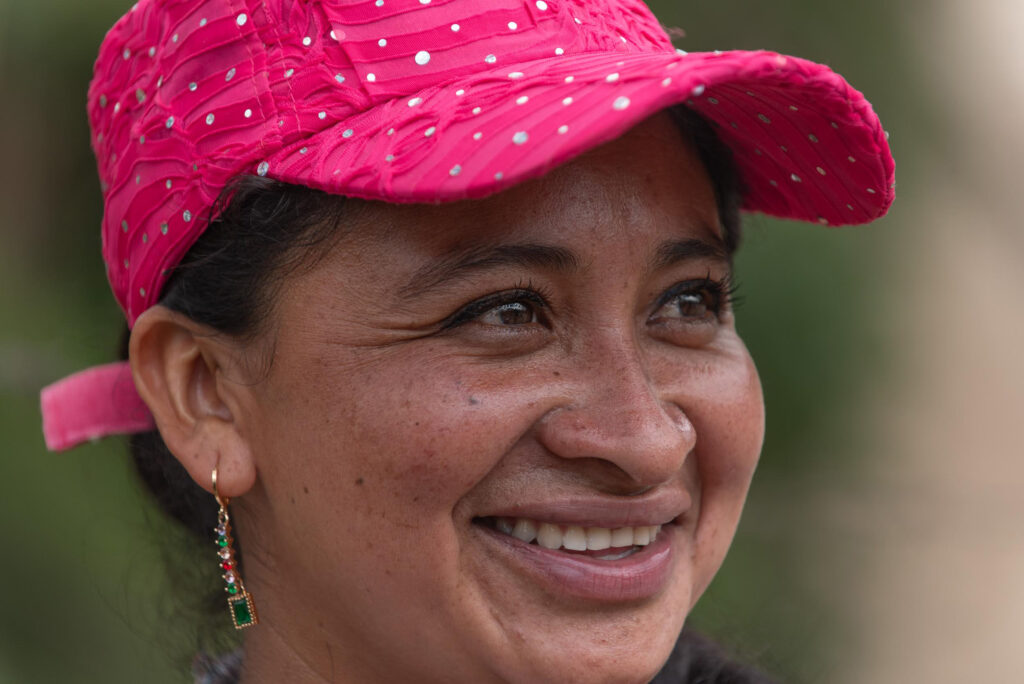
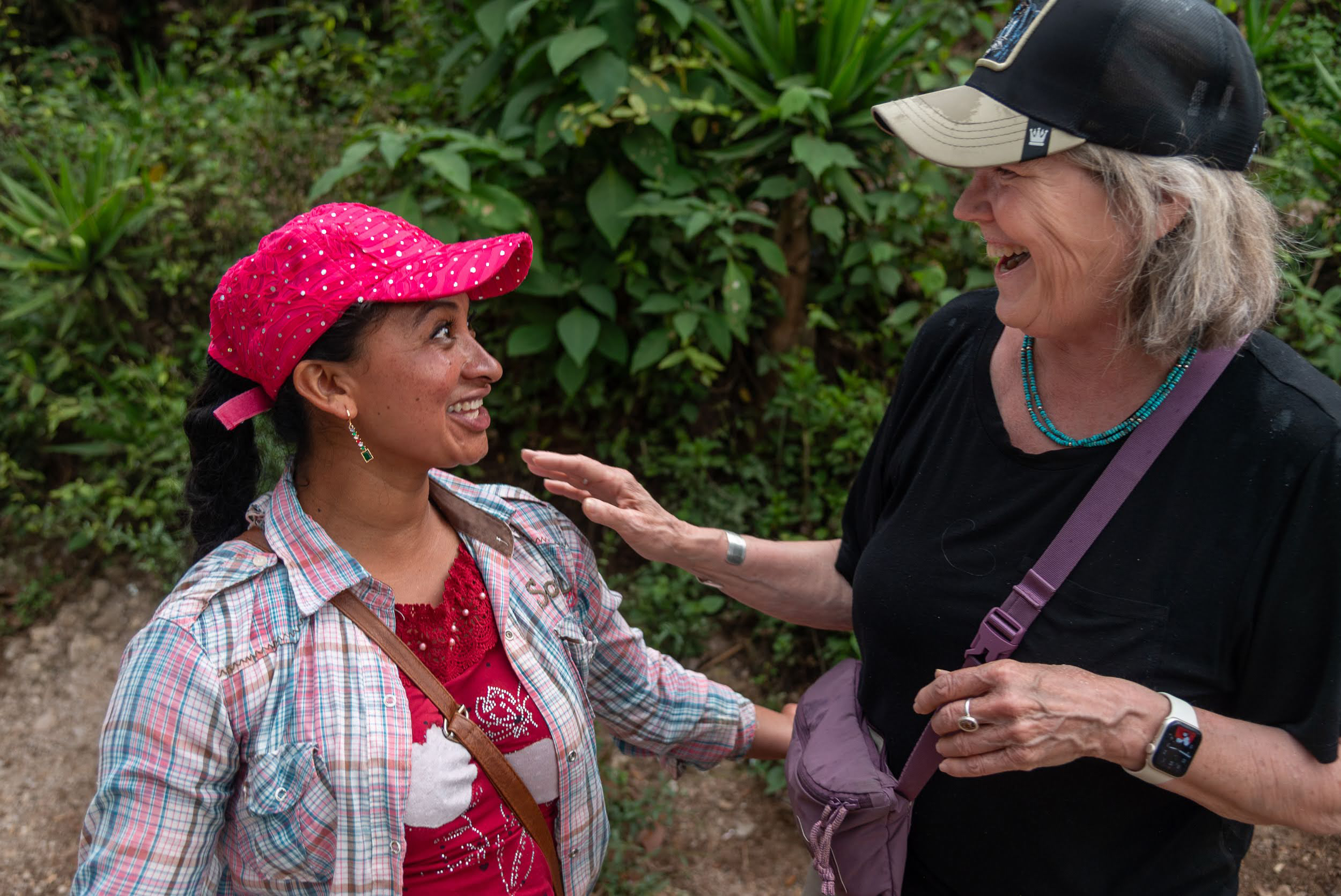
Cruz and other women in her village, about 20 minutes from the city of Jalapa, participated in months-long workshops where they settled on community cleanups as their plastic-reduction strategy. The women elected Cruz, a charismatic mother of three whose thick black braid spills out the back of a magenta and white polka dot baseball cap, as a promotora, or environmental health leader, to oversee their plan.
“The workshops motivated us to come together as a community,” said Cruz, who’s determined to rid her village of plastic. “Now we motivate each other to not burn plastic and to reduce.”
Cruz is on the front lines of a global plastic pollution crisis, created by the skyrocketing production of petroleum-based materials that are laced with toxic chemicals and cannot be recycled or sustainably managed.
Plastic manufacturers have cranked out hundreds of millions of tons of plastic every year for decades, originally advertising throw-away, single-use products as the ticket to a carefree lifestyle. Then, as concerns about plastic pollution grew, manufacturers promoted recycling as a solution to the burgeoning waste crisis, even though barely 9 percent of plastic has ever been recycled.
The consequences of that failure are particularly acute in Guatemala, which has limited capacity to manage waste even as it imports increasing amounts of both plastic goods and plastic scrap.
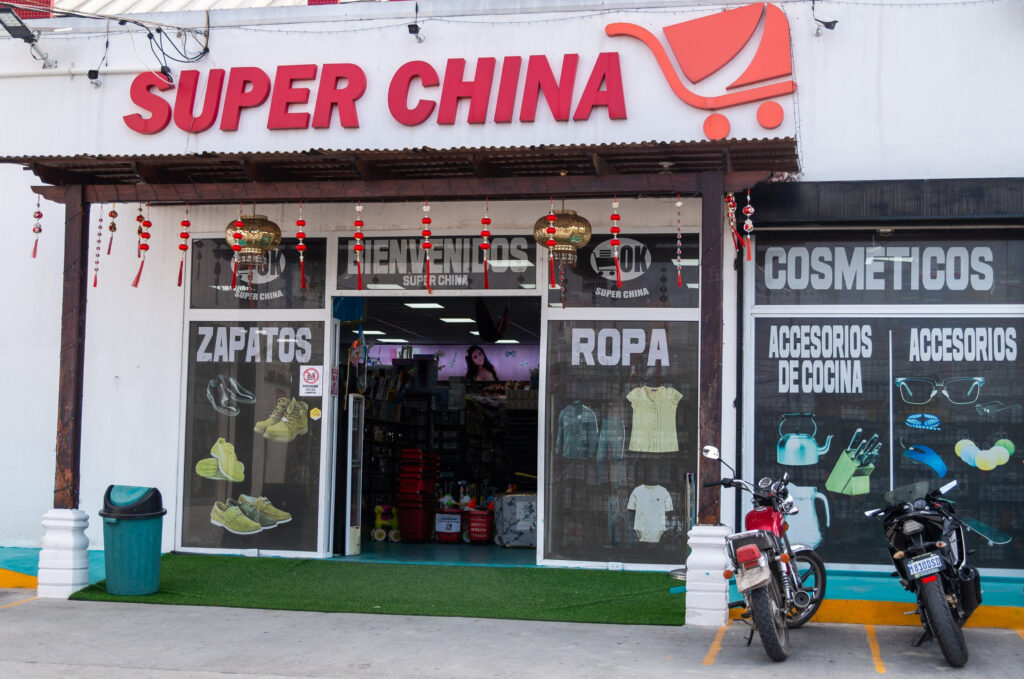
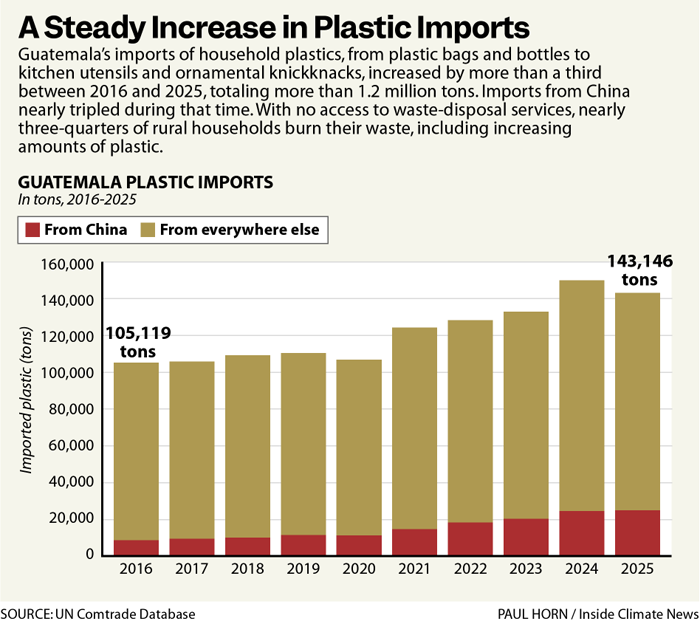
Over the past decade, Guatemala imported more than 1.2 million tons of household plastic goods, with products from China nearly tripling since 2016, an Inside Climate News review of United Nations trade data found. Downtown Jalapa now hosts several stores devoted to selling plastic wares from China. The pungent odors from volatile plastic chemicals escaping into the air fill the aisles of a store named “Super China,” where shelves are crammed with mass-produced water bottles, lunchpails, toys, knickknacks and other plastic goods—most packaged in plastic.
Guatemala is also importing increasing amounts of hard-to-recycle plastic waste, a recent study in Environmental Research Letters reported. The influx of discarded plastic in a country with poor waste management, the authors wrote, has made Guatemala one of Latin America’s worst plastic-pollution hotspots.
Plastic debris clogs rivers and cascades down hillsides during heavy rains, turning Guatemala’s Motagua River, which flows north of Jalapa, into one of the most plastic-polluted rivers in the world.
In a country where more than half of the population lives in poverty, most people lack access to waste-collection services, particularly in rural regions like El Duraznal, where Cruz lives. Nearly three-quarters of households in the Guatemalan countryside burn their waste, including plastic.
Air-pollution and greenhouse-gas emission inventories do not account for releases from burning plastic waste. But a 2023 study led by Ecolectivos’ Saikawa estimated that burning plastic waste across Guatemala, including in the Xalapán mountains, could produce “notable increases” in emissions.
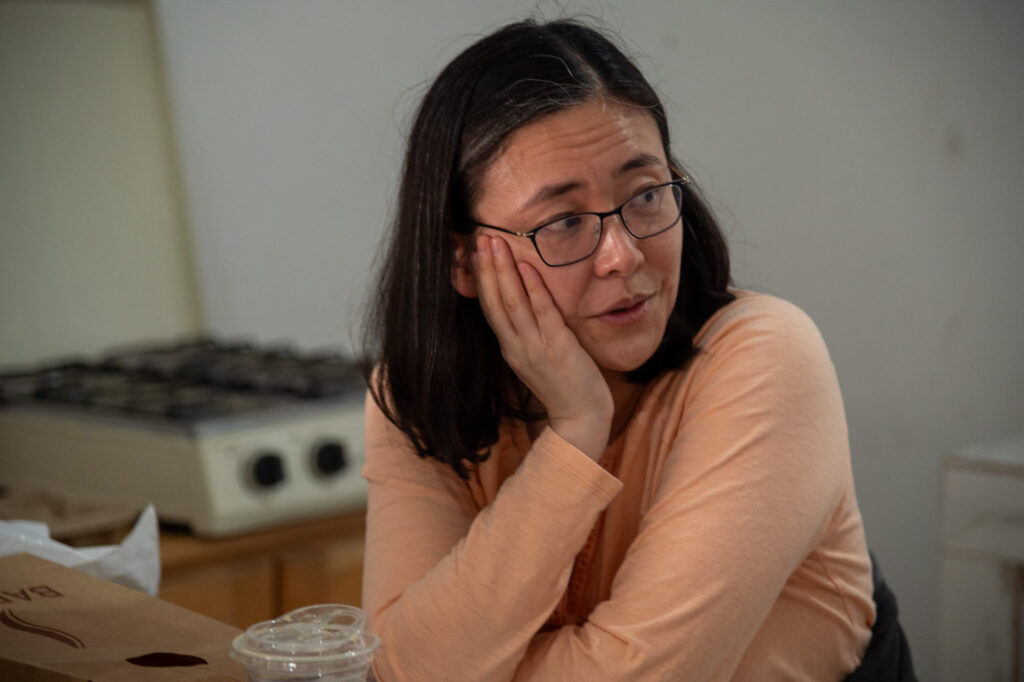
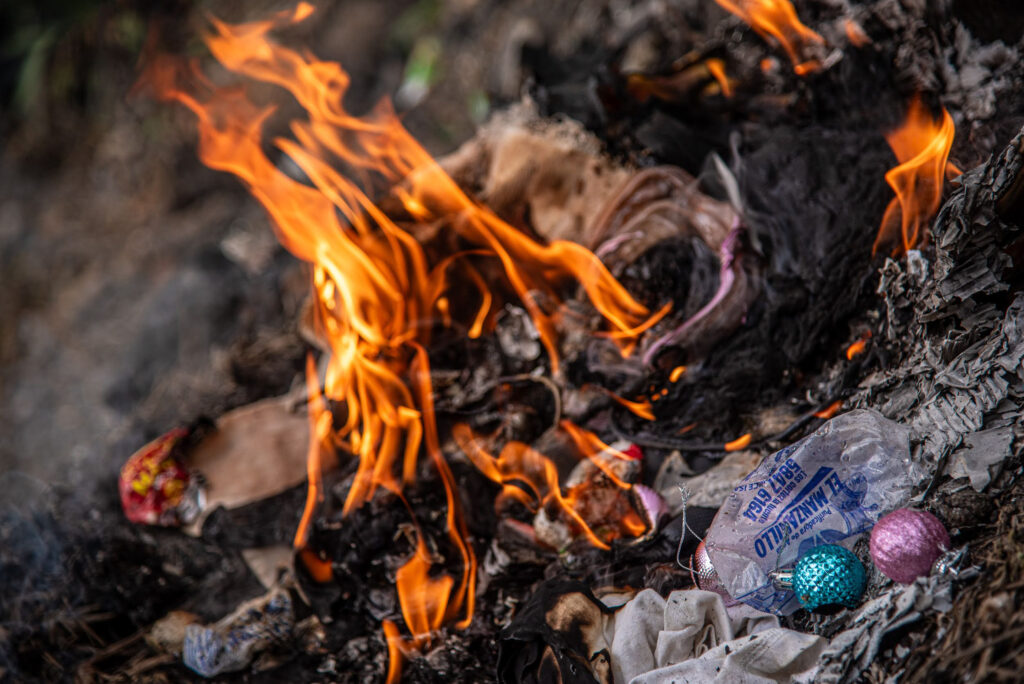
The results are concerning but also suggest that plastic waste burning is a solvable problem, Saikawa said. “By simply creating access to waste collection, we could potentially mitigate these emissions and improve human and ecosystem health,” she said.
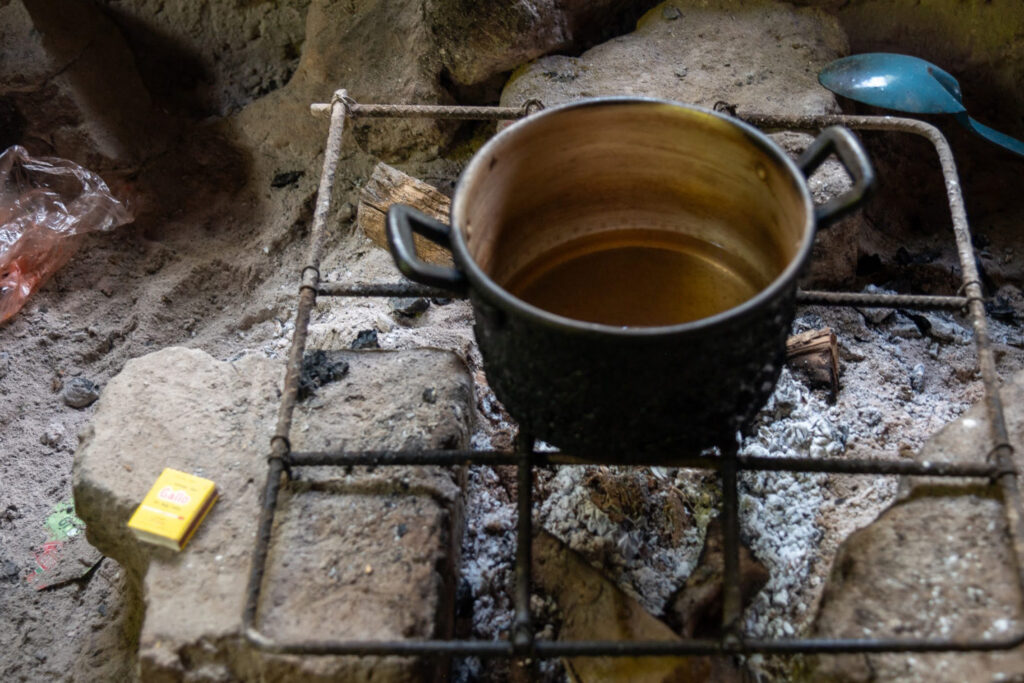
Many Guatemalans burn plastic trash to start or stoke cooking fires and manage the never-ending waste stream, unaware that they’re releasing a noxious mixture of microplastics, carcinogens, endocrine disruptors and other toxic chemicals that alter how the brain and nervous system develop and how hormone and reproductive systems work.
Before Cruz met Thompson and her team, she threw plastic packaging into her cooking fire and regularly burned plastic trash next to her house. The smoke irritated her eyes, burned her throat and gave her bad headaches.
When Cruz heard that researchers wanted to help communities like hers find ways to stop burning plastic, she jumped at the chance to participate.
“We realized that plastic bags are only used once and then we throw them away,” Cruz said. So she switched to burlap bags and baskets, which she can use over and over.
“It’s very exciting to know that we can contribute to society by making small changes,” Cruz said.
That’s why she and many of her neighbors volunteer to clean up their community. “We gain our health,” she said. “What could be better?”
An Insidious Indoor Threat
Lisa Thompson has been studying the health effects of indoor air pollution since she made home visits to children with asthma in San Francisco’s East Bay in the 1990s as a nurse practitioner. The experience inspired her to pursue graduate studies at the University of California, Berkeley’s environmental health studies program, where she started a decades-long collaboration with the late Kirk Smith, who she calls the godfather of indoor air pollution research.
Smith was a pioneer in documenting the health hazards of smoky stoves in developing countries. He also pioneered the use of low-cost, unobtrusive particle sensors to document exposures in low-income countries, said Thompson, now a professor in UCSF’s Department of Family Health Care Nursing.
Women and children under 5 years old are particularly susceptible to indoor air pollution because they spend so much time in the kitchen. Pollution from cooking with solid fuels like wood is a leading killer of women of childbearing age, harms fetal development and increases the risk of respiratory infections and other health problems.
In Guatemala, 95 percent of rural households cook with wood fuel.
When Thompson started at UC Berkeley, Smith had just received funding to study whether replacing open-fire stoves with safer enclosed stoves would reduce pneumonia in Guatemalan children. Thompson, fluent in Spanish, signed on to what became the first randomized controlled trial to study the health effects of indoor air pollution.
Although enclosed stoves did not reduce the incidence of pneumonia, one of the resulting studies showed that they did lead to a significant reduction in severe pneumonia.
Similar efforts to improve women and children’s health by introducing cleaner cooking fuels have also yielded mixed results, likely due to multiple complicating factors. Cleaner fuels may not have improved air quality enough to produce clear health benefits, or outdoor air pollution may have counteracted indoor reductions.
“But potentially the biggest reason that studies are finding conflicting health effects,” Thompson said, “is likely due to other unmeasured factors that overshadow the impact of the stove intervention, such as poverty, nutritional status and access to healthcare.”
Thompson co-launched Ecolectivos, a collaboration among researchers at Universidad del Valle de Guatemala (UVG), Emory University and UCSF, after seeing a pair of old plastic sandals in an outdoor fire where someone was cooking food for their pigs in Guatemala’s highlands. It’s the first research project to assess whether strategic changes in behavior—evaluated by randomly assigning villages to control or intervention groups—can reduce exposures to plastic combustion by-products in women of reproductive age.
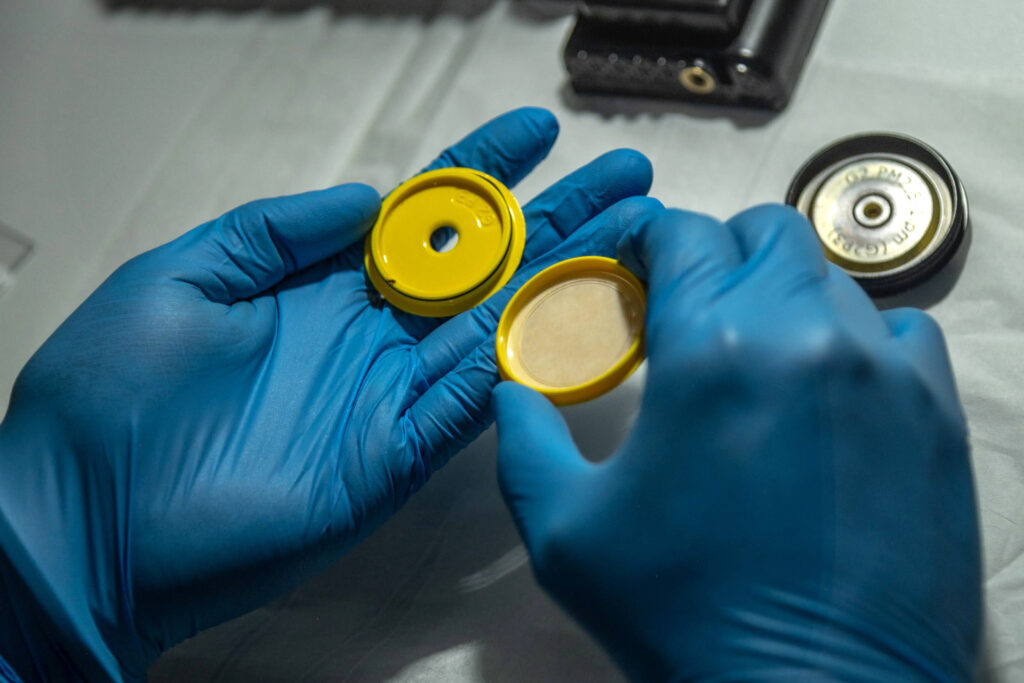
As part of the five-year study, the team outfitted aprons with air monitors the size of a flip phone and distributed them to hundreds of women in 16 rural villages across Santa María Xalapán. Women wear the aprons during the day and place them beside their beds at night, allowing filters in the monitors to trap harmful substances like sooty fine particles and black carbon over 24 hours.
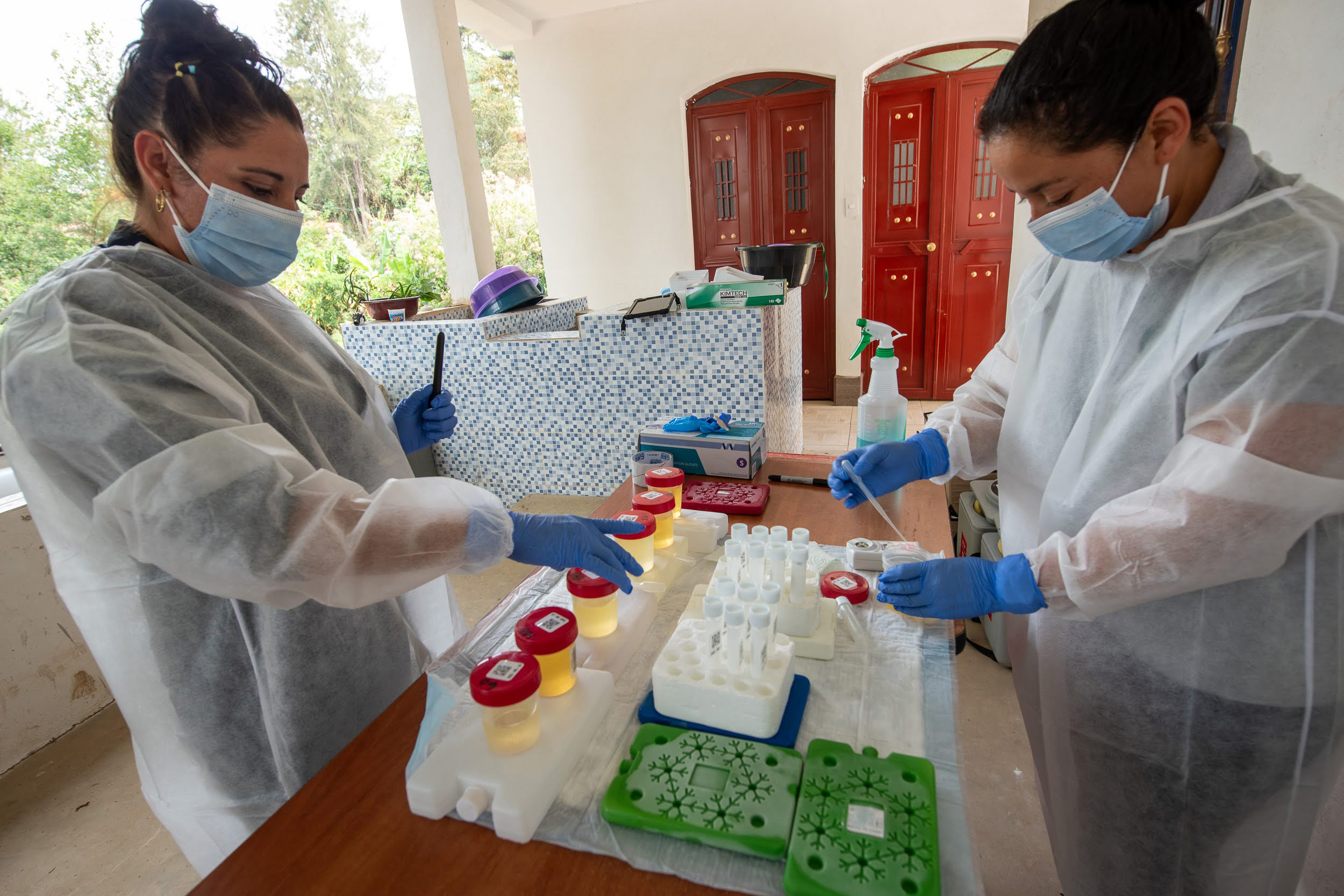
Field workers retrieve the monitors the following day, along with urine samples that a lab at Emory analyzes for biomarkers linked to burning plastic. The field team also asks the women a series of questions about their cooking and burning routines at the beginning of the study and after interventions designed to reduce plastic burning.
Oscar de León, a senior research scientist at UVG, was on his way to meet with field workers at the project’s office in La Fuente, west of Jalapa, one morning in May when he saw someone throw a bag out of a diesel exhaust-spewing three-wheeled tuk-tuk taxi.
“A plastic bag, filled with more plastic trash,” said de León, who’s in charge of data curation among other scientific tasks for Ecolectivos. “It’s right under our truck now.”
Plastic trash is everywhere, de León said, clogging the streets of Jalapa and strewn along the roads of remote villages on the mountain, la montaña, where the team works.
The road to the office rises high above the city, curving through settlements of cinder-block homes with corrugated steel roofs where small shops sell soft drinks in plastic bottles and snacks in plastic wrappers. Clouds of smoke from wood fires billow from many of the homes, some built of clay dug out of yards. Women and their children walk along the narrow road balancing baskets filled with firewood on their heads, wearing nothing to shield their faces from the piercing, acrid fumes of burning plastic and smoke from woodfires.
At the office, de León hooks up with two field workers, Abdías Misael Ramírez Méndez and Yosselin Maribel Merlos Mendoza, who have appointments with study participants in a nearby village. It’s only about 7 miles to Palo Verde but it takes half an hour to reach the village on the bumpy dirt roads. The team parks their trucks in front of some partially constructed cinder-block houses and hikes up a dirt path to meet a shy, soft-spoken 19-year-old named Delmy, who did not want to share her last name.
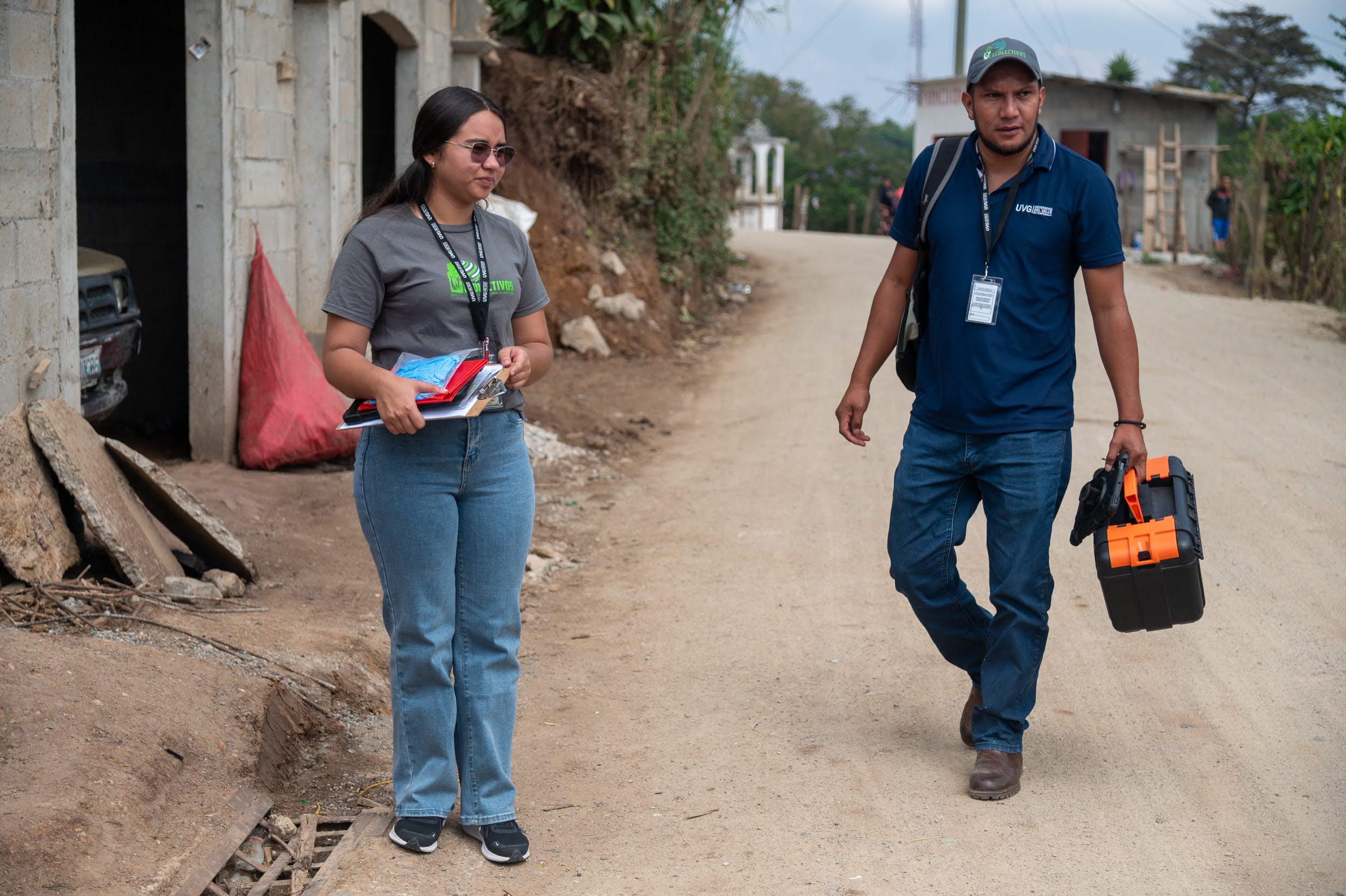
Ramírez and Merlos pick up Delmy’s air sensor and biomonitoring sample and take turns asking her about her activities over the past 24 hours, including whether she used any plastic materials, what she’s eaten, how she cooked it, if she opened windows when she cooked, if she burned plastic in her stove and, if so, what type.
Several boxes of donated food sit in front of Delmy’s home, which she shares with her mother, brother and cousin. She isn’t sure who dropped them off. She just knows they’re filled with dehydrated vegetables, packed in plastic bags.
This story is funded by readers like you.
Our nonprofit newsroom provides award-winning climate coverage free of charge and advertising. We rely on donations from readers like you to keep going. Please donate now to support our work.
Delmy, whose long black hair is pulled back in a ponytail, doesn’t add plastic to the cooking fire because she knows the smoke is bad for her lungs. But she and her mother burn large piles of plastic bags, bottles, clothes and other refuse once a week. “There’s no other way to handle the waste,” she said, over the din of crowing roosters.
Ramírez and Merlos thank Delmy for her time, and head to another study participant’s home, a short, rough drive further up la montaña. The team scrambles down a steep trail to the home of Sandra Mungiya Marcos, a 27-year-old mother of three.

Mungiya, who speaks quietly and sometimes giggles as she talks, was happy to join the project after working with Thompson on the Household Air Pollution Intervention Network (HAPIN) trial. HAPIN assessed the health impacts of providing pregnant women who cook with wood and other biomass fuels with a cleaner liquefied petroleum gas cooking stove in Guatemala, Rwanda, Peru and India. Mungiya was randomly assigned to a control group and appreciated receiving a table as compensation for participating in the study.
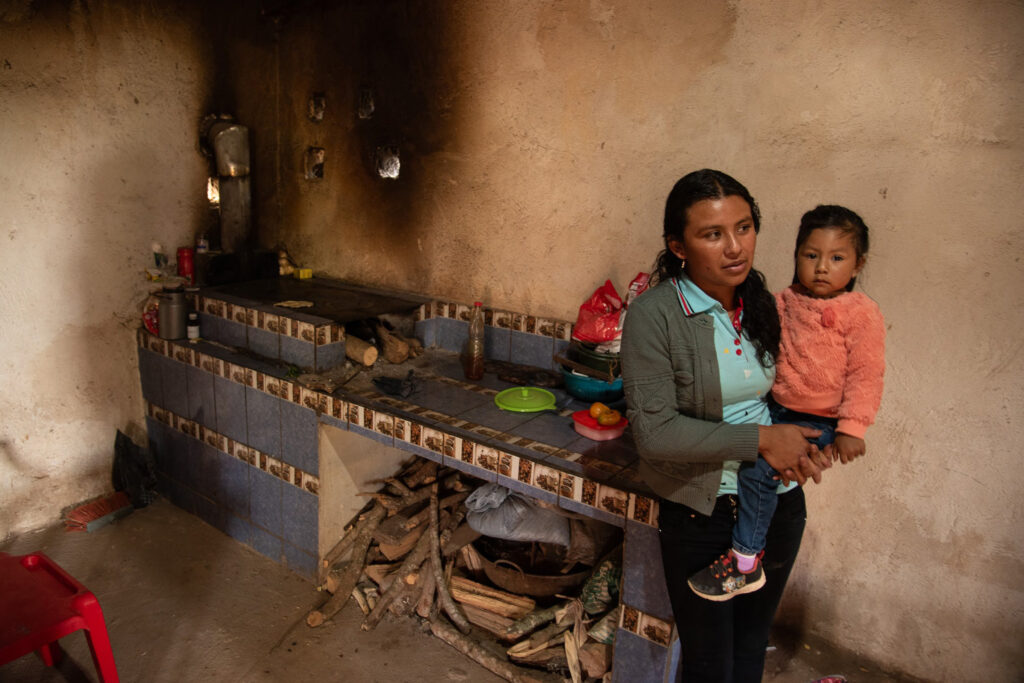
The table is doing double duty this sunny spring morning. After it took several days to find a turkey that went missing on Mother’s Day, Mungiya tied the wayward bird to a table leg in her kitchen, where piles of firewood sit atop low-slung stone walls that afford easy access to the hillside.
Mungiya has to cook with wood, she explained, because it costs too much to use gas to cook most of her staples, like the field corn hanging from wooden beams in her kitchen that she’ll turn into masa for tortillas. Sometimes she uses plastic trash as kindling, but then she has trouble breathing so she tries to avoid it.
The cooking fire makes it harder for the children to breathe when they’re already sick, Mungiya said. They all had colds and a fever in April, she said, which seems to happen every month.
For Ramírez and Merlos, it’s frustrating to tell women to stop using and burning plastic when few alternatives exist.
“Everything they get comes in plastic, and if they want to change that, it’s more expensive,” Ramírez said. They know alternatives are available and would like to use them, he added. “But they just can’t afford it.”
Fighting for Clean Air
The road from the office to Los Izotes is paved, with more local shops, restaurants and corner stores, where people cash remittances from their loved ones working in the States. Maize, peaches and coffee grow in some of the fields beyond the road. But if there is an open field, de León said, it will probably be used to burn plastic.
Minutes later, as if on cue, a plastic bag rises from the road like an escaped party balloon.
“Here we don’t have tumbleweeds, we have tumble bags,” de León said wryly.
The team’s trucks turn onto a dirt road to reach the home of Wendy Hernandez, a mother of three elected as promotora by her fellow participants. Hernandez was trained to educate her community about how to recycle and reuse plastic by turning old items into art projects instead of throwing them on the ground or into the kitchen fire. She visited more than two dozen households once a month to share what she learned, invite them to community cleanups and reinforce positive behaviors.
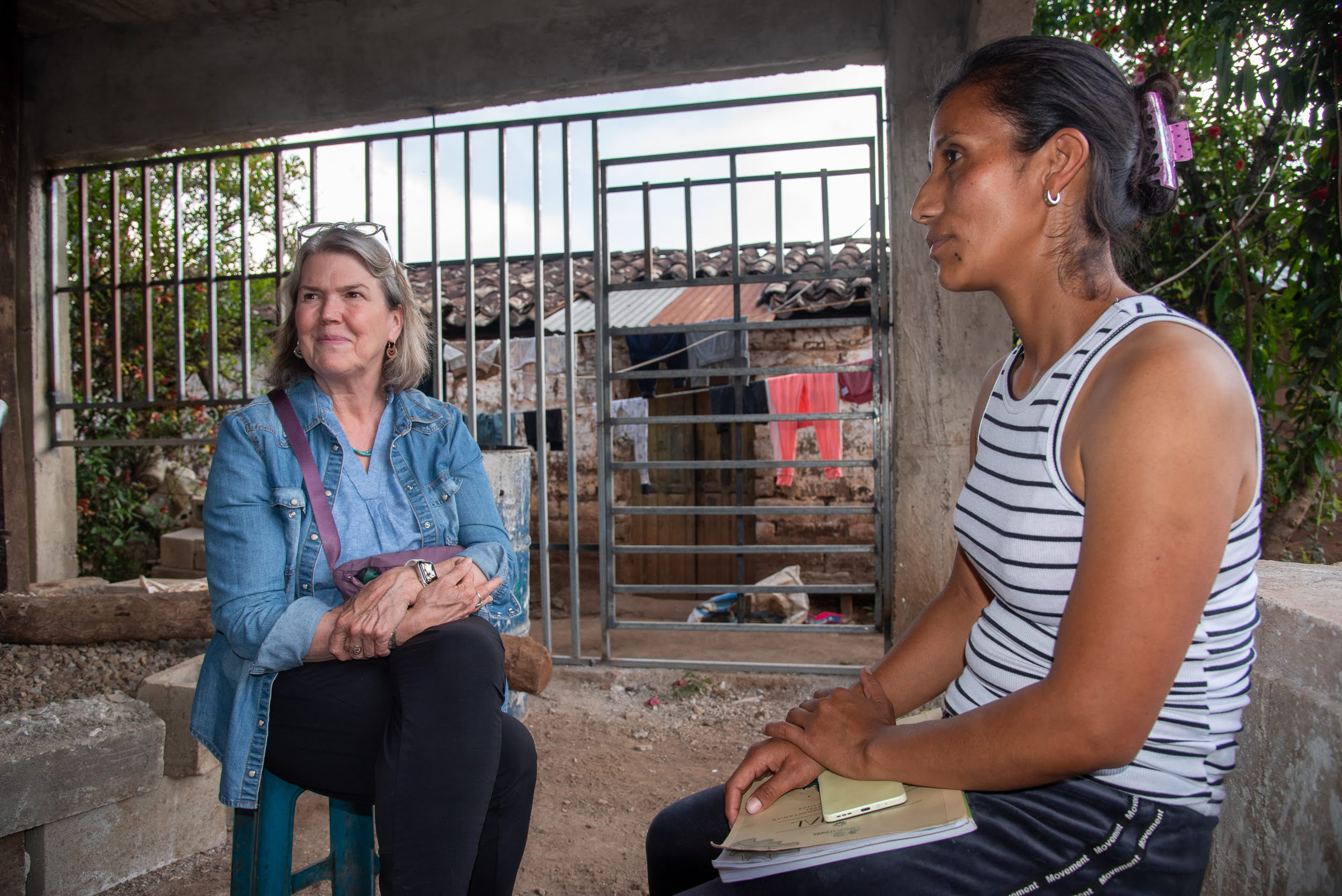
As many as 200 people joined the first community cleanups, Hernandez said, but only 50 people showed up after that.
Most people stopped burning plastic in their cooking fires after learning it was harmful, but they still burn plastic to get rid of it, Hernandez said. “We don’t have anybody picking up our garbage, so even I burn plastic outside,” she said. “But I don’t burn it inside.”
The breathing problems children experience near wood stoves get worse when plastic is added to the fire, Hernandez said. She hopes one day her community can breathe clean air and people stop dumping their plastic trash near local springs. But they need more education and support, said Hernandez, who stopped speaking for a moment when the distinctive smell of burning plastic reached her home.
Katerine Ramírez, a mother of two who also lives in Los Izotes, does what she can to recycle plastic containers. But she typically burns trash, including plastic, at least once a week.
“Since the garbage truck doesn’t come by here, everyone has to figure out what to do with their own waste,” Ramírez said.
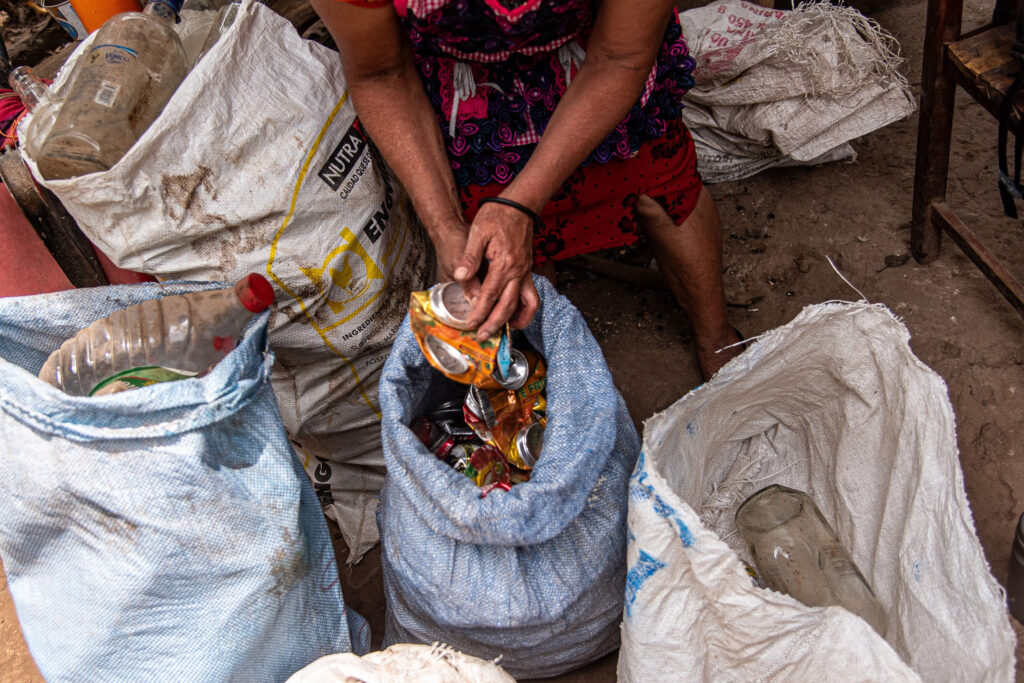
That’s why the workshops on reducing plastic burning, where villagers developed strategies like community cleanups and sorting sellable recyclables from trash, were such an important part of the project. People in eight intervention villages removed more than 4,500 large bags of trash during dozens of cleanups over the course of two years, Thompson said. The project also held events to show study participants and others in the village that they could earn money by selling glass, metal and plastic materials they collected to recycling companies, she explained.
Even people in the control villages, who did not work on strategies to reduce plastic waste burning, participated in a community cleanup and recycling event.
Juliana Perez Aguilar has been cleaning up trash in La Fuente, near the field office, since 2019. That’s when she heard Mayari Hengstermann, an anthropologist who launched the Ecolectivos project with Thompson, talk about the harms of burning plastic and the benefits of recycling.
Hengstermann held workshops in La Fuente in 2019 as part of a proof-of-concept study. The findings laid the groundwork for educational materials that were later used in the Ecolectivos intervention communities, she said.
Hengstermann also set up a GoFundMe campaign to continue supporting the community.
Perez said she and her daughter, Clara Luce Castrillo Perez, have continued to recycle aluminum cans, glass and plastic bottles ever since attending the workshops. When she noticed mosquitoes breeding in water that collected in the containers where she kept the recycling, her sons built her a shelter to keep the rain out.
Perez used to sell plastic containers made of polyethylene terephthalate, or PET, until the recycling center stopped taking them.
After oil prices dropped around 2023, it became cheaper to produce new plastic than to recycle PET, Hengstermann explained. Local recyclers stopped buying PET for more than a year, and only a few started buying it again, she said.
But now it costs too much for Perez to haul the bulky PET bottles down la montaña, so she burns them. Perez’s cleanup efforts were also disrupted by a new Trump administration policy that required U.S. universities to submit separate budgets if they worked with a foreign entity. As a result, the Ecolectivos team had to shut down the project for nine months until they met the new policy requirements and couldn’t help transport trash and recyclables.
Perez mostly breaks even when she sells scavenged materials to recycling companies, but she doesn’t do it for the income. She wants to educate her community and keep the environment clean.
What the community really needs is a collection center where people can bring their trash, Perez and her daughter believe. “That would help them stop burning plastic,” Castrillo said.
A local village leader told Hengstermann they’re working to establish a local landfill and possibly a collection center where people could sell recyclable materials without having to travel to Jalapa. “This would reduce transportation costs while creating stronger incentives for recycling within the community,” Hengstermann said.
The Ecolectivos team recently received funding to conduct a potentially radical experiment in the Xalapán mountains.
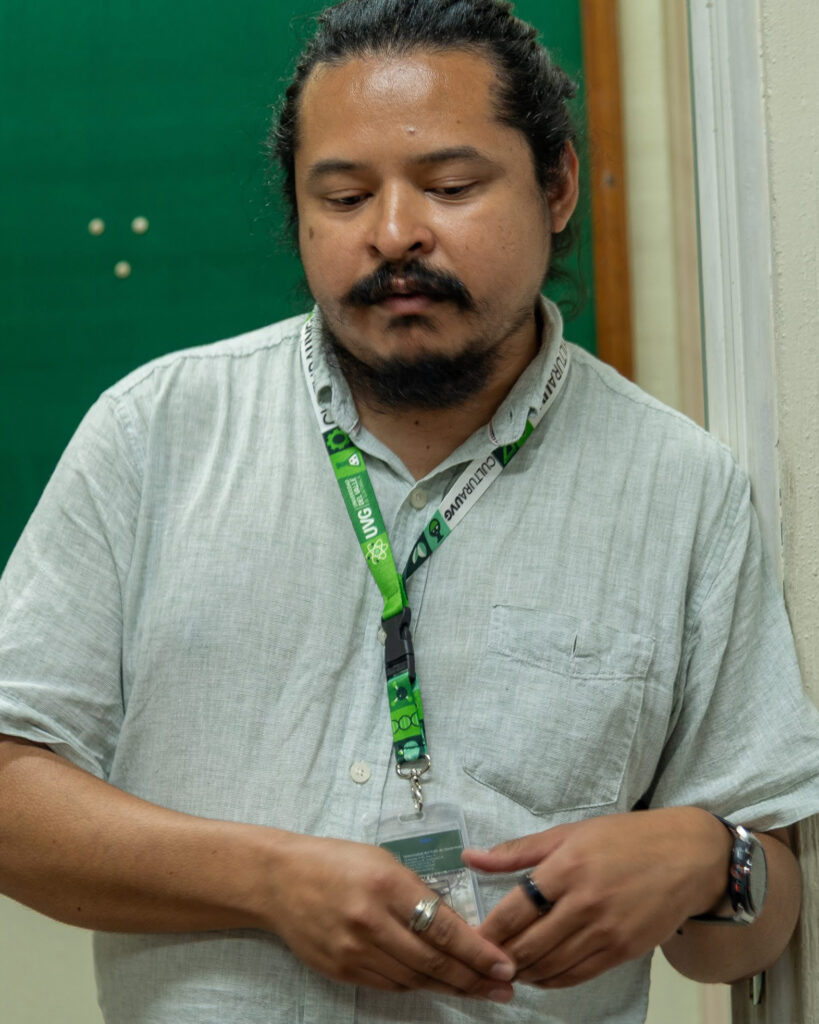
The researchers plan to outfit a small kitchen in the La Fuente field station with electric induction stoves to see if they can meet local participants’ meal preparation needs. The team would invite women to cook there, provide a stove and possibly ingredients, and ask them to prepare their meals as they normally do, de León explained. Whether the stoves can boil maize long enough to make the dough for tortillas and provide the large, flat surface needed to cook them remains to be seen.
In previous studies, the team showed that replacing open-fire stoves with gas stoves or units outfitted with vented chimneys can decrease indoor air pollution. Removing combustion as a heat source altogether by using induction stoves could reduce emissions even more, de León said. But, given spotty access to power grids and community cooking practices, he said, “it’s unclear if this is feasible.”
Ramírez, for one, said she’d try an induction stove. But she wishes products weren’t made of plastic so people weren’t forced to burn them or deal with mountains of waste.
The day after Betty Cruz and her El Duraznal neighbors spent hours enthusiastically collecting plastic trash, de León noticed some men tending trash fires in the same area. The trash was probably leftover from the community cleanups, he said. The unmistakable stench of burning plastic filled the air.
About This Story
Perhaps you noticed: This story, like all the news we publish, is free to read. That’s because Inside Climate News is a 501c3 nonprofit organization. We do not charge a subscription fee, lock our news behind a paywall, or clutter our website with ads. We make our news on climate and the environment freely available to you and anyone who wants it.
That’s not all. We also share our news for free with scores of other media organizations around the country. Many of them can’t afford to do environmental journalism of their own. We’ve built bureaus from coast to coast to report local stories, collaborate with local newsrooms and co-publish articles so that this vital work is shared as widely as possible.
Two of us launched ICN in 2007. Six years later we earned a Pulitzer Prize for National Reporting, and now we run the oldest and largest dedicated climate newsroom in the nation. We tell the story in all its complexity. We hold polluters accountable. We expose environmental injustice. We debunk misinformation. We scrutinize solutions and inspire action.
Donations from readers like you fund every aspect of what we do. If you don’t already, will you support our ongoing work, our reporting on the biggest crisis facing our planet, and help us reach even more readers in more places?
Please take a moment to make a tax-deductible donation. Every one of them makes a difference.
Thank you,

Reporter, California
Liza Gross is a reporter for Inside Climate News based in Northern California. She is the author of The Science Writers’ Investigative Reporting Handbook and a contributor to The Science Writers’ Handbook, both funded by National Association of Science Writers’ Peggy Girshman Idea Grants. She has long covered science, conservation, agriculture, public and environmental health and justice with a focus on the misuse of science for private gain. Prior to joining ICN, she worked as a part-time magazine editor for the open-access journal PLOS Biology, a reporter for the Food & Environment Reporting Network and produced freelance stories for numerous national outlets, including The New York Times, The Washington Post, Discover and Mother Jones. Her work has won awards from the Association of Health Care Journalists, American Society of Journalists and Authors, Society of Professional Journalists NorCal and Association of Food Journalists.
