

Close Menu
NCIJ Network NCIJ Network
    What's Hot

    NASA Competition Invites Students to Help Imagine a Future Enabled by Lunar Technologies 

    August 14, 2026

    100 species on the brink get a $200m conservation lifeline

    August 14, 2026

    Trump Announces Drone Tariffs, Cyber Memo in Flurry of National Security Policies

    August 14, 2026
    Facebook X (Twitter) Instagram
    Trending
    • NASA Competition Invites Students to Help Imagine a Future Enabled by Lunar Technologies 
    • 100 species on the brink get a $200m conservation lifeline
    • Trump Announces Drone Tariffs, Cyber Memo in Flurry of National Security Policies
    • Trump says record Navy deployment in Iran operations ‘not nearly long enough’
    • Futile Clacton byelection has done Farage no favours | Nigel Farage
    • Former Cambridge professor Jason Arday found dead
    • Ice cream: How the big firms innovate to stay ahead
    • Hackers arrested over €30M bank fraud exploiting service provider flaw
    • About
      • Our Team
      • Editorial Policy
      • Editorial Independence
      • International Support
    • Trust & Standards
      • AI Usage Policy
      • Conflict of Interest Policy
      • Corrections Policy
      • Ethics Policy
      • Fact-Checking Policy
      • Source Protection
    • Get Involved
      • Guide for Sources
      • Support Independent Journalism
    • Legal
      • Cookie Policy
      • Privacy Policy
      • Terms of Use
    Facebook X (Twitter) Instagram
    NCIJ Network NCIJ Network
    Friday, August 14
    • Home
    • World
    • Ai
    • Business
    • Politics
    • Health
    • Crypto
    • Science
    • Technology
    • Cybersecurity
    • Defense & Security
    • Economy
    • Energy
    • Europe
    • More
      • Fact Check
      • Investigations
      • Opinion & Analysis
      • Environment
    NCIJ Network NCIJ Network
    Home»Science

    Scientists detect a nuclear reactor’s ghostly afterglow for the first time

    NCIJ NETWNCIJ NETWORKBy NCIJ NETWNCIJ NETWORKAugust 14, 2026 Science No Comments3 Mins Read
    Share
    Facebook Twitter LinkedIn Pinterest Email

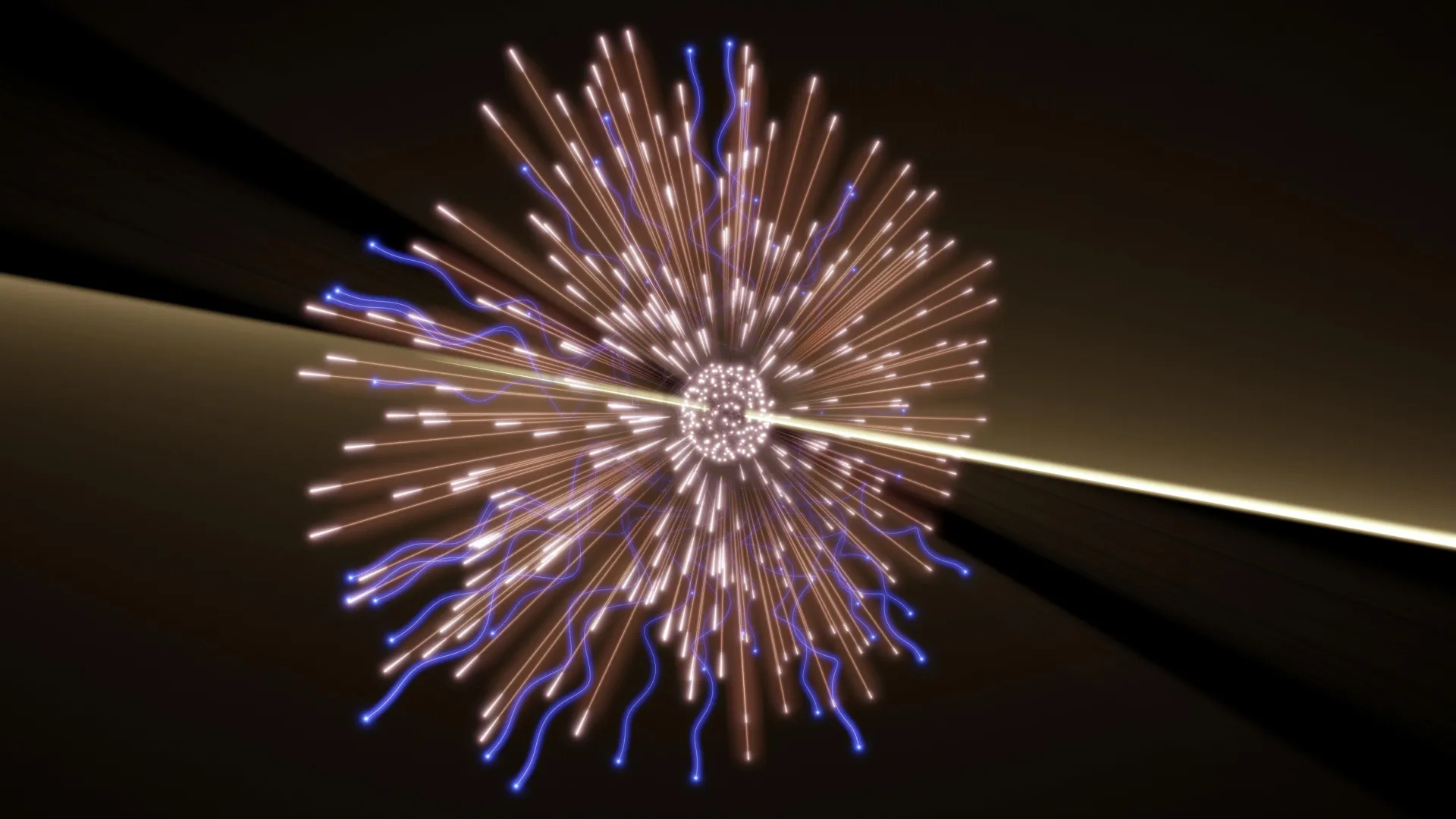
    Even after a nuclear reactor is switched off, activity continues deep inside its core. Long-lived radioactive fission products keep decaying for months or even years, releasing a weak stream of particles called antineutrinos. (Anti)neutrinos are the lightest and most elusive known particles in the Universe, and they can pass through both the reactor and its surrounding shielding with little interference.

    Scientists with the Double Chooz collaboration have now measured this lingering antineutrino emission for the first time. The research, recently published in Physical Review Letters, was led by Anthony Onillon and Thierry Lassere of the Max-Planck-Institut für Kernphysik (MPIK) in Heidelberg, Germany. The findings show that antineutrino detectors can gather information about nuclear reactors even while they are shut down, potentially creating new opportunities for reactor monitoring, nuclear safety, and safeguards.

    Detecting Antineutrinos From a Shutdown Reactor

    The measurement took place at the Chooz nuclear power plant in northern France. The Double Chooz detector sits underground about 400 meters from the facility’s two reactor cores. Inside the detector are more than 30 cubic meters of liquid scintillator, a material that produces tiny flashes of light when an antineutrino interacts within it.

    “Antineutrinos interact only extremely rarely with matter. However, when one interacts within the Double-Chooz detector, a characteristic double-light signal is produced that can be distinguished from background events,” explains Thierry Lasserre from the independent research group OMINA, also located at MPIK. This distinctive signal enables scientists to identify antineutrinos coming from the reactors.

    Researchers examined 17.2 days of observations collected while both reactor units were fully shut down. Over that period, the detector recorded around 100 antineutrino candidate events linked to residual radioactivity in the reactor cores and nearby spent-fuel cooling pools.

    Measurements Match Nuclear Fuel Predictions

    The detected signal closely matched detailed simulations that accounted for the remaining nuclear fuel inventory and the decay of long-lived fission products. The result provides the first direct experimental confirmation of predictions describing antineutrino emissions from shut down reactors and spent fuel.

    “Until now, reactor antineutrino experiments have mainly focused on operating reactors, where the antineutrino flux is much larger. Detecting the tiny residual signal after shutdown required exceptionally low backgrounds and careful analysis techniques developed by the Double Chooz collaboration over many years,” adds Dr. Onillon.

    Other experiments are already beginning to explore this new area. Initial results from JUNO-TAO, presented at Neutrino 2026, show that researchers are also using reactor-off data to study the faint antineutrino signal produced by spent nuclear fuel. TAO is working to isolate that weak emission, while the Double Chooz findings now provide the first published benchmark for studying the residual signal from shut-down reactors and spent-fuel pools.

    A New Tool for Nuclear Reactor Monitoring

    The findings suggest that antineutrino detectors could eventually provide useful information not only while reactors are operating, but also during maintenance and after shutdown. Measurements of this kind could become valuable for independently confirming reactor status and tracking spent-fuel inventories.

    Double Chooz was originally built to investigate neutrino oscillations and played a key role in measuring the neutrino mixing angle θ13, a fundamental parameter describing how neutrinos change from one type to another as they travel. That measurement helped pave the way for future research into matter-antimatter asymmetries in the neutrino sector.

    Now, Double Chooz has added another first to its scientific record by detecting the faint neutrino glow that continues after a nuclear reactor goes dark.

    afterglow detect ghostly nuclear reactors Scientists time
    NCIJ NETWNCIJ NETWORK
    • Website

    Keep Reading

    NASA Competition Invites Students to Help Imagine a Future Enabled by Lunar Technologies 

    World’s first superconducting quantum heat engine could help unlock massive quantum computers

    NASA Announces MAX POWER: America’s Newest Aerospace Expo, Airshow

    How a brutal drought may have helped unleash yellow fever in Brazil

    Rare breeding bat found roosting near South Yorkshire reservoir

    I tested an Android app that lets anyone fight censorship – and shows your impact in real time

    Add A Comment
    Leave A Reply Cancel Reply

    Editors Picks

    NASA Competition Invites Students to Help Imagine a Future Enabled by Lunar Technologies 

    August 14, 2026

    100 species on the brink get a $200m conservation lifeline

    August 14, 2026

    Trump Announces Drone Tariffs, Cyber Memo in Flurry of National Security Policies

    August 14, 2026

    Trump says record Navy deployment in Iran operations ‘not nearly long enough’

    August 14, 2026
    Latest Posts

    Meta just created a moderation nightmare for its smart glasses

    July 26, 2026

    Maga’s creepy baby obsession won’t solve the fertility crisis

    July 26, 2026

    France battles fire ‘whirlwinds’ as another 55,000 evacuated

    July 26, 2026

    Subscribe to News

    Get the latest sports news from NewsSite about world, sports and politics.

    NCIJ Network is an independent digital news platform delivering trusted investigative journalism, European and global news, in-depth analysis, and fact-based reporting with accuracy, transparency, and integrity.

    Facebook X (Twitter) Instagram Pinterest YouTube

    NASA Competition Invites Students to Help Imagine a Future Enabled by Lunar Technologies 

    August 14, 2026

    100 species on the brink get a $200m conservation lifeline

    August 14, 2026

    Trump Announces Drone Tariffs, Cyber Memo in Flurry of National Security Policies

    August 14, 2026

    Subscribe to Updates

    Get the latest creative news from FooBar about art, design and business.

    Type above and press Enter to search. Press Esc to cancel.