


Unlock the Editor’s Digest for free
Roula Khalaf, Editor of the FT, selects her favourite stories in this weekly newsletter.
The writer is the former deputy prime minister of Canada
Leo Tolstoy famously observed that happy families are all alike, while unhappy families are unique in their unhappiness. But today, among the world’s liberal democracies, the opposite is true. From Tokyo to London, Paris to Washington, the world’s democracies are alike in their unhappiness.
Whether the ship of state is being piloted by the conservative leaders of Japan and Germany, the centrist leader of France or the centre-left leader of the UK, democratic governments seem serially unable to satisfy their voters. And changing bosses, or even the political party in charge, does not appear to resolve the underlying angst.
There are many competing explanations for this malaise: the community bonds that once held us together have been frayed by social media or immigration or both; persistently slower growth means a smaller pie to share; an ageing population makes our societies grouchier and more expensive to maintain; authoritarians from Beijing to Moscow are manipulating us into doubting our own democracies.
But there is one complaint whose drumbeat is consistent and powerful across each of the democratic world’s unhappy families — regular people feel they are paying more than ever in taxes while the public services they receive in return are getting worse.
We shouldn’t be surprised that this makes voters mad. Since the invention of the modern welfare state, effective delivery of government services has been central to the democratic social contract. We pay our taxes and in exchange our children are educated and our illnesses are treated. That’s not all that governments do, but it is a lot of it: OECD countries spend an average of about 14 per cent of GDP on healthcare and education. And the two account for around a quarter of all government spending.
Yet more and more people feel they aren’t getting their money’s worth. Responding to that justified dissatisfaction is a central challenge in every democracy. The answer needs to start with recognition that part of the dilemma is entirely structural — and in some ways isn’t really a problem at all.
We are all grappling with Baumol’s disease, a phenomenon identified by economist William Baumol in the 1960s and sometimes known as Baumol’s cost disease. The genesis of Baumol’s diagnosis is important, because it had nothing to do with the tired old debates about why public services seem to cost more every year.
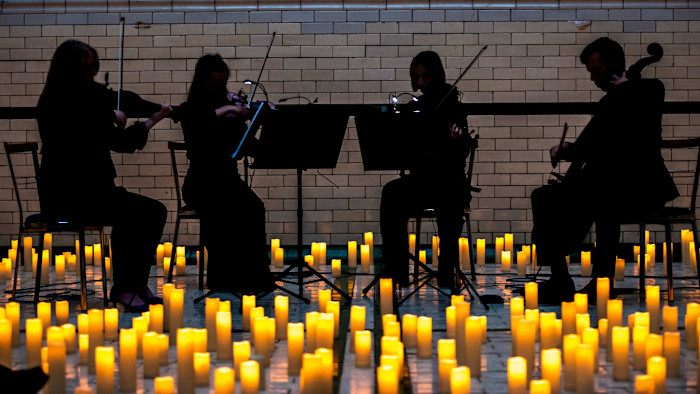
Baumol’s assignment was to determine why in-person classical music performances seemed harder to fund. He found that the snag wasn’t that the musicians were getting worse — it was that the rest of the economy was getting better. It took four musicians one hour of work to perform a Schubert string quartet, exactly the same as it always had done. But four hours of human labour would produce roughly a hundred times as much wheat as it did in the pre-industrial era. For manufactured goods, the multiple is even greater.
The same insight applies to taking a two-year-old on a walk in the park, or supporting a mother as she gives birth. As such, Baumol’s disease poses a knotty challenge for the state in liberal democracies because so much of what governments do is more like playing the violin than manufacturing a car.
It’s a common argument that governments simply need to get better at healthcare and education — that the public sector needs to figure out how to become more productive just as T-shirt makers and computer manufacturers have done. And there’s certainly some truth to that: red tape and a soft budget constraint make many public services more costly than they need to be, something the AI revolution may help fix.
Yet it would be a mistake to ignore the structural power of Baumol’s observation. Some jobs done by in-person humans could be performed by robots — I would be delighted to live in a self-cleaning home. But we surely don’t want robots to push our toddlers on swings in the playground or squeeze our hands between contractions in childbirth.
One way to adapt would be to levy higher taxes on the sectors that can become more productive. That, of course, brings its own political challenges: you can already see them in the brewing battle pitting “makers” against “takers.” This struggle makes a global tax deal, which the OECD came so close to implementing during the Biden administration, more essential than ever. Without one, the most productive players of any democracy can threaten to simply pick up sticks and move to lower-tax jurisdictions.
The politics of dealing with Baumol’s disease are truly fiendish. But there is a silver lining. If we can figure out how to share, Baumol’s disease suggests we could have happy outcomes in the age of AI. All of the things that do not need a bespoke human touch could be produced at an ever lower cost — not just wheat and T-shirts and TVs, but white-collar paper shuffling. And that could free us to spend more of our collective time doing the things only a human being can do well — teaching a child to read, washing a grandmother’s hair, and, yes, playing a string quartet.
