


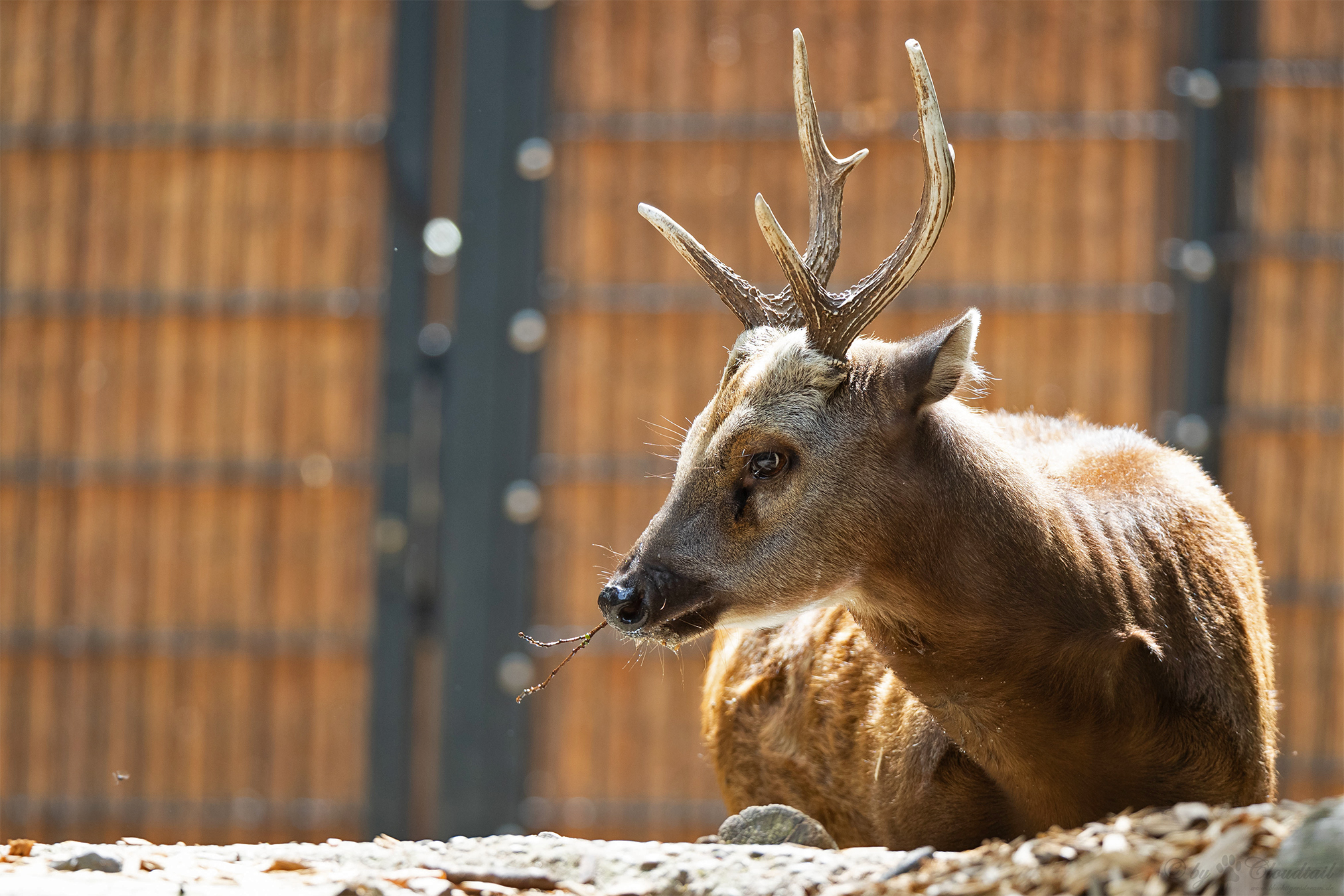
- Scientists in the Philippines have produced a draft genome of the Visayan spotted deer, an endangered mammal endemic to the island nation.
- The draft genome, the first of its kind for any of the Philippines’ endangered mammals, has already revealed information that can be used for conservation planning, including confirmation that captive populations are dangerously inbred.
- While the captive population shows low genetic diversity overall, researchers are working to identify individuals that still carry unique variants, and to shape captive breeding programs around genetic findings.
- Efforts in the lab are paired with efforts to confirm the locations of wild populations, plan future release sites for captive-bred animals, and build community support for conservation.
The net fell with a dull thud. Abraham thrashed once, twice, then went still. A metal notcher clicked against the soft cartilage of his ear, snipping a tiny piece of tissue into ethanol. An antiseptic spray then hissed over the wound, sealing it from infection.
Abraham is a Visayan spotted deer (Rusa alfredi), who was born, raised and ultimately died at Silliman University’s Center for Tropical Conservation Studies (CENTROP) in the Philippines.
Named for the unique constellation of pale spots running across their flanks, the Visayan spotted deer once roamed across six islands in the central Philippines.
Deforestation for agricultural expansion and hunting wiped them from four, leading them to be listed in 1988 as endangered by the IUCN, the global wildlife conservation authority. Now, only the islands of Panay and Negros remain as their refuge. The last count, from 2016, put the wild population at 700 mature individuals. By 2019, Philippine authorities had escalated the national listing to critically endangered. A decade on, with deforestation and hunting persisting throughout the deer’s refuge, conservationists find it hard to say whether that number has held, or slipped further.
A few hundred more spotted deer live in captivity, cared for in facilities scattered across the two islands. Before their numbers dwindle even further, researchers from both Panay and Negros have sprung into action to restore deer population. Their first move: unlocking the deer’s genetic secrets.
Using the sample taken from Abraham, researchers from Silliman University, in Negros, and the Philippine Genome Center Visayas, in Panay, worked together to produce a draft genome of R. alfredi, a first for any of the Philippines’ threatened mammals.
The sequenced genome spans 2.5 billion DNA letters. The team identified 24,531 genes, a count surprisingly close to our own of 20,000, and benchmarked the assembly at 95.5% completeness for expected gene content. While gaps remain, this draft has already pointed scientists to new — and alarming — information about the species.
Heterozygosity, which measures the differences between the DNA an organism inherits from each of its parents, showed the deer were in worse genetic shape than they appeared. A healthy, genetically diverse wild population typically scores well above 0.3. Abraham’s sample came back at 0.17, a worryingly low score that indicated his parents shared nearly identical genes.
The number wasn’t entirely a surprise, says Albert Noblezada, who runs the bioinformatics pipeline at the Philippine Genome Center Visayas. The deer herd at CENTROP is the largest of its kind, but it’s still a captive colony. That means decades of isolation have allowed inbreeding to quietly take hold. “Since Abraham is from a captive population, we expected to get a low heterozygosity result,” Noblezada says.
Whether foreseen or not, the results of the genetic analysis presented two distinct paths for crucial intervention: one led to the laboratory, the other into the forests.

Spotting genetic differences
Despite the high level of inbreeding at CENTROP, Silliman University biologist Persie Mark Sienes says he wanted to see how much genetic diversity still existed in the population, and whether any individuals carried variations that could be beneficial for breeding decisions. Finding such individuals would allow for immediate interventions that could help undo decades of genetic damage.
First, Sienes scanned the draft genome to find short, repeating segments of DNA. The length of these repeating sequences varies from one individual to another, like a genetic fingerprint.
Using these repeating sequences as landmarks for comparison, Sienes then took samples from selected deer at CENTROP, unwound a portion of their DNA with computer software, and analyzed the target sequences.
What Sienes found was both rare and fortunate: “We have identified a rare allele found only in one individual here, and luckily this individual is still sexually active.”
That deer carries a potential variation that might improve the genetic health of the CENTROP colony.
That was what Robert Guino-o of Silliman University says he’d hoped for from the start. “The overall objective is to find out if the gene diversity is still there,” he says. With proof in hand, Guino-o and team are now planning to revamp CENTROP’s captive deer management.
“We are pursuing a genome-based breeding protocol,” he says. It’s an overdue overhaul of their previous method, he says, which was “all based on stud book tracing, where every individual was traced to its parents.”
Both Sienes and Guino-o agree that the surest solution lies beyond CENTROP’s fences, at two other captive facilities: the Mari-it Wildlife and Conservation Park in Panay, and the Negros Forest Park in Negros.
“They have other unique alleles that they can share to boost the health of those in CENTROP,” Sienes says.
The last exchange of deer among the facilities, between CENTROP and Negros Forest Park, was in 2007. Restarting this genetic traffic is now among the project’s most pressing priorities.
“Ideally, the next activity would be to have a roundtable discussion with the Department of Environment and Natural Resources and the two other facilities to initiate and resume animal exchange,” Guino-o says.
Finding the right spots
Improving captive genetic diversity is only meaningful if there are secure and suitable wild habitats for their potential release, experts say.
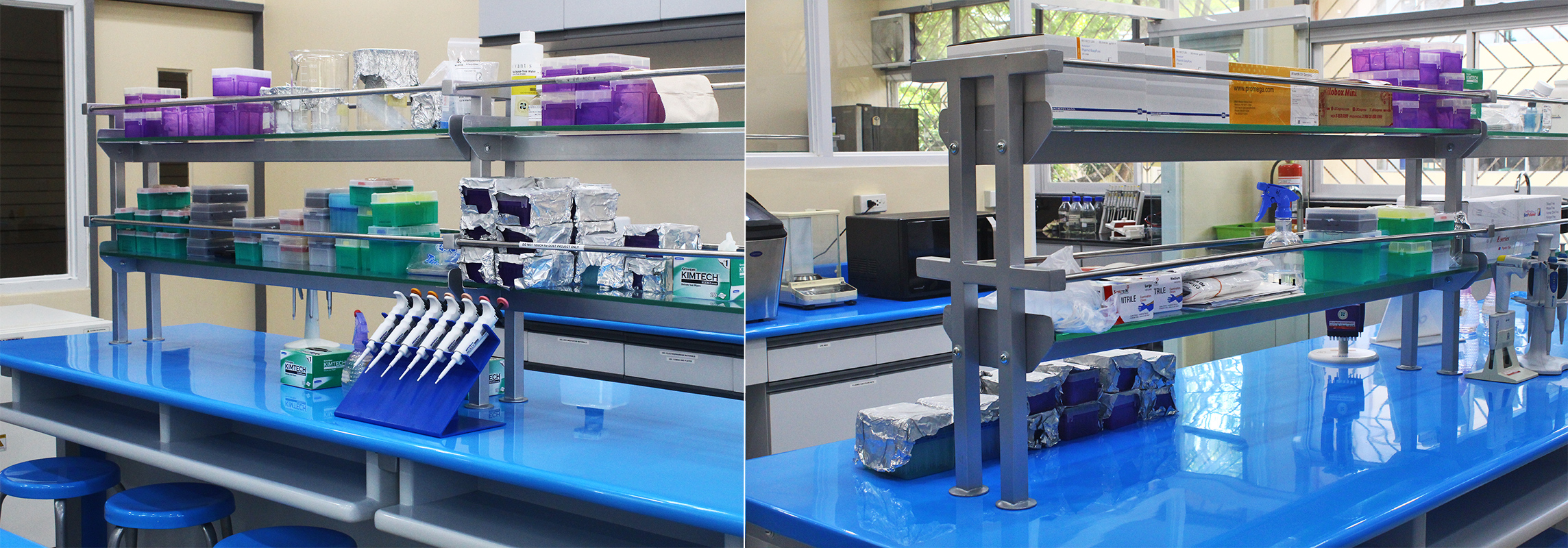
To address this, the Philippine Genome Center Visayas is already preparing a second phase that will use environmental DNA, or eDNA to identify sites where wild R. alfredi populations are actually present. The technique exploits a basic fact of biology: Animals shed genetic material everywhere they go, in water, in soil, in the air above a forest trail, like genetic graffiti announcing their presence long after they have moved on. Environmental DNA sensors can pick up these signals and give researchers a rough idea of whether a given species is present in the area.
Ultimately, the ambition is to ensure that deer from captive colonies and their wild counterparts will mix, closing the genetic gap between the two populations.
“Our plan is to make the Rusa alfredi our flagship organism in terms of genetic studies,” says Maria Carmel Javier from the Philippine Genome Center Visayas.
The testing ground for all of this is the Bayawan Nature Reserve, a 300-hectare (740-acre) sanctuary on Negros that already hosts more than 70 spotted deer. “We have four with trackers,” says Yubert Marc Juanillo, the reserve’s communication and data science officer, adding this allows them to “understand their movement patterns around the reserve.”
Beyond the fences, the team conducts assessments in nearby communities, documenting local testimonies for undocumented deer. Camera traps spread across the reserve also complement anecdotes.
Back at the reserve, the staff watch the herd with cautious optimism. “From our data,” says Angeliegh Faith Pios, the reserve’s human-wildlife conflict mitigation officer, “they seem to be doing well.” But Pios is already thinking ahead: “If the population here keeps on increasing with no release set in the future, that could be a problem.”

Allies spotted
Feral ungulates such as goats and cattle often raid local plots to eat crops, damaging property and livelihoods in the process.
The Visayan spotted deer has no such track record. “The deer are not known to eat crops of our farmers,” Pios says. This has led to a greater willingness among community members to help in R. alfredi monitoring.
The genome, the tracking, the revamped breeding protocols, the eDNA detections, and community involvement, taken together, form the kind of collaboration that Javier says makes for the proper working model.
“A more holistic approach would make the program more effective,” she says, “requiring collaboration between all, from the academe, environmental institutions, and especially the government.”
Guino-o expands this vision of future collaboration to include a legacy from the past. “It’s important to cite our source of vision,” he says. “These are the animals that our predecessors have kept for many decades. It’s really continuing the work they started.”
For Abraham, that continuation came too late. He died peacefully at CENTROP in 2025, just months after the publication of his genome. But the little notch of ear that he left behind was big enough to serve as the first signpost guiding his kind back home.
Banner image: A Visayan spotted deer (Rusa alfredi) in a zoo. Image by Cloudtail the Snow Leopard via Flickr (CC BY-NC-ND 2.0).
Pippo Carmona is a Filipino biologist and historian. He writes about animals, plants, precolonial Filipino history, and the dangers of sugar monocropping on his website www.bibliotikal.com.
DNA research changes the fate of the most trafficked parrots in Colombia
Citation:
Javier, M. C. F., Noblezada, A. C., Sienes, P. M. Q., Guino-o, R. S., Palomar-Abesamis, N., Malay, M. C. D., … Ferriols, V. M. E. N. (2025). Draft genome of the endangered Visayan spotted deer (Rusa alfredi), a Philippine endemic species. Gigabyte. doi:10.46471/gigabyte.150
FEEDBACK: Use this form to send a message to the editor responsible for this story. If you want to post a public comment, you can do that at the bottom of the page.
Cite this article
Pippo Carmona (2026). From one deer’s DNA, a road map emerges to save an endangered Philippine species. Mongabay Conservation news. DOI: https://doi.org/10.66709/news-325218

