


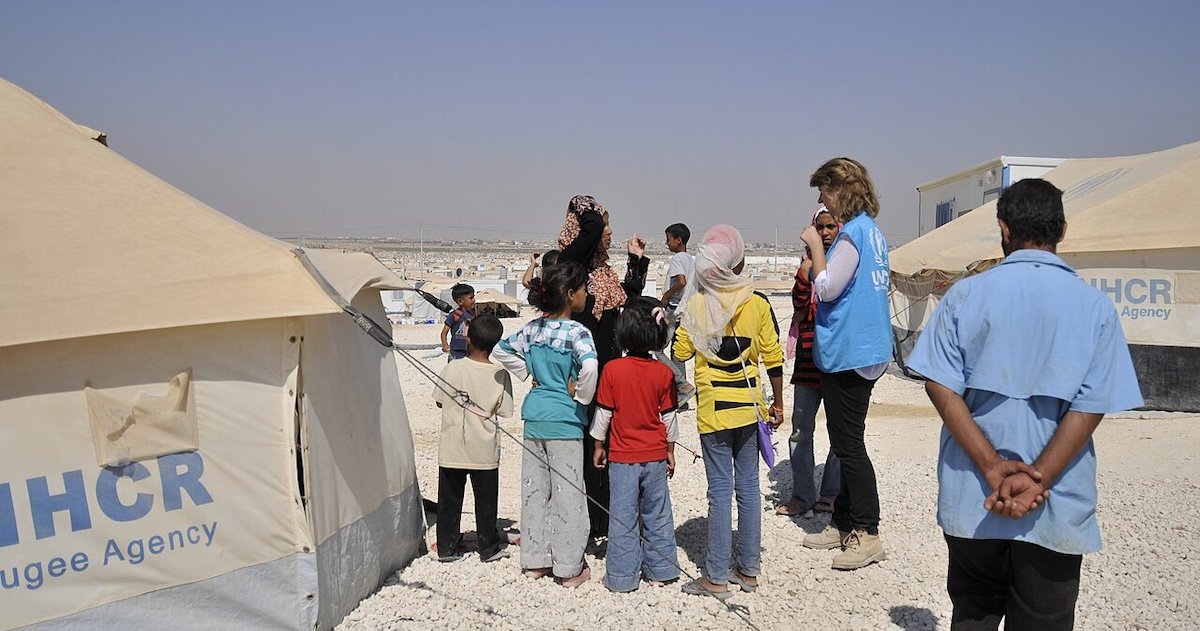
We’ve seen an incorrect claim that “not one of the 56 Muslim countries is taking in refugees” being shared again on Facebook.
As we’ve explained before, millions of refugees are hosted by countries with majority-Muslim populations.
According to the latest data from the UN’s refugee agency, the UNHCR, five of the ten nations in the world that hosted the most refugees as of the end of 2025 are members of the Organisation of Islamic Cooperation (OIC), which describes itself as “the collective voice of the Islamic world”, and are listed by Pew Research Centre as having Muslim majority populations. These countries are Turkey, Chad, Bangladesh, Pakistan and Sudan. Between them they host over seven million refugees.
Where does the 56 figure come from?
The OIC currently lists 57 member states, while the Pew Research Centre identifies 52 countries as having Muslim majority populations in its latest data from 2020.
Syria was reinstated as an OIC member in March 2025, meaning that between 2012 and 2025 the OIC had 56 members—and this may be what the post is referring to when it claims there are “56 Muslim countries”.
The post also claims 85% of the world’s refugees are Muslim, but the UNHCR does not hold data on the religion of refugees, and told us earlier this year that “the claim circulating on social media that 85% of all refugees are Muslim is false”, highlighting the large number of refugees from Venezuela and Ukraine, which are both majority Christian countries.
What about asylum seekers?
The post specifically refers to refugees, which is why we have used this data in our fact check, but it is possible it may have meant asylum seekers. We sometimes see ‘refugees’ and ‘asylum seekers’ conflated in posts on social media. Asylum seekers are those looking for international protection, whereas refugees have had this status confirmed.
Muslim countries are also among those with a large number of asylum seekers. Egypt has the second most pending asylum cases in the world (after the USA), and Pakistan, Libya and Turkey are also included in the top 20.
False or misleading claims about specific religious groups can be harmful. Online claims can spread fast and far and are difficult to contain and correct. Internet companies must take responsibility to ensure that they have clear and transparent policies on the treatment of misinformation on their platforms, and then apply them consistently.
