


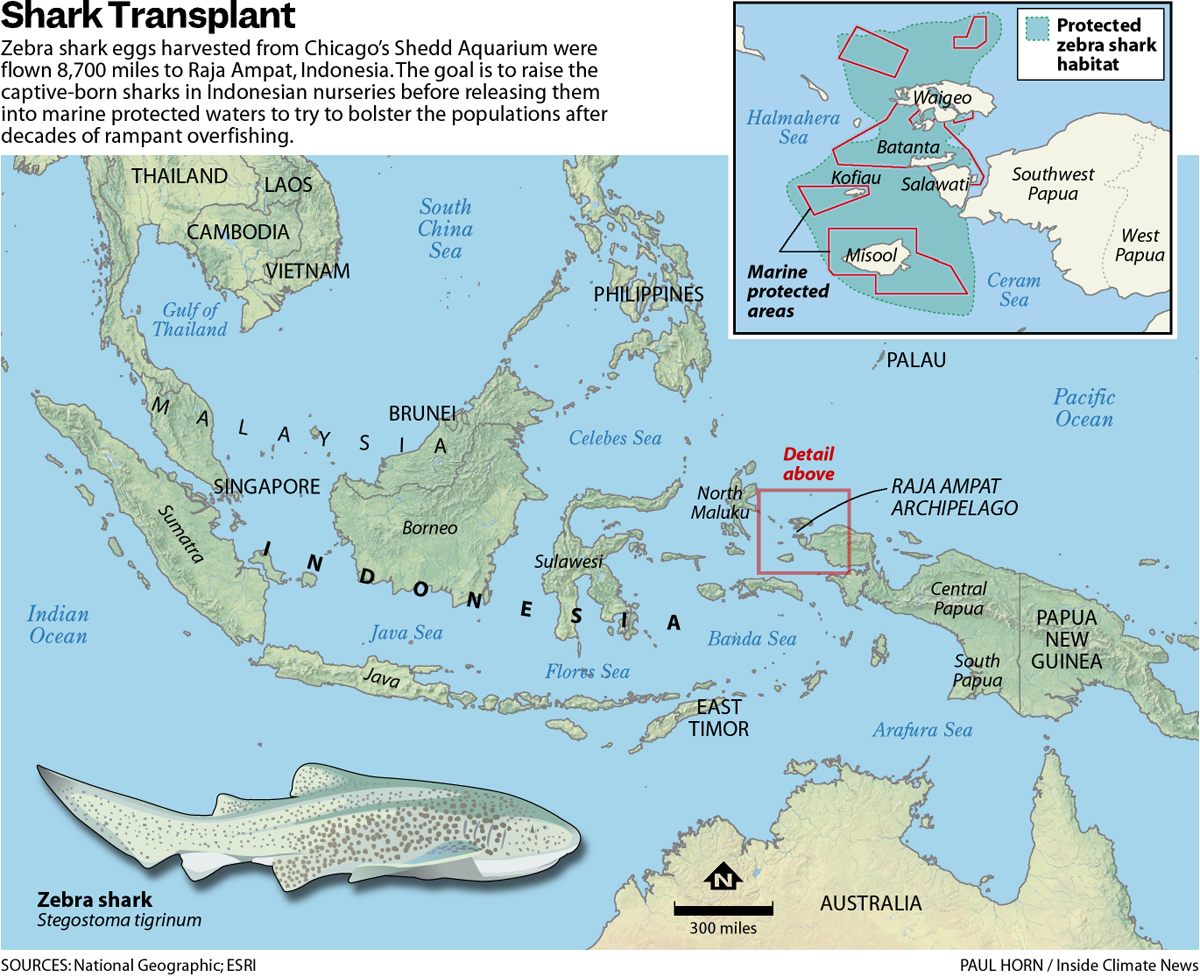
Inside an insulated FedEx package, sloshing around in a sealed sack of seawater at 30,000 feet, four shark eggs traveled from the U.S. to Indonesia last month. Each leathery capsule—affectionately nicknamed “mermaid’s purses”—held the embryo of a species so decimated by overfishing that conservationists have built a first-of-its-kind international rewilding pipeline to overcome functional extinction in Southeast Asian waters.
From Chicago to Seattle, Taiwan, Jakarta, Sorong and Raja Ampat, with the help of 10 partner organizations, four planes and one boat, the eggs arrived in a marine sanctuary in the heart of the Coral Triangle in July.
Battling temperature variation, water oxygenation levels and transnational customs, the team pulled off a feat that was not just an award-worthy accomplishment in global logistics. It might also be the future of marine conservation.
“These sharks are playing the role right now as ambassadors for future endangered sharks and rays,” said Nesha Ichida, program director of Thrive Conservation and the program manager of ReShark’s Indonesian StAR Project.
For Ichida, who credits her early interest in marine science with witnessing coral reef bleaching firsthand and watching National Geographic documentaries while growing up in Jakarta, the success of the project rests in partnerships with regional, national and international actors. “To have a coalition of the willing be able to collaborate this way gives me a little bit of hope in humanity,” she said.
Zebra sharks—also known locally as Indo-Pacific leopard sharks—were once heavily prevalent in tropical waters from Taiwan to Tonga. Named for their black and white stripes in youth and leopard-like spots in adulthood, the bottom-dwelling species has been devastated in recent decades.
“Fishing activities really hammered them,” said Steve Kessel, director of marine research at Chicago’s Shedd Aquarium, whose Midwest office walls are adorned with marine taxonomy posters. “They became a target and got hammered to the point where the youngest generations in Indonesia now don’t have a name for them. They don’t know what they are.”
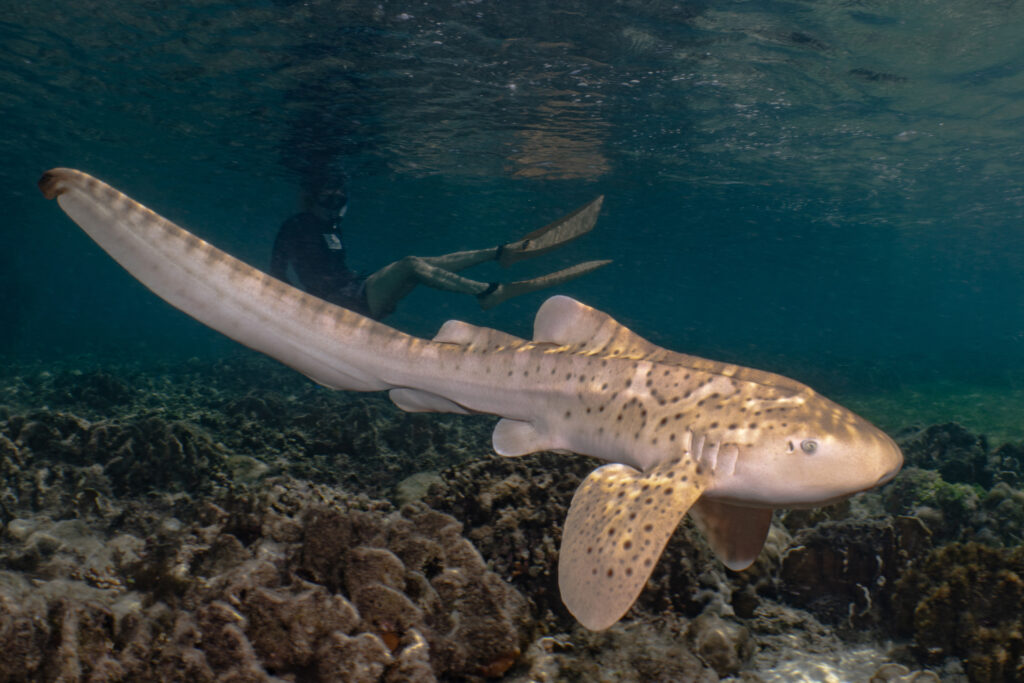
Extracted en masse for shark fin soup and their vitamin-rich liver oil, zebra sharks are now considered “endangered” by the International Union for Conservation of Nature.
While nearly 80 million sharks are killed each year for their meat or as bycatch, zebra sharks are especially vulnerable to localized depletion due to low levels of breeding between populations. And, like other elasmobranchs, their late maturity, slow growth and small offspring rates leave them easily exposed to external shock factors.
Indonesia has long been one of the largest shark- and ray-landing nations in the world. But in 2004, following years of poaching and dynamite fishing, the first marine protected area (MPA) took root in Raja Ampat—a 1,500-island archipelago off Western New Guinea that’s home to leatherback turtles, orcas and 75 percent of the planet’s known coral species.
Regular patrols over the 8,000 square miles by local rangers and the Indonesian Navy soon yielded a ban on shark and ray fishing in the wider region.
By the mid-2010s, blacktip and whitetip reef sharks had rebounded. And today, it’s the only MPA on the planet where reef manta ray populations grow by 10 percent each year.
But for zebra sharks, the same successes never came. In 2021, experts estimated there were just 20 individual sharks left.
“[Zebra sharks] were probably functionally extinct in terms of being able to survive and sustain their populations,” said Kessel, whose “prized possession” is a model shark painted like the U.K. flag that he brought from his native London to his Chicago desk. “They were very close to [being] fully extinct.”
It was this sorrowful state that led ReShark—a collective of aquariums, NGOs, local communities and researchers—to launch the world’s first shark translocation program, the Stegostoma tigrinum Augmentation and Recovery Project (StAR Project), in 2020.
To date, shark eggs have been shipped to Indonesia from Sydney, Singapore, six U.S. cities and four other international aquariums. And the process, unsurprisingly, is not always straightforward.
While zebra sharks are popular in global aquariums for their calm, slow-moving temperament, not all species in captivity were eligible for relocation into the wild.
The species falls into two distinct genetic pools based on whether their ancestors came from the east or west of the Wallace Line—a deep ocean trench that bisects the ecozones of Australia and Asia. A genetic census of all participating zebra sharks was therefore necessary to determine which distinct biogeographical zone they came from to prevent “genetic pollution.”
Marine researchers also had to consider the makeup of the larger breeding population. Though the Shedd Aquarium was a founding partner, it had to wait five years before donating eggs because its individuals had been so prolific at populating other aquariums that they were temporarily placed on a no-breed list.
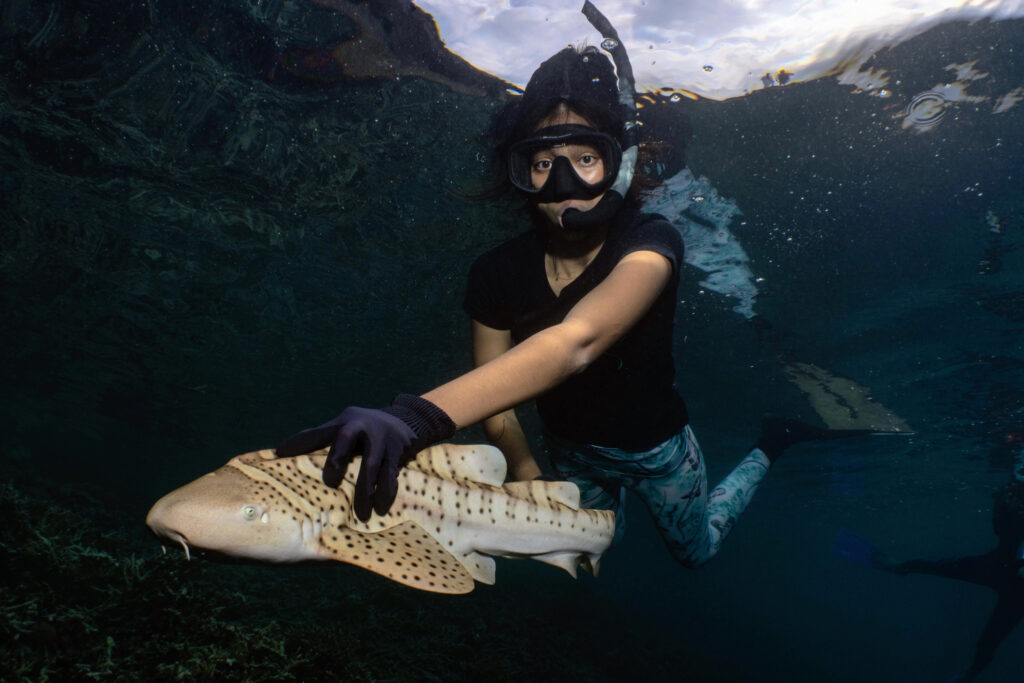
After half a decade of collaborative research, the green light finally came this summer when Anna Byczynski, a supervisor of Shedd’s tropical marine fishes exhibit, plunged into the habitat in Chicago with her trademark pink gloves.
Diving among vibrant, psychedelic-patterned mandarin dragonets and well-camouflaged spotted wobbegongs in the 400,000-gallon habitat, Byczynski carefully pried the brown eggs from the rocks.
To check their health, she stripped away the matted wispy and sticky tendrils that surround the eggs, numbered and tagged them individually and shone an underwater flashlight from behind in a process known as “candling.” Illuminating the amber-colored capsules revealed a small silhouette of pulsating life. An umbilical cord, a “wiggly stick” of a body and eventually, after a few weeks, the faint outline of a shark.
This story is funded by readers like you.
Our nonprofit newsroom provides award-winning climate coverage free of charge and advertising. We rely on donations from readers like you to keep going. Please donate now to support our work.
“For me, this has been very full circle—to take care of the adults, watch them lay the eggs, grab the eggs, candle the eggs, see that there’s an embryo developing and then ship that out—it’s something I’m very proud to be a part of,” said Byczynski.
Once the strongest eggs were selected—the offspring of “super mom” Cleo and dad Link—they began their long and winding journey to the nursery at Kri Island in Raja Ampat.
When the newest additions arrived by boat last month, a team of “shark nannies” stood by to receive the cases and check how they’d fared on the journey. Every arrival is a mix of excitement and anxiety after the multi-leg, multi-day journey; previous unboxings have even resulted in surprise in-transit hatchings.
Shark eggs are inspected with a torch in a process known as “candling”. Credit: Rachel Mittelstaedt/Shedd Aquarium
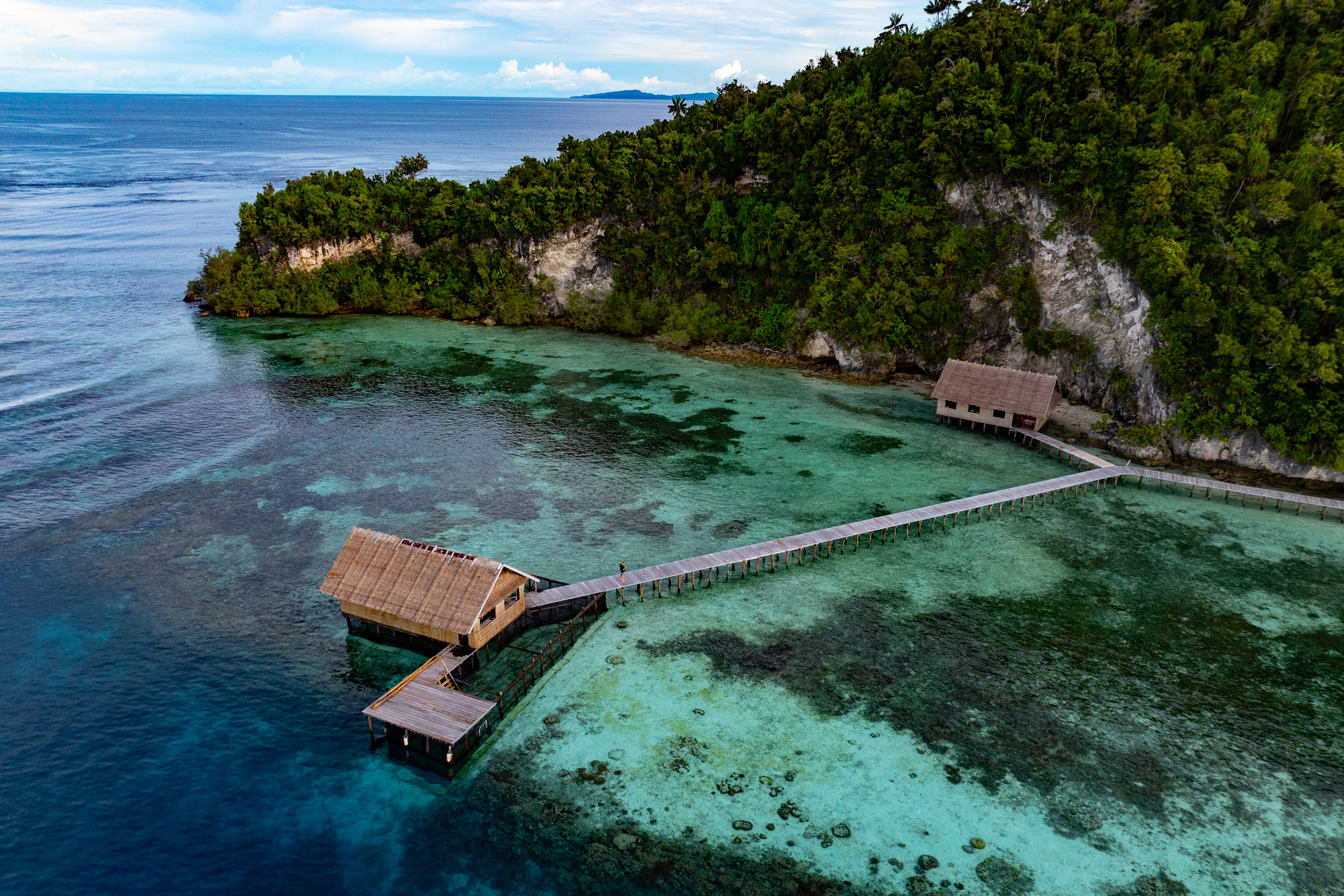
This time, however, all four shark embryos had remained cocooned in their capsules ready to gently acclimate to the warm tropical waters and enter a period of incubation expected to last four to seven months.
“I call it the assembly line of baby sharks. It goes from eggs to babies to release,” said Ichida, the ReShark program manager, noting that the hatched sharks will be held in open sea pens for six to 10 months to ensure the highest chance of survival.
The sea pen, anchored to the seafloor directly below the nursery, exposes the sharks to tidal currents and swells and lets them hunt for any live prey that slips through the net.
To date, the program has released 75 sharks into the wild and trained more than 50 local Indonesians. Ichida is as proud of the latter as she is of the former.
“I also call it an assembly line of talent because we’ve had school kids who became interns who became shark nannies who went on to graduate studies using the data,” Ichida said.
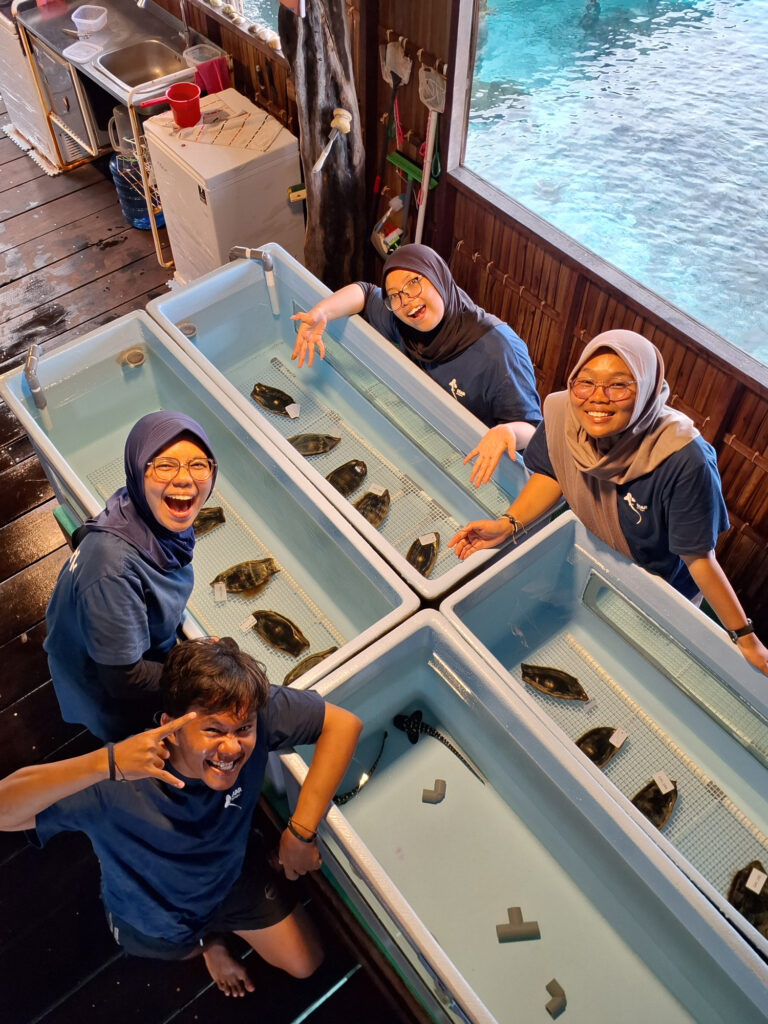
As benthic feeders, zebra sharks spend their days vacuuming and crunching mollusks and crustaceans as their primary prey. The greatest challenge for the ReShark team is therefore not water filtration or monitoring behavior, it’s finding enough snails to feed the ever-hungry, ever-growing baby sharks.
“Now we just go around Raja Ampat trying to look for jetties that have enough snails,” Ichida said. To meet demand, the team is even building partner relationships with local women-led groups who forage lush mangrove forests for snails and clams themselves, transforming traditional food-gathering techniques into a steady supply of shark suppers.
Once they are three or four feet in length, the Shedd Aquarium sharks will be rewilded into the jeweled waters of western Papua, and there will almost certainly be tears. The nannies who raise them know every individual’s personality and witness them mature from pups to playful predators: “Every time I go to the nursery, there’s a new favorite,” said Ichida, highlighting the close bond the care team have with their cartilaginous children. “Right now my favorite is one named Esta. She’s a sunbather, she likes to just chill in the seagrass.”
ReShark’s goal is to release 500 individuals by 2032—a figure that population analysis shows to be the minimum required for the species to rebound. And telemetry tracking data of those already in the wild has shown the sharks capable of covering hundreds of miles across deep ocean trenches and even of breaking the species’ known depth record.
Sightings of the sharks swimming among coral reef outcrops have also skyrocketed. Between 2001 and 2019, across 15,000 hours of monitoring, there were just three or four individuals seen. In the first half of the year, there have already been 10.
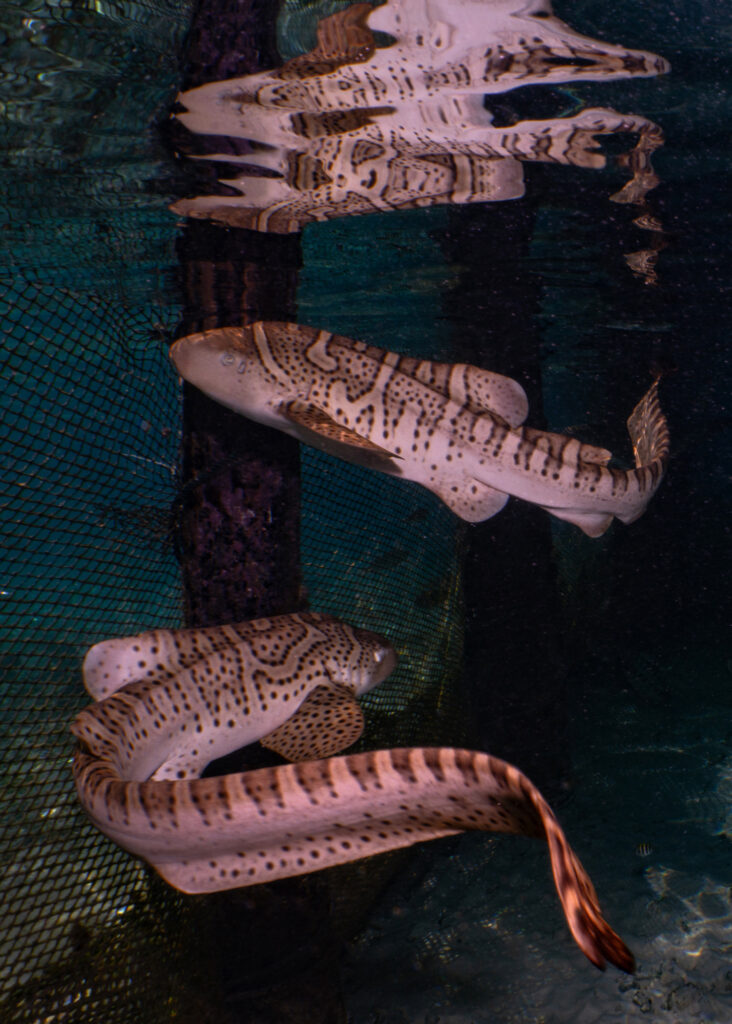
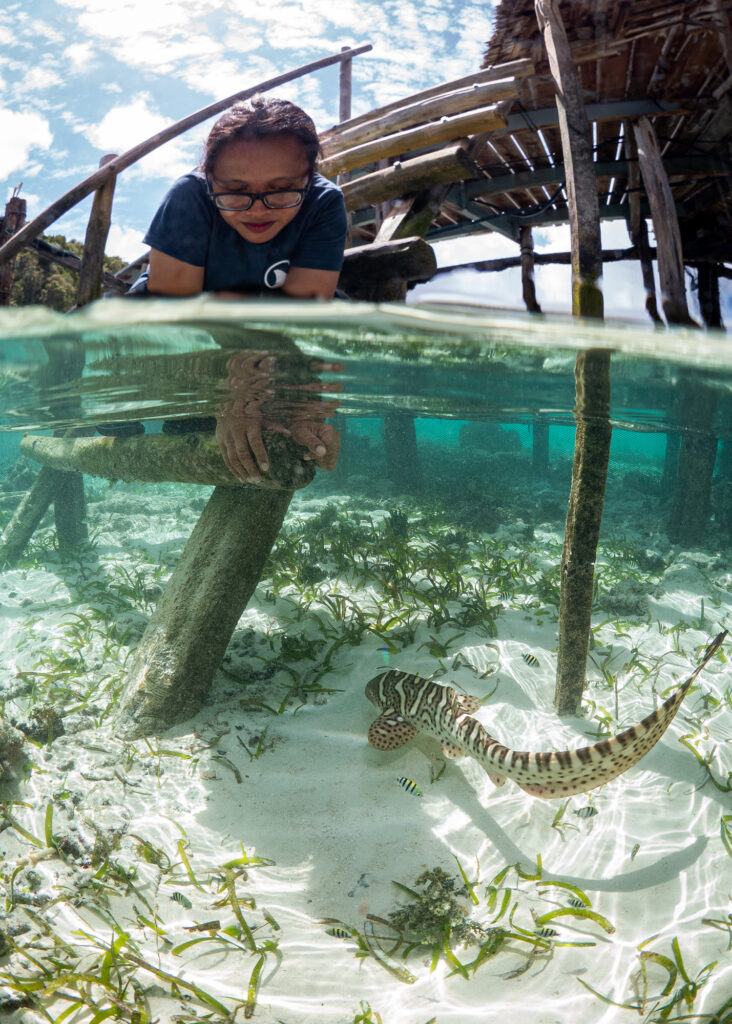
Even the artisanal fishermen—who might have once been responsible for their depletion—are engaged in the conservation measures. One fisher, so moved by the initiative, sent Ichida and the “shark mamas” a video of himself leaping to the water to grab a shark pup that was swimming toward a fleet of boats with baited lines. Identified later by her unique spots as Karen, a pup who had been released eight months earlier, the encounter suggested to Ichida that community conversations around shark conservation are changing.
“I’ve seen the eyes of fishers in Raja Ampat and the kids. It’s hard to hate a baby shark,” said Ichida, laughing at the bizarreness of the fisherman’s video. “We don’t need to do much, they sell themselves!”
Whether or not translocating captive-laid eggs will prove to be the future of marine conservation for viable species or simply a Band-Aid is still yet to be seen. But for Kessel, the Shedd Aquarium’s director of marine research, the success of the StAR Project so far proves that when well-enforced marine areas fuse with cutting-edge science and international efforts, the ocean can heal.
“An area that was once fished heavily has since been turned into a very large, very well-monitored and enforced marine protected area,” said Kessel. “Which gives us the right conditions to release animals in good faith knowing that we’re not just feeding the fishery, we’re actually giving these animals a chance.”
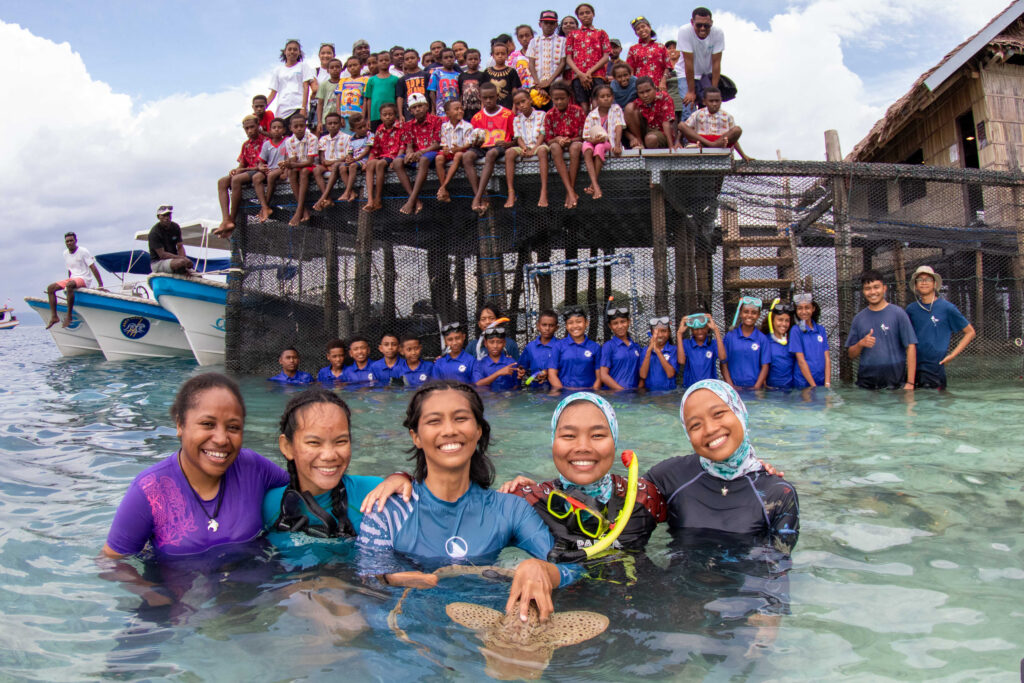
And that “chance” is already compounding. The team in Indonesia believes marine rewilding programs can act as “a carrot for government” to institute protections. In neighboring Thailand, for example, the government recently included zebra sharks in wildlife conservation laws and in October 2025, the first Indo-Pacific leopard sharks were released west of the Wallace Line.
Long before Ichida will release the 500th zebra shark in Raja Ampat, she will also have seen releases in Fiji and the Maldives, with sites expected in both nations next year. And it’s not just sharks. The team is preparing to add bowmouth guitarfish—a critically endangered ray with a thorny ridgeline and wide winged bodies—back to the west Papuan ecosystem.
In Chicago, the Shedd staff are busy designing new educational displays to describe and track the journey of their recently departed eggs, with the trans-Pacific relocation intended to show visitors what aquariums can do for creatures in crisis.
“Everything we do needs to have a true purpose or application to conservation and management,” said Kessel, who credits his own career with touring public aquariums as a boy in the U.K. “Not only is this a great benefit to this endangered species in this location but it’s also proof of concept. This is a new tool in our conservation toolbox.”
About This Story
Perhaps you noticed: This story, like all the news we publish, is free to read. That’s because Inside Climate News is a 501c3 nonprofit organization. We do not charge a subscription fee, lock our news behind a paywall, or clutter our website with ads. We make our news on climate and the environment freely available to you and anyone who wants it.
That’s not all. We also share our news for free with scores of other media organizations around the country. Many of them can’t afford to do environmental journalism of their own. We’ve built bureaus from coast to coast to report local stories, collaborate with local newsrooms and co-publish articles so that this vital work is shared as widely as possible.
Two of us launched ICN in 2007. Six years later we earned a Pulitzer Prize for National Reporting, and now we run the oldest and largest dedicated climate newsroom in the nation. We tell the story in all its complexity. We hold polluters accountable. We expose environmental injustice. We debunk misinformation. We scrutinize solutions and inspire action.
Donations from readers like you fund every aspect of what we do. If you don’t already, will you support our ongoing work, our reporting on the biggest crisis facing our planet, and help us reach even more readers in more places?
Please take a moment to make a tax-deductible donation. Every one of them makes a difference.
Thank you,

Fisheries Reporter
Johnny Sturgeon is a London-based reporter covering fisheries and aquaculture. Joining us from the Outlaw Ocean Project, he has experience producing in-depth maritime investigations for nonprofit newsrooms. A former boatbuilder, he holds a B.A. in History & Politics from the University of Oxford, and an M.S. from Columbia Journalism School.
