

Close Menu
NCIJ Network NCIJ Network
    What's Hot

    Ford’s new electric truck, ‘Fathom’, starts at $28,350

    August 6, 2026

    Cybersecurity needs a new operating model

    August 6, 2026

    Crypto Wrench Attacks Steal Over $30M in 2026: Chainalysis

    August 6, 2026
    Facebook X (Twitter) Instagram
    Trending
    • Ford’s new electric truck, ‘Fathom’, starts at $28,350
    • Cybersecurity needs a new operating model
    • Crypto Wrench Attacks Steal Over $30M in 2026: Chainalysis
    • Major study challenges long-held fears about acetaminophen and ibuprofen use in babies
    • Latest chapter up and running at Chinese oilfield project housing 19 offshore platforms
    • How to use an inflation calculator
    • Israel charges settler for killing Palestinian activist Awdah Hathaleen in occupied West Bank
    • Council wants pubs in London’s Soho and West End to ban standing | Hospitality industry
    • About
      • Our Team
      • Editorial Policy
      • Editorial Independence
      • International Support
    • Trust & Standards
      • AI Usage Policy
      • Conflict of Interest Policy
      • Corrections Policy
      • Ethics Policy
      • Fact-Checking Policy
      • Source Protection
    • Get Involved
      • Guide for Sources
      • Support Independent Journalism
    • Legal
      • Cookie Policy
      • Privacy Policy
      • Terms of Use
    Facebook X (Twitter) Instagram
    NCIJ Network NCIJ Network
    Thursday, August 6
    • Home
    • World
    • Ai
    • Business
    • Politics
    • Health
    • Crypto
    • Science
    • Technology
    • Cybersecurity
    • Defense & Security
    • Economy
    • Energy
    • Europe
    • More
      • Fact Check
      • Investigations
      • Opinion & Analysis
      • Environment
    NCIJ Network NCIJ Network
    Home»Science

    The Paradox of Lençóis Maranhenses National Park

    NCIJ NETWNCIJ NETWORKBy NCIJ NETWNCIJ NETWORKAugust 6, 2026 Science No Comments3 Mins Read
    Share
    Facebook Twitter LinkedIn Pinterest Email

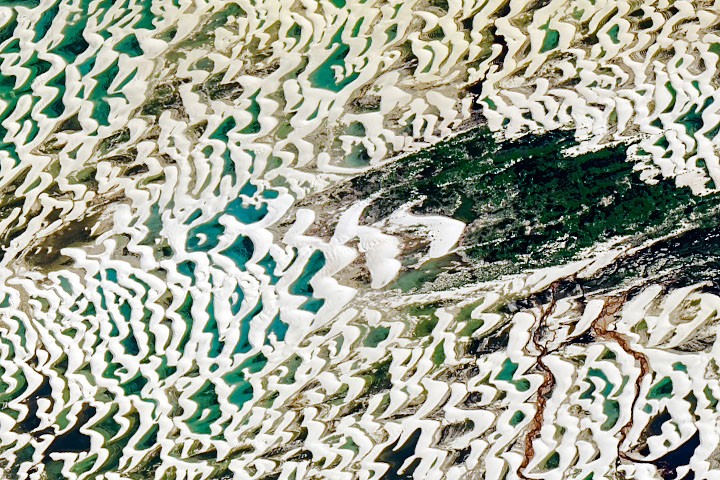
    The coastal dune system in Lençóis Maranhenses National Park in northeastern Brazil is among the most surreal landscapes on Earth. At first glance, the park looks like a desert, but it is far from it. This place receives about 125 centimeters (50 inches) of rain per year—slightly more than Seattle and double what falls in London. 

    The result is a paradox: rows of sparkling white quartz dunes, some rising 30 meters (100 feet), soar over a mosaic of blue and green freshwater lagoons. The park’s name stems from the Portuguese word lençóis, meaning “bedsheets,” a reference that makes the most sense when the park is viewed from afar. From that perspective, the sweeping curves of the largest coastal dune field in South America resemble a rumpled, white bedsheet.

    These Landsat 9 images were captured in June 2026, around the time when lagoon water levels typically peak. The partially impermeable layer of bedrock and clay beneath the sand prevents the lagoons from draining during the wet season. However, as rains subside between August and November, the water table falls, and by December, most of the lagoons dry up.

    The dune field, a tan area within an expanse of green, is the centerpiece of the park. It spans about 900 square kilometers (350 square miles), roughly the size of New York City. From above, shallower lagoons appear light blue, often taking on turquoise or aquamarine hues as sunlight reflects off the sand below. Deeper lagoons are darker, a result of the deeper water absorbing more red, yellow, and green wavelengths, leaving mostly blue light to scatter back. Suspended sediment, microscopic algae, and dissolved organic matter also contribute to the array of colors, giving some lagoons greener and browner tones.                                    

    Green vegetation surrounds the dune field, which sits at the intersection of three Brazilian biomes: the Amazon rainforest to the west, the tropical wooded savannas of the Cerrado to the south, and the dry shrublands and thorn forests of the Caatinga to the east. Closest to the dunes are mangroves and restinga forests, ecosystems well adapted to sandy, coastal soils.

    The dune field exists because of the rare convergence of geologic and climatic conditions. Rivers, including the Mearim and Parnaíba, deliver the key ingredient—quartz sand—to this unusually flat portion of the Maranhão coastline in massive quantities. It has accumulated here over the past few hundred thousand years driven in part by fluctuating sea levels and shoreline transgression and regression. Persistent easterly trade winds have also played a critical role. During the dry season, winds often reach at least 50 kilometers per hour, fast enough to build the dunes and push them westward at a pace of roughly 4 to 25 meters per year. That is fast for sand dunes, though not the fastest in the world. Satellites have tracked small barchan dunes in Namibia’s Sperrgebiet region moving at rates exceeding 80 meters per year.

    Lençóis Maranhenses national Paradox Park
    NCIJ NETWNCIJ NETWORK
    • Website

    Keep Reading

    Major study challenges long-held fears about acetaminophen and ibuprofen use in babies

    Majority of England’s rivers and lakes fail pollution review

    THC medication made PTSD nightmares disappear for more than a third of patients

    Dirty air may trigger painful rheumatoid arthritis flares

    Cashing in on SpaceX: ‘Every chance I get, I’ll sell a little more’

    NASA’s Perseverance Captures Phobos and Earth

    Add A Comment
    Leave A Reply Cancel Reply

    Editors Picks

    Ford’s new electric truck, ‘Fathom’, starts at $28,350

    August 6, 2026

    Cybersecurity needs a new operating model

    August 6, 2026

    Crypto Wrench Attacks Steal Over $30M in 2026: Chainalysis

    August 6, 2026

    Major study challenges long-held fears about acetaminophen and ibuprofen use in babies

    August 6, 2026
    Latest Posts

    Can you identify Taylor Farms products by codes beginning with ‘TF’ printed on bags?

    July 23, 2026

    The Guardian view on Britain’s uninhabitable homes: as temperatures rise, a new approach is needed | Editorial

    July 23, 2026

    Can Wisconsin voters void a returned absentee ballot?

    July 23, 2026

    Subscribe to News

    Get the latest sports news from NewsSite about world, sports and politics.

    NCIJ Network is an independent digital news platform delivering trusted investigative journalism, European and global news, in-depth analysis, and fact-based reporting with accuracy, transparency, and integrity.

    Facebook X (Twitter) Instagram Pinterest YouTube

    Ford’s new electric truck, ‘Fathom’, starts at $28,350

    August 6, 2026

    Cybersecurity needs a new operating model

    August 6, 2026

    Crypto Wrench Attacks Steal Over $30M in 2026: Chainalysis

    August 6, 2026

    Subscribe to Updates

    Get the latest creative news from FooBar about art, design and business.

    Type above and press Enter to search. Press Esc to cancel.