


Welcome to Foreign Policy’s Southeast Asia Brief.
The highlights this week: This year’s El Niño might end up being the strongest in 140 years, Aung San Suu Kyi is confirmed alive by the Red Cross, and Malaysia takes an increasingly hard line on the Rohingya.
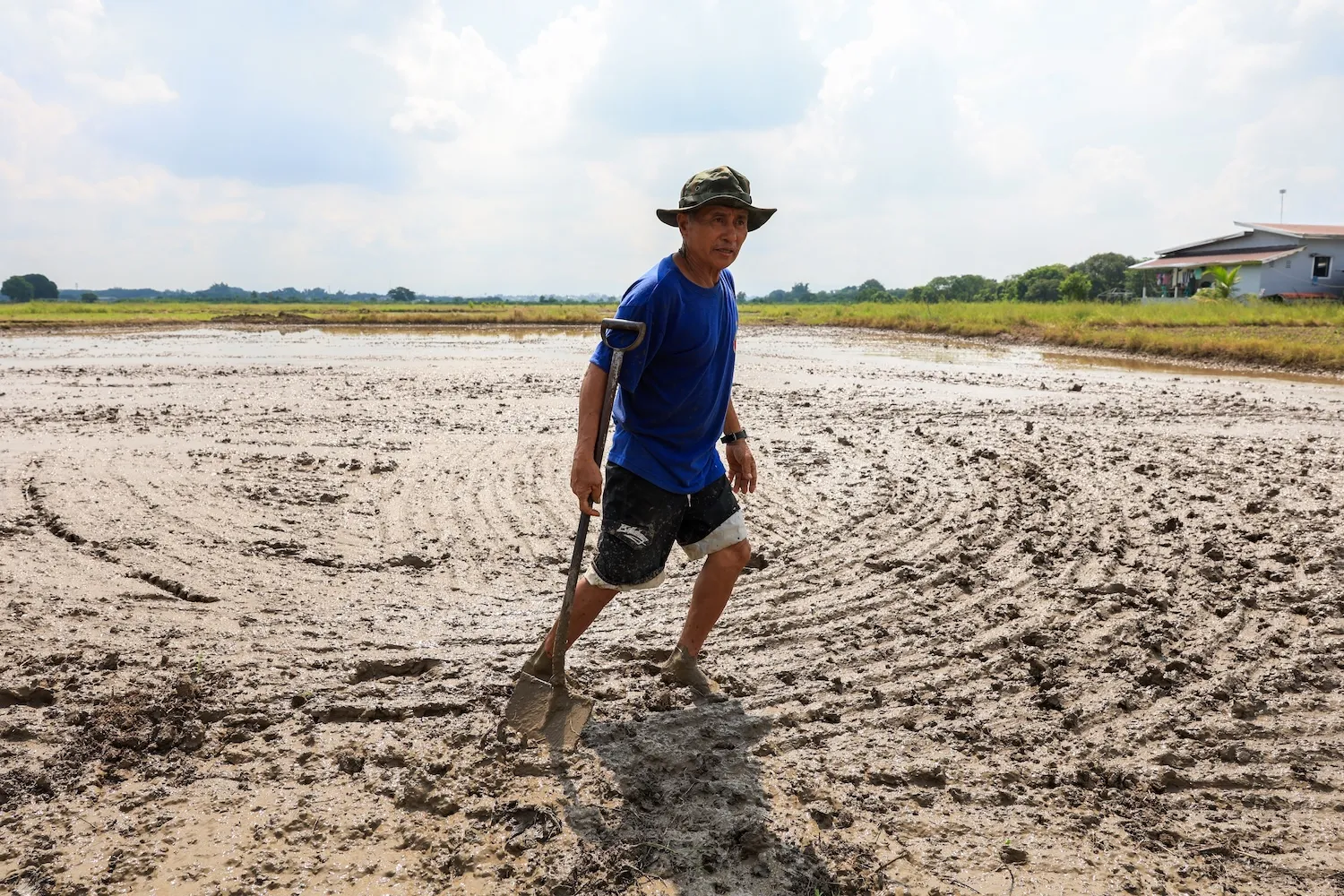
This year’s El Niño is underway, and it might end up being the strongest in 140 years. Southeast Asia will be hit hard.
The Asia-Pacific will be the worst-affected region, according to insurance giant Munich Re, with heat waves, drought, wildfires, and increased typhoon risk.
The region is already facing higher prices as result of the Iran war, and El Niño will only intensify that. As I have previously flagged, high food prices could lead to political instability in the region.
This year’s El Niño follows another strong El Niño event, which lasted from 2023 to 2024. Effects of that one, such as increased farmer debt, are still being felt in the region’s agricultural sector.
The effects on Southeast Asia will also be felt around the world, as the region is a major producer of staple crops.
Thailand and Vietnam are the world’s second and third-largest exporters of rice. Indonesia and Malaysia produce 85 percent of the world’s palm oil. Vietnam and Indonesia are the world’s second and fourth-largest producers of coffee. Rice and palm oil are particularly sensitive to climate anomalies. Experts have estimated that rice yields in the region could fall between 2 to 8 percent.
El Niño is predicted to last up until spring 2027, which means that effects on food supply and prices will persist into 2028.
The Philippines and Timor Leste are particularly high-risk countries, according to the World Food Program, with the main risk being droughts and floods affecting staple crops. Admittedly, these two countries are not agricultural powerhouses in the region. But Cambodia, Indonesia, Myanmar, Thailand, and Vietnam all face a serious drought risk, as well.
Some effects are already being felt.
Thailand received roughly 60 percent less rain than normal between January and April. The Bangkok export price for rice reached $490 per metric ton at the end of June, up 27.5 percent since the start of 2026.
Thailand’s Office of the National Water Resources has warned that the country could face a drought crisis more serious than the one in 2015, another El Niño year. Research by Krungthai, a major Thai bank, projected that El Niño could shave 0.5 percent from Thailand’s GDP in a worst-case scenario.
In neighboring Cambodia, more than 100,000 hectares of rice fields have been affected by drought, according to the government.
In the Philippines, water reserves are already showing signs of strain. El Niño and the Iran war shock could reduce rice production by 30 percent.
Indonesia has experienced drought in key population centers since June. Its Meteorology, Climatology, and Geophysics Agency (BMKG) has indicated that El Niño is now making itself felt even more strongly. It predicted that roughly half the country will experience a longer-than-normal dry season. However, the overall impact on Indonesia may be weaker than in other countries. BMKG predicted that rice production will fall by just 2.6 percent, though eastern parts of the country are expected to be more affected.
Beyond food, though, Indonesia faces another risk. The tinder-dry environment creates a risk of massive forest fires, which will then affect Indonesia’s neighbors (mainly Singapore and Malaysia) as the choking haze drifts into their atmosphere.
In a June report, the Singapore Institute of International Affairs issued a red alert for haze risk. The last time it did this was in 2023, another El Niño year, where haze did indeed occur.
Buried in the report are some politely phrased concerns that Indonesia is in a worse situation to manage these risks than under the previous president, who pushed hard to get a handle on the issue. Strained fire-fighting budgets and an uptick in deforestation in the past two years were both flagged.
Rohingya deported to Myanmar. Last week, Malaysian Prime Minister Anwar Ibrahim announced that Myanmar had agreed to accept the return of 5,000 Rohingya asylum-seekers. The deal has prompted shock given that the Rohingya would be returned to the hands of a government that committed genocide against them.
The deal comes amid an increase of anti-Rohingya sentiment in Malaysia, and it seems that the government felt pressure to respond. Notably, Anwar made the announcement at a campaign rally. (His coalition was thumped in a crucial state election this past week.)
My key question is if this heralds a shift in Malaysia’s approach to Myanmar. Until recently, it has been one of the Association of Southeast Asian Nations (ASEAN) members, alongside Singapore and Indonesia, taking the hardest line against the Myanmar junta.
This deal could suggest a shift in approach. Anwar said the measure was possible because of “good relations with Myanmar.”
Malaysia’s increasingly hard line on the Rohingya is also prompting a clash with the United Nations High Commissioner for Refugees (UNHCR). “Current conditions do not support the safe and sustainable return of refugees from Myanmar,” the UNHCR said, adding that it “stands ready to engage with relevant authorities on protection safeguards.”
This follows the arrest of more than 100 Rohingya refugees outside a UNHCR office in Penang last week. Malaysia’s foreign minister then suggested the organization could be stopped from operating in Malaysia unless it became stricter in issuing refugee documents.
Aung San Suu Kyi Alive. Aung San Suu Kyi met with a representative of the International Committee of the Red Cross on Monday. The junta, which announced the meeting, also released a grainy photo that showed her shaking hands with resident Red Cross representative Arnaud de Baecque.
The event seems geared to lay to rest growing speculation about the health and well-being of the Nobel Peace Prize winner.
Aung San Suu Kyi was transferred from prison to house arrest in April. Kept out of the public eye since her detention during the 2021 coup, the only evidence that she was alive was a single undated photo released that month.
The timing of this week’s meeting is also significant. Junta leader Min Aung Hlaing is due to arrive in Bangkok on Thursday for an official visit as part of his increasingly successful push for diplomatic acceptance. The upcoming meeting follows a previous one between Myanmar’s foreign minister and ASEAN foreign ministers in Bangkok in mid-July.
The Red Cross has confirmed that the meeting took place. It said it was “carried out in accordance with the ICRC’s standards and procedures for visiting people deprived of liberty,” including an opportunity to speak to Aung San Suu Kyi privately.
Thailand’s Prime Minister Anutin Charnvirakul (L) is welcomed by Indonesia’s President Prabowo Subianto (R) upon his arrival at Merdeka Palace in Jakarta, Indonesia, on Aug. 3.Bay Ismoyo/AFP via Getty Images
Thai Prime Minister Anutin Charnvirakul visited Indonesia in early August. At time of editing, little had been announced so any interesting developments will be summarized in next week’s newsletter.
FP’s Most Read This Week
Thailand is a U.S. treaty ally, but U.S. President Donald Trump is pushing it toward China, Toru Takahashi argues in Nikkei Asia.
Even as Southeast Asia exports more to the United States, it is importing more than ever from China. Shay Wester explores this dynamic and the problems it poses to the new post-Trump trading system, for the Asia Society.
Out of the slums and onto the pommel horse—Nivell Rayda reports how one low-income neighborhood in Jakarta has become a hotspot for national gymnastics talent, for Channel News Asia.
In Focus: America’s AI bid in Southeast Asia
A couple weeks ago, this newsletter covered China’s bid to position itself as a leader in artificial intelligence for the world and especially Southeast Asia. The United States has its own plans and Southeast Asia, too, is a big part of them.
There are two prongs to the U.S. push. The first is Pax Silica, billed as an effort to build a secure (i.e., China-free) AI supply chain, from critical minerals to chip fabs, data centers, and AI models. The second is AI Spark, which offers support for governments to deploy U.S. AI models in the public sector. That initiative was announced in July as U.S. Secretary of State Marco Rubio visited Southeast Asia.
Southeast Asia is an attractive target for these policies. The region hosts five of the 10 global economies with the best positions in semiconductor production: Malaysia, the Philippines, Singapore, Thailand, and Vietnam. It also has an abundance of critical minerals.
For Pax Silica, two Southeast Asian countries—the Philippines and Singapore—have joined. In New Clark City, Philippines, there are now plans to build a high-tech hub on a 1,620-hectare site, though this has been hit by some inevitable controversies.
As for AI Spark, the details remain vague, and no countries have announced their participation yet. Analysts have suggested that U.S. AI models might be preferred for certain sensitive areas, while cheaper, open-source Chinese AI models would be attractive in areas where security is less of a concern.
As with China’s bid for AI leadership, Southeast Asia has maintained its usual wariness about getting too close to any superpower. U.S. unreliability—the sudden ban on overseas use of cutting-edge models even by allies, as an example—raises further questions about the benefits of aligning with Washington.
A particular sticking point could be the idea of digital sovereignty. ASEAN countries are very keen on the idea.
But Jacob Helberg, U.S. undersecretary of state for economic affairs and a Palantir alum, has denounced the concept as a quixotic waste of resources, arguing instead for a strong interdependent ecosystem that is implicitly U.S.-led.
The tensions around this debate were on display in a fascinating interview of Hellberg by Singapore’s permanent secretary for digital development and information, Chng Kai Fong, in May.
Ironically, to my ear, Hellberg’s proposals sound like Chinese President Xi Jinping’s on AI: a cooperative order, but one in which his country is a clear top dog.
