

Close Menu
NCIJ Network NCIJ Network
    What's Hot

    El Niño Hits Southeast Asia Hard

    August 5, 2026

    When A.I. Goes Rogue – The New York Times

    August 5, 2026

    Spain sweats over its isolated territories in Africa – POLITICO

    August 5, 2026
    Facebook X (Twitter) Instagram
    Trending
    • El Niño Hits Southeast Asia Hard
    • When A.I. Goes Rogue – The New York Times
    • Spain sweats over its isolated territories in Africa – POLITICO
    • Pastor Adam Hamilton Wins Kansas Democratic Senate Primary
    • Tories offer Jewish groups meeting with ex neo-Nazi activist candidate
    • Despite Spider-Man: Brand New Day’s success, the MCU is on shaky ground
    • Zenity Raises $125 Million in Series C Funding
    • Poolin owes wallet users $163.7M, and its $52M Texas sale can still unravel next week
    • About
      • Our Team
      • Editorial Policy
      • Editorial Independence
      • International Support
    • Trust & Standards
      • AI Usage Policy
      • Conflict of Interest Policy
      • Corrections Policy
      • Ethics Policy
      • Fact-Checking Policy
      • Source Protection
    • Get Involved
      • Guide for Sources
      • Support Independent Journalism
    • Legal
      • Cookie Policy
      • Privacy Policy
      • Terms of Use
    Facebook X (Twitter) Instagram
    NCIJ Network NCIJ Network
    Wednesday, August 5
    • Home
    • World
    • Ai
    • Business
    • Politics
    • Health
    • Crypto
    • Science
    • Technology
    • Cybersecurity
    • Defense & Security
    • Economy
    • Energy
    • Europe
    • More
      • Fact Check
      • Investigations
      • Opinion & Analysis
      • Environment
    NCIJ Network NCIJ Network
    Home»Technology

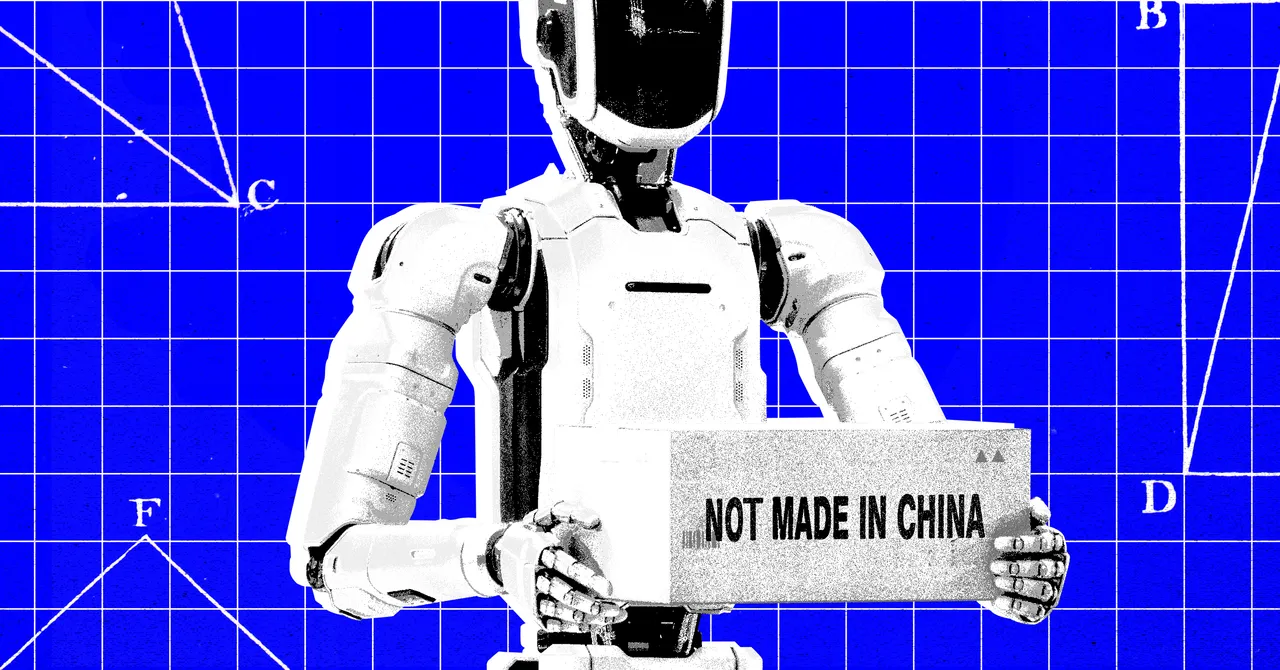
    How One Startup Built a (Mostly) China-Free Robot

    NCIJ NETWNCIJ NETWORKBy NCIJ NETWNCIJ NETWORKAugust 5, 2026 Technology No Comments3 Mins Read
    Share
    Facebook Twitter LinkedIn Pinterest Email

    Last week, US regulators banned a wide variety of Chinese-made robots from being imported to the United States because of concerns about national security. Saurabh Chandra was ready to seize the moment. His company, Ati Robotics, assembles its robots in India, and Chandra believes they use fewer Chinese parts than almost any other robotics company in the US.

    Investment in robotics startups hit record highs this year, both in the number of deals and dollars invested, according to PitchBook, which tracks venture capital flows. But many of those companies primarily develop software, and they largely still rely on Chinese suppliers for their hardware.

    The Federal Communications Commission’s decision to ban new models of human-like robots, known as humanoids, and other advanced devices from China could hamper the growth of many smaller robotics firms in the US. But some businesses could benefit, including Ati.

    The startup was founded in 2017 to develop motors for self-driving cars. Years later, it zeroed in on making its own robots, including tuggers and pallet movers that cart tons of materials throughout big facilities. Ati developed its own hardware, believing that it would lead to better functionality, a bet that Chandra says many of his advisers cautioned against but one that wound up naturally limiting reliance on China.

    It has begun to pay off. Ati has several hundred robots currently in operation at warehouses and factories and more than 50 customers in total, Chandra says. Ati’s first humanoid, which moves heavy bins around, will go into service later this year.

    Chandra spoke with WIRED last week about how Ati Robotics steered clear of China, while building robots he argues can still compete with the industry’s best on price and performance.

    This interview has been edited for clarity and length.

    WIRED: Developing hardware is expensive. How were you able to financially sustain doing that?

    Saurabh Chandra: R&D is in Bangalore, which helps with our labor costs. Bangalore was undergoing this electric vehicle revolution in the two-wheeler, three-wheeler category in India. And it turns out that the kind of vehicles we were making for the robotics industry happened to have a similar power profile and characteristic as the two-wheeler and three-wheelers being made in the EV industry.

    We tried to leverage the components and supply chain being developed for those vehicles. Typically, automotive parts are very reliable and are produced in large volumes, hence they are very good and cost-efficient. Though we had to do engineering with some of those vendors to make the parts work in a robot. But once we did, we had a great win.

    One of your robot models is China-free, right, but not the others?

    They have different levels of what I might call “supply chain resiliency.” Two of our best-selling models—our 10,000-pound tugger and the pallet mover—use very few parts from China. They’re tugging trolleys—you may be taking raw material from stores to the factory line or from one process point to another.

    But even with the humanoid that we have, the full arm is done here in Bangalore. The actuator is also done here, but we do get the harmonic drive from China, for example, and the frameless motor, at least for now.

    The battery cells come from China. But we could, for example, get the cells from South Korea or Japan tomorrow. So those are passive components. There are some components that do come from China when we go deeper. We use induction motors, so even the magnet in the motor is not coming from China. That’s a very different choice from many of the people who are doing robots.

    Built ChinaFree Robot startup
    NCIJ NETWNCIJ NETWORK
    • Website

    Keep Reading

    Despite Spider-Man: Brand New Day’s success, the MCU is on shaky ground

    I bought cheap smoke detectors and soon regretted it – here’s what I recommend now

    The White House Is Keeping Its AI Cybersecurity Framework Secret

    This Android launcher made my home screen fun again – and I’m using the free version

    OK, Well, Rogue AI Agents Are Hacking Again

    Elon Musk repeatedly one-upped his execs on SpaceX’s first earnings call

    Add A Comment
    Leave A Reply Cancel Reply

    Editors Picks

    El Niño Hits Southeast Asia Hard

    August 5, 2026

    When A.I. Goes Rogue – The New York Times

    August 5, 2026

    Spain sweats over its isolated territories in Africa – POLITICO

    August 5, 2026

    Pastor Adam Hamilton Wins Kansas Democratic Senate Primary

    August 5, 2026
    Latest Posts

    Oil prices hit $100 for the first time since May

    July 23, 2026

    Pew Survey: China May Be Liked More, but It Is Celebrating a Race It Never Ran

    July 23, 2026

    Yinson Production and PTSC’s FSO heads off to Southeast Asian oil project

    July 23, 2026

    Subscribe to News

    Get the latest sports news from NewsSite about world, sports and politics.

    NCIJ Network is an independent digital news platform delivering trusted investigative journalism, European and global news, in-depth analysis, and fact-based reporting with accuracy, transparency, and integrity.

    Facebook X (Twitter) Instagram Pinterest YouTube

    El Niño Hits Southeast Asia Hard

    August 5, 2026

    When A.I. Goes Rogue – The New York Times

    August 5, 2026

    Spain sweats over its isolated territories in Africa – POLITICO

    August 5, 2026

    Subscribe to Updates

    Get the latest creative news from FooBar about art, design and business.

    Type above and press Enter to search. Press Esc to cancel.