


Illustrators have spent years sounding the alarm about generative artificial intelligence startups training their models on artists’ work without permission. They’ve pointed out how the practice is tantamount to theft, and in response, many gen AI boosters have argued that it’s necessary for the technology’s evolution. This has led to contentious legal battles, but it’s also given rise to a new wave of AI startups like Pippa that market their services as being more ethical than the competition.
Like most companies selling access to text-to-video models, Pippa’s main product is short bursts of user-generated footage that can be cobbled together to tell visual stories. But what sets Pippa apart from other players in the gen AI video space is the way its business model is designed to pay artists directly. Every time a Pippa subscriber generates an image or a video clip whose style is derived from a human artist’s work, that artist is compensated by the platform.
Pippa’s cofounders, Hogan Shrum and Sean Wright, think that their focus on working with artists is what will attract customers. They also believe that their company will prove that AI firms can generate content ethically. But Pippa faces an uphill battle as it seeks to convince artists. Even as it tries to create an ethical spin on AI video generation, the company is still getting off the ground with the same sloppy models that other text-to-video services offer.
When I recently spoke with Shrum and Wright, they told me that they see Pippa as a way to move forward from “the bloody history that the AI industry has been built on.” The duo want to set an example for their peers and show the public how AI companies don’t necessarily have to steal to make their products work.
“All of these models from the past 18 months have been trained on real people’s art without their permission — that’s how it was built,” Wright said. “I harken it back to when Napster was a thing and everybody was stealing music. But then, Apple came out with the 99-cent song, Napster got shut down, and we figured out a different way to get musical artists paid.”
Pippa’s payments to artists aren’t very large on an individual basis — especially when you compare them to how much the service charges users for monthly subscriptions (which range from $14.99 to $99.99.) The company says that artists receive $0.005 per image and $0.003 per second of video. The more generations a user makes, the larger an artist’s payments become, and Pippa also gives them access to a cut of a 5 percent royalty pool that’s funded by the platform’s overall subscription revenue. In Pippa’s press materials, the company likens its royalty payment structure to Spotify’s — a curious choice given how many artists have spoken out about being shafted by the music streamer.
Pippa’s tech still involves using art that was scraped from the internet
Pippa — which launched in May — currently has around 800 paying subscribers, and while the company has only signed licensing / model training agreements with four human artists, Shrum said they are in talks to bring four more into the fold. Artists interested in working with Pippa must first go through a multi-step vetting process to verify that the illustrations they submit are actually theirs. Once an illustrator is approved, models trained on their art become available to Pippa’s subscribers. Additionally, the service provides artists a profile page, which can be used to direct people to their work outside of the platform. But Wright noted that Pippa also gives its partner artists the option to submit their work under pseudonyms if they are concerned about being seen as “crossing the picket line.”
“We’ve had so many conversations with artists where they’re like, ‘I love this, but I don’t want to get ostracized by my community,’” Wright explained. “We’re very early in this space, so there’s some apprehension to participate in it. But we think that can change as people see the economics of how we’re paying artists and that our intent is good.”
Though Pippa hopes to fully switch to models that are trained on datasets provided by its in-house artists, that technology is still built with open models that the company says “have initial training on the broader set of content out there.” Put more bluntly, Pippa’s tech still involves some degree of using art that was scraped from the internet without creators’ express consent. The company’s intentions may be good, but it doesn’t exactly have a way to completely solve for the creative theft that’s inherent to gen AI.

That issue isn’t unique to Pippa; it’s something that must be considered with every “ethical” AI startup whose bespoke models are trained on information that wasn’t created internally. This is why some companies — like Ben Affleck’s InterPositive — have made a point of emphasizing the fact that they develop wholly original, proprietary datasets of their own. But that requires a lot of upfront capital most startups don’t have access to, and the end result is usually very specialized AI tools that aren’t exactly designed for general consumers.
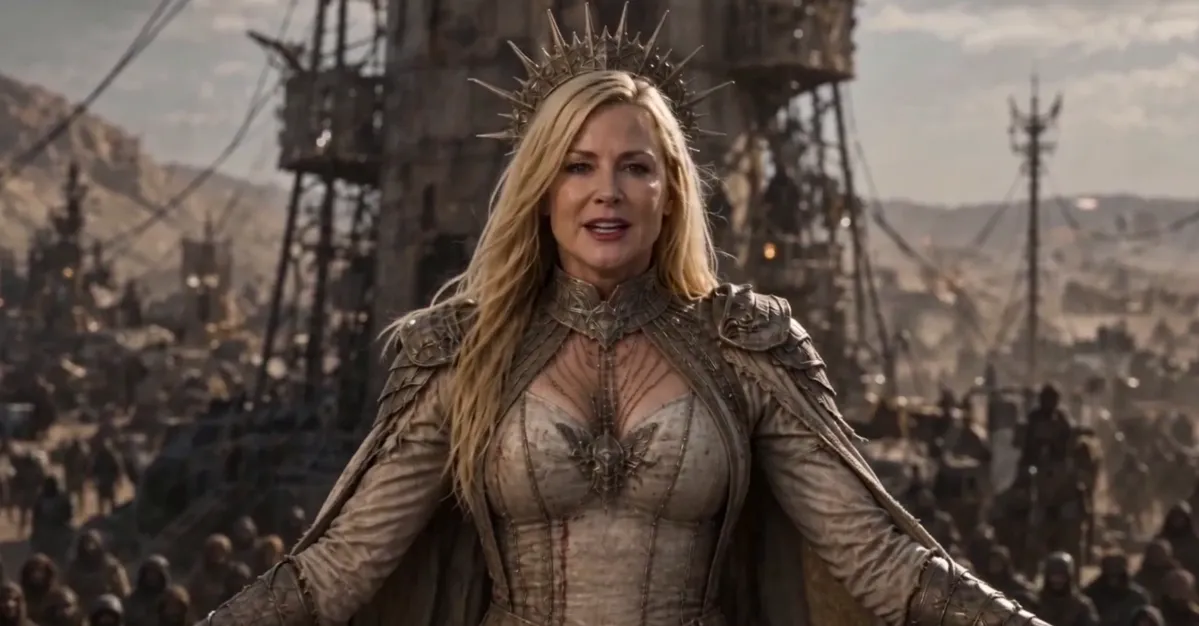
Scrolling through Pippa’s online portal where you can watch other people’s gen AI animations or prompt up your own, I didn’t see all that much that looked very different from what you would find from other text-to-video services. Right now, the site is mostly filled with kid-oriented content that’s doing a poor job of imitating Pixar’s polished aesthetics, and nothing really looks like it was inspired by an independent artist’s hand.
This makes some sense given that — while Pippa intends to incorporate more original art styles — it still uses many of the same cloud-based models that other platforms sell access to. In the near future, Pippa plans to incorporate ByteDance’s Seedance 2.5 model into its service, which may attract some subscribers because of the model’s ability to generate up to 30 seconds of video footage that can be fine-tuned without starting over from scratch. But in order for Pippa to really stand out from competitors that also offer Seedance 2.5, it will need to sign more in-house artists, which will depend on how well the company is able to pitch itself to potential partners.
Shrum and Wright believe that they will find more artists to work with, and that using Pippa will convince them to sell their communities on the idea of joining as well. In order for that to happen, though, public opinion about whether they really want to use gen AI would need to shift back in the technology’s favor.
