


- In July 2026, a claim spread online that trans dolls with interchangeable genitalia would be distributed to Minnesota classrooms in the fall.
- The rumor stemmed from from a report by conservative news outlet The College Fix, which focuses on higher-education news. Several other right-leaning news outlets repeated the claim.
- While it is true that a research group at the University of Minnesota has developed paper dolls with interchangeable internal reproductive organs and external genitalia due for release in 2026, the claim they will be distributed to classrooms in Minnesota or elsewhere isn’t supported by evidence and doesn’t appear to have any basis in reality. For this reason, we have left this claim unrated, pending further information.
- We have reached out to the makers of the doll to obtain further clarification. We have also reached out to the Minnesota Department of Education to ask whether the state bought the dolls in question and, if so, when it expected to receive them. We will update this report should we receive a response.
In July 2026, a rumor spread that trans dolls with interchangeable genitalia would be distributed to classrooms in Minnesota or elsewhere in the fall.
The claim spread across social media, including on X, Facebook and Instagram, with some underscoring the rumor that schools would acquire these dolls with taxpayers’ money.
The X account of Moms for Liberty, a far-right political organization that opposes LGBTQ+ and racially inclusive school curricula and was described as an extremist anti-government group by the civil rights advocacy watchdog Southern Poverty Law Center, also relayed the rumor, saying the dolls were going to schools to be used with students from kindergarten to high school (archived):
Meanwhile, several right-leaning news outlets, such as the tabloid The New York Post, Fox News and U.K.-based The Telegraph, spread the claim as well. It appears to have stemmed from a July 10 report in The College Fix, a conservative publication that focuses on higher-education news. The report quoted Quentin Van Meter, past president of another anti-LGBTQ+ group, the American College of Pediatricians, as saying the dolls are “just a grooming tool.”
In addition, several Snopes readers emailed and searched the website seeking confirmation that transgender dolls would really be distributed in Minnesota schools.
While it is true that a sex and gender health research group at the University of Minnesota that has received state and federal funding has developed paper dolls with interchangeable internal reproductive organs and external genitalia due for release in 2026, the claim they would be distributed to Minnesota classrooms wasn’t supported by evidence and did not appear to have any basis in reality.
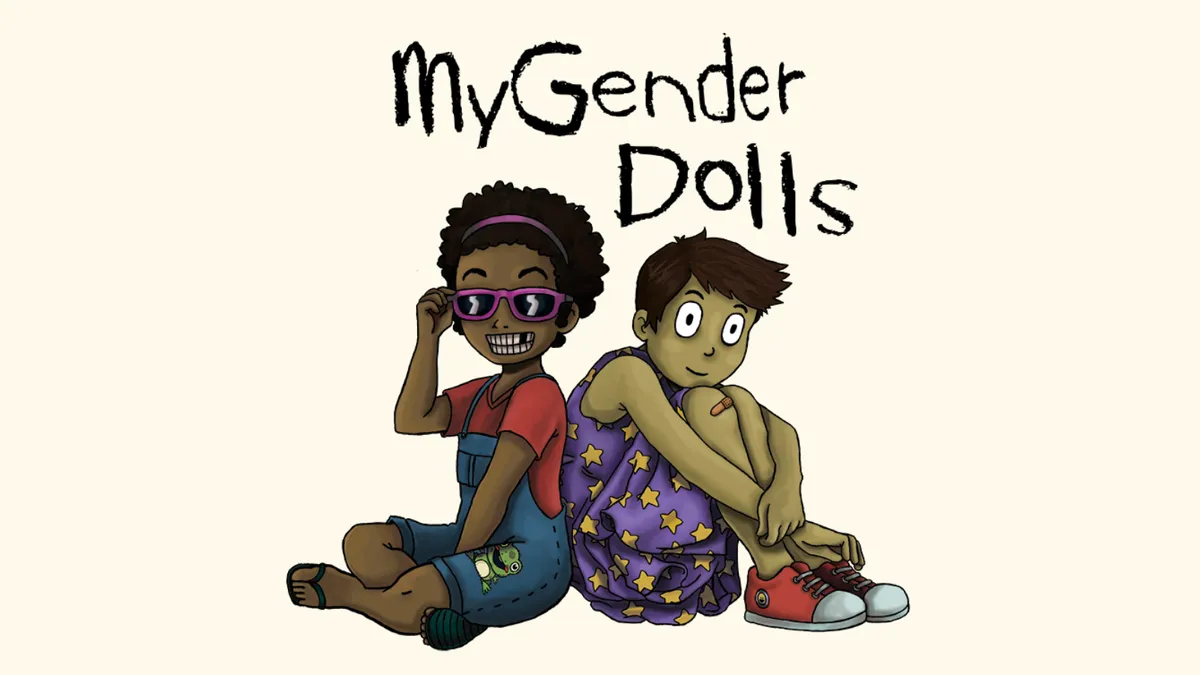
Contrary to the assertion that the dolls are a “grooming tool,” the MyGender Dolls website said they would be used for “therapeutic play,” specifically for children who have already expressed themselves as trans or “gender-diverse.” The dolls were designed for children as young as 4 and as old as 10.
Further, while the website said the dolls would be available by 2026, it was not clear whether schools in Minnesota or elsewhere would receive them by the fall. For this reason, we have left this claim unrated.
We have reached out to the makers of the doll to obtain further clarification. We have also reached out to the Minnesota Department of Education, asking whether the state bought the dolls in question and, if so, when it expected to receive them. We will update this report should we receive a response.
How gender identity develops
Scientific research has long established that for most children, gender identity becomes stable by age 3. At that age, most children self-identify (“I am a boy” or “I am a girl”) in a way that matches their biological sex. A small portion of them express the gender identity opposite to their biological sex.
Recent findings from the Diversity Science Lab at Rutgers University confirmed that whether they are cisgender (that is, have a gender identity that matches their biological sex) or trans, the vast majority of children maintain their gender identity over time.
“Early identifying transgender children’s sense of their own gender was no more or less stable than cisgender children’s, suggesting that children who are supported in their transgender identities tend to show developmental patterns that mirror their cisgender peers,” the paper read.
In this sense, the dolls did appear to be developmentally appropriate for children as young as 4.
Further, the website did not say the dolls should be used for instruction in classrooms, as claimed on social media. Instead, the dolls would be used for “therapeutic” purposes, specifically for children who appear to express a gender identity different from what their biological sex might indicate. The website appears to target “professionals who support trans and gender diverse children in clinical and educational settings,” including mental health providers, school counselors and educators, and pediatricians and allied health professionals.”
While the website said the dolls would be ready for sale by 2026, Snopes was not able to confirm that they were indeed being bought and shipped to schools by the fall.
How kids would use the dolls
A 2020 article from the Discovery Magazine of the University of Minnesota, now removed from the website (archived), revealed the dolls had been in development for years. The article said the dolls were meant to help children represent themselves by layering body type and skin color with internal reproductive organs and genitals that matched theirs, as well as clothes and hairstyles.
Citing Dianne Berg, a researcher at the Eli Coleman Institute for Sexual and Gender Health — which developed these dolls — the article read:
These additions of reproductive organs and genitalia are key, Berg explains, and they make these dolls unique.
“It’s really important to address the belief, ‘I’m not a “real” boy because I don’t have these private parts,’ versus, ‘I am a real boy, whatever my anatomy looks like,'” Berg says. “It’s about helping children develop tools to cope with messages in society that could lead to shame.”
In other words, the children using these dolls would be able to show who they were. Another deleted page on the website (archived) of the Eli Coleman Institute said more about the purpose of the dolls:
The dolls consist of bodies that vary in age, shape, and skin color, so all kids can see themselves represented. In addition to the bodies, kids will have a choice of genitals and internal reproductive organs to show that their gender identity is valid no matter what parts they have. Clothing options: each clothing item is drawn several times so that any outfit will fit any body. With over 100 different clothing, accessory, and hair options, kids will have a lot of choices for self-expression through their doll.
The explanation appeared to suggest that the dolls would be a concrete way for young children to show who they are at a moment in their development when they may not have the words to express it.
For further reading, Snopes has covered several rumors surrounding Minnesota’s treatment of trans children, including the false claim that Minnesota Gov. Tim Waltz had signed a bill authorizing gender reassignment surgery for children.
