


Welcome back to World Brief, where we’re looking at Israel’s agenda heading into talks at the White House, the uncertain status of U.S.-Iran peace talks, and wildfires spreading across France and Spain.
What Bibi Wants
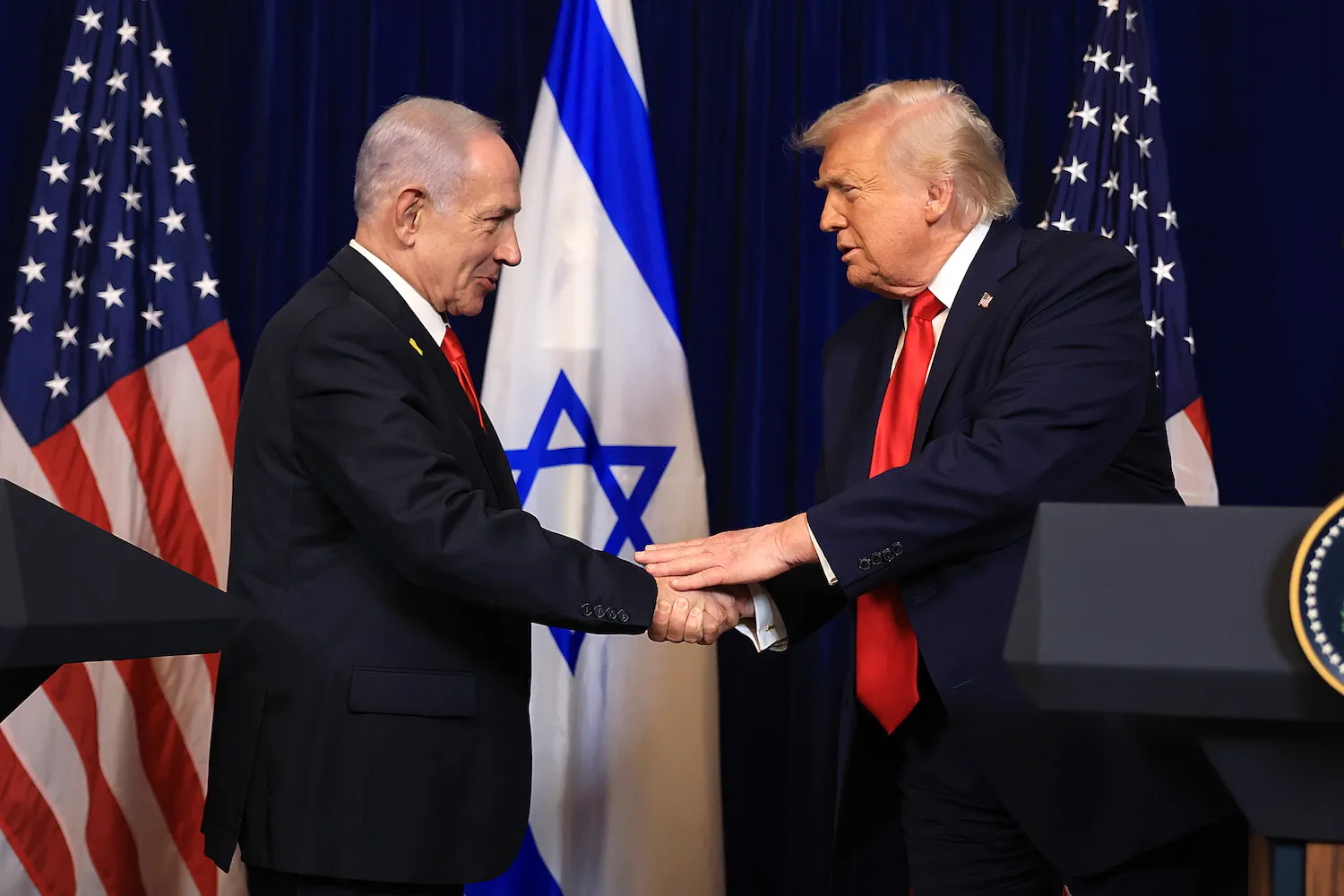
Israeli Prime Minister Benjamin Netanyahu is finally getting his White House meeting. After reportedly angling for an invite to Washington for months, the Israeli leader will meet with U.S. President Donald Trump in the Oval Office on Tuesday for their first face-to-face meeting since the Iran war began.
Welcome back to World Brief, where we’re looking at Israel’s agenda heading into talks at the White House, the uncertain status of U.S.-Iran peace talks, and wildfires spreading across France and Spain.
What Bibi Wants
Israeli Prime Minister Benjamin Netanyahu is finally getting his White House meeting. After reportedly angling for an invite to Washington for months, the Israeli leader will meet with U.S. President Donald Trump in the Oval Office on Tuesday for their first face-to-face meeting since the Iran war began.
“I am embarking on this mission with one clear goal—to ensure the security, strength, and future of our dear state of Israel,” Netanyahu said on Monday. But whereas past summits have largely served as opportunities to showcase the two leaders’ shared values, this week’s talks have unusually high stakes for both countries.
On Oct. 27, Israeli citizens will vote in parliamentary elections that could prove dire for Netanyahu’s ruling Likud party. Only 33 percent of Israelis consider Netanyahu as the best candidate to be prime minister, while 59 percent prefer someone else. To counter low public opinion, Netanyahu is expected to emphasize his close working partnership with Trump and push for a return to all-out war with Iran.
However, Trump may not be on the same page. Unlike Israel, which has characterized the Iran war as essential to tackling an existential threat, Trump has turned his attention to the Strait of Hormuz. Specifically, Trump appears focused on controlling the critical waterway in the hopes that U.S. influence will reinsert stability into global energy markets.
But U.S. citizens aren’t convinced. Rising fuel costs and high inflation have made Trump’s war unpopular among American voters. With Democrats expected to pull ahead in November’s midterm elections, Trump could be persuaded to distance himself from Israel and seek a swift end to the conflict; on Monday, Trump said that he wants to give diplomacy with Tehran another chance. (For more details on that pivot, see below.)
Washington’s recently unveiled nuclear deal with Saudi Arabia is also likely to widen the rift between Netanyahu and Trump. According to the White House, the landmark agreement will allow U.S. companies to help Riyadh develop a civilian nuclear program—but only if Saudi Arabia signs the Abraham Accords. Israel, as the only nuclear power in the Middle East, has long opposed Riyadh’s nuclear ambitions. And Netanyahu has refused to entertain Saudi Arabia’s demand that a condition of normalized relations be the establishment of a path to Palestinian statehood.
During Netanyahu’s trip this week, he will also attend funeral services for Sen. Lindsey Graham, whom Netanyahu once described as a “great friend” and staunch ally of Israel. And on Monday, Netanyahu confirmed that he will still visit the United Nations despite New York City Mayor Zohran Mamdani calling for his arrest. In 2024, the International Criminal Court issued an arrest warrant for Netanyahu for alleged war crimes and crimes against humanity committed during the war in Gaza; however, the United States is not a member of the Rome Statute and therefore does not recognize the warrant.
Today’s Most Read
The World This Week
Tuesday, July 28: Trump separately hosts Netanyahu and Ukrainian President Volodymyr Zelensky at the White House.
Irish Taoiseach Micheal Martin hosts German Chancellor Friedrich Merz.
Keiko Fujimori is sworn in as president of Peru.
South Korean President Lee Jae-myung concludes a three-day trip to Brazil before heading to Chile and Argentina.
U.N. chief António Guterres visits Cyprus.
International Monetary Fund chief Kristalina Georgieva begins a two-day trip to Argentina.
Wednesday, July 29: Slovakian President Peter Pellegrini concludes a three-day trip to China.
Thursday, July 30: The U.N. Security Council holds its first straw poll on candidates to succeed Guterres.
Saturday, Aug. 1: The Venezuelan government holds talks with the opposition.
What We’re Following
The status of talks? Trump told Axios on Monday that he decided to pause strikes on Iran over the weekend to give diplomacy another shot. “We are in very deep talks with Iran,” the U.S. president said. U.S. Vice President J.D. Vance and Gen. Dan Caine, chairman of the Joint Chiefs of Staff, both reportedly warned Trump against escalating the war on Friday—as did Adm. Brad Cooper, the commander of U.S. Central Command.
Despite Brent crude prices dropping around 6 percent on Monday in response to the U.S. military’s pause, Trump stressed that if talks “don’t work out, we will go back to very strong military action.” Negotiations are reportedly focused on reopening the Strait of Hormuz and restarting nuclear talks.
However, Iran does not appear to be in agreement. On Monday, Tehran insisted that its forces still control the critical waterway and said that it was not interested in resuming direct peace negotiations. Iraq, Jordan, and Saudi Arabia all reported drone attacks on Monday, with Riyadh blaming Iranian-backed groups in Iraq. Yemen’s Houthi rebels, another Iranian proxy group, also claimed to have struck transit sites carrying crude to Saudi Arabia’s main Red Sea oil port.
Rampant wildfires. French President Emmanuel Macron convened an emergency cabinet meeting on Monday to address dangerous wildfires spreading across southern France. The fires, which began last Wednesday, have already burned nearly 104,000 acres and forced hundreds of thousands of people to flee their homes, marking one of France’s largest evacuation efforts in history. Thousands of firefighters, military personnel, and police have deployed to the region to assist rescue efforts and attempt to bring the blaze under control.
The wildfires have also spread into Spain, where they have similarly wreaked havoc on local communities. On Monday, Spanish Prime Minister Pedro Sánchez traveled to impacted areas near the city of València to assess the situation. Around 100,000 people across Spain have also been ordered to evacuate their homes or seek shelter.
“What we’re experiencing isn’t a succession of isolated events,” Sánchez said on Monday. “It’s the most painful expression of a climate emergency that is making sixth-generation wildfires more ferocious, heat waves more frequent, and our territory more vulnerable.”
12 decisive seats. Polls opened in Pakistan-administered Kashmir on Monday for the first phase of its legislative elections. But recent political unrest has overshadowed the vote, as protesters with the Joint Awami Action Committee (JAAC) have called for the abolition of 12 seats usually reserved for Kashmiri refugees.
Of the region’s 45 directly elected seats that are up for grabs, 12 constituencies are voted on by roughly 439,000 refugees from India-controlled Kashmir who now live in different parts of Pakistan. Legal experts argue that refugee representation has “a firm historical basis” rooted in some of the government’s founding documents, and in June, the region’s Supreme Court ruled that the seats are constitutionally protected.
However, the JAAC believes that these seats give nonresidents disproportional influence over local politics and that only people who live in Pakistan-administered Kashmir should be allowed to vote. Its leadership has since boycotted Monday’s election and has called on JAAC supporters to do the same.
Odds and Ends
UNESCO added a host of historic landmarks to its World Heritage List on Sunday. Among the sites chosen were Greece’s Mount Olympus, just in time for The Odyssey’s revival; five World War II landing beaches in Normandy, France; South Sudan’s Boma-Badingilo Migratory Landscape, home to one of the world’s largest land mammal migrations; and the ancient Japanese capitals of Asuka and Fujiwara, which cover 19 archaeological sites. Receiving a UNESCO designation gives these sites protected status and honors their historical and cultural significance.
