


The word on the street in the Middle East and United States is that Saudi Arabia wants to cut Israel out of the India-Middle East-Europe Economic Corridor. IMEC, as it is known, is a maritime and rail network that is supposed to connect India and Europe via the United Arab Emirates, Saudi Arabia, Jordan, and Israel. It was announced with great fanfare at the G-20 summit in September 2023 and, from the perspective of U.S. officials, as an answer to China’s Belt and Road Initiative. At the time, it was hard to have a conversation about pretty much anything in Washington without hearing the words “great-power competition.”
A new proposed route would take the railway from Saudi Arabia into Jordan, Syria, and Turkey before connecting to Europe. And it’s not the only initiative that would bypass Israel. In June, Saudi Arabia and Turkey announced a plan to reconstruct the Hejaz Railway, which ran from Damascus through Jordan to Medina. For their part, the Israelis and Emiratis want to stick to the original plan. It is unclear how any change will fly with India, which affirmed its commitment to IMEC in February. India has important relations with both Israel and Saudi Arabia.
The word on the street in the Middle East and United States is that Saudi Arabia wants to cut Israel out of the India-Middle East-Europe Economic Corridor. IMEC, as it is known, is a maritime and rail network that is supposed to connect India and Europe via the United Arab Emirates, Saudi Arabia, Jordan, and Israel. It was announced with great fanfare at the G-20 summit in September 2023 and, from the perspective of U.S. officials, as an answer to China’s Belt and Road Initiative. At the time, it was hard to have a conversation about pretty much anything in Washington without hearing the words “great-power competition.”
A new proposed route would take the railway from Saudi Arabia into Jordan, Syria, and Turkey before connecting to Europe. And it’s not the only initiative that would bypass Israel. In June, Saudi Arabia and Turkey announced a plan to reconstruct the Hejaz Railway, which ran from Damascus through Jordan to Medina. For their part, the Israelis and Emiratis want to stick to the original plan. It is unclear how any change will fly with India, which affirmed its commitment to IMEC in February. India has important relations with both Israel and Saudi Arabia.
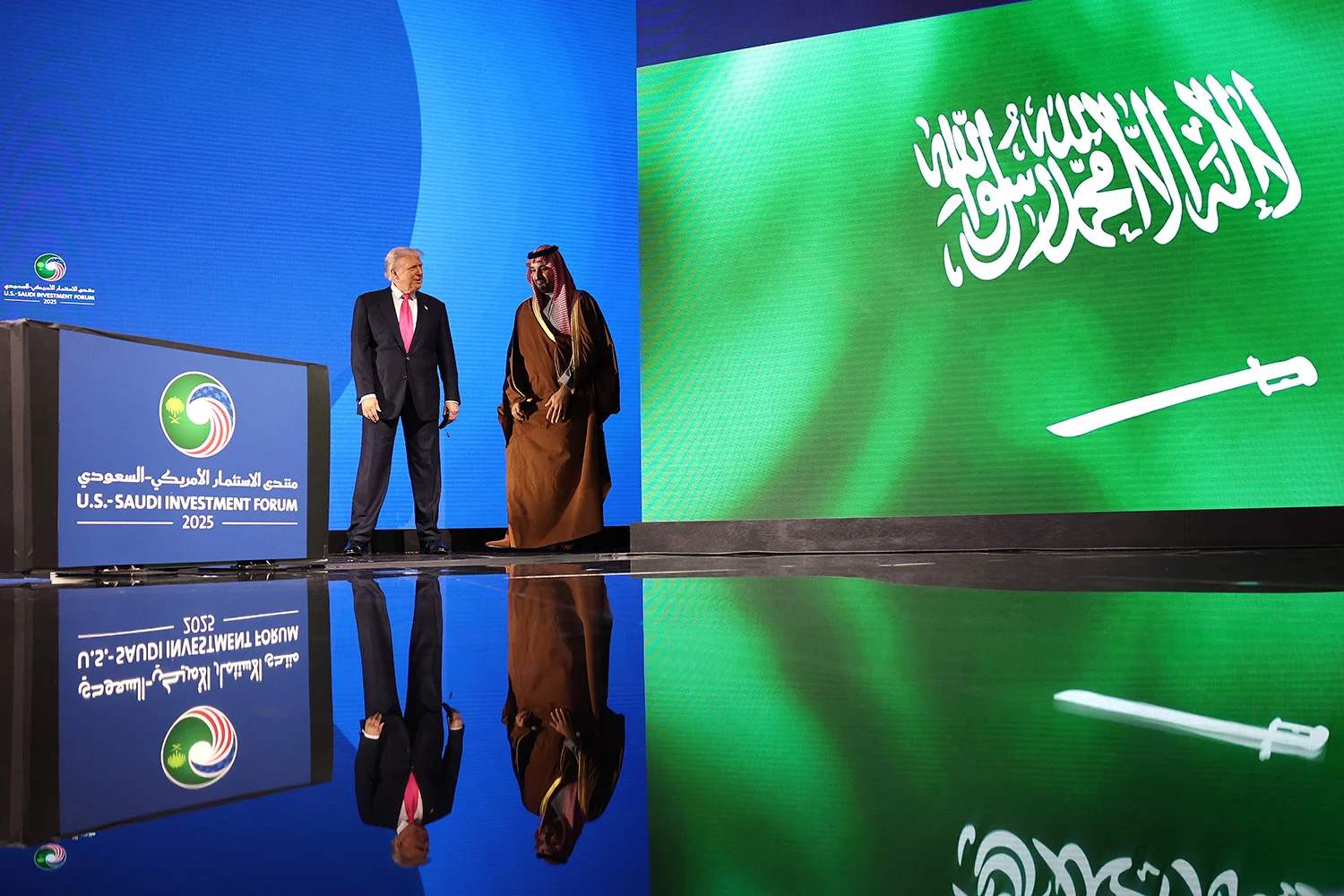
The differences between the players reflect regional tensions, but those stresses and conflicts have not dampened enthusiasm in Washington for regional integration. The Trump administration has continued to push Saudi-Israeli normalization despite Riyadh’s Palestinian state demand—a price that many Israelis are unwilling to pay. Just this week, U.S. President Donald Trump made normalization a precondition for a nuclear deal with Riyadh. Many members of Congress—from both parties—are on the integration train, as well. Axios reported that on the day that Sen. Lindsey Graham died, he said, “I can’t die now. I still need to do the Russia sanctions, get Iran sorted out, and do Israeli-Saudi normalization.” That seems both apocryphal and something the late senator would say.
In June, the co-chair of the House Abraham Accords Caucus introduced the Abraham Accords Expansion Act of 2026, which garnered a bevy of bipartisan support. On July 22, two former U.S. ambassadors to Israel testified at a hearing of the House Foreign Affairs subcommittee on the Middle East and North Africa titled, “Building a New Regional Security Architecture: The Next Phase of the Abraham Accords.” All this attention and interest is odd because regional integration is not that important to Washington, at least not based on any objective analysis of U.S. interests and the geopolitics of the region. Sure, countering Chinese influence in the area remains a priority for Washington, but the United States can meet that challenge regardless of whether there is regional integration in the Middle East or not.
Of course, IMEC grew out of a minilateral grouping called I2U2 (which stands for India-Israel-United States-United Arab Emirates), itself a product of the 2020 Abraham Accords. Given the normalization of Israel’s relations with the UAE, Bahrain, and Morocco; India’s interest in linking its human resources to the Emirates’ financial power; Israel’s globally important tech sector; and U.S. power, IMEC was a logical next step and the physical manifestation of regional integration. It was an exciting moment, but the regional wars that raged since Hamas’ attack on Israel in October 2023 produced a vibe shift. The Abraham Accords have endured, but Israel has become toxic, and there is considerable tension even among Arab states. Last December, Saudi Arabia bombed Emirati allies in Yemen.
This is not to say that countries of the Middle East would not benefit from integration and regional institutionalization. They tend not to trade with each other (as much as one might expect) and don’t share a common currency. They don’t even have the same weekends. The Arab League, which is comprised of 22 states across the region, hasn’t done anything significant in decades, and the Gulf Cooperation Council is an exercise in ceremony over substance. The Abraham Accords, by contrast, prioritized normalization of diplomatic, economic, and security ties, and they also pointed the way toward broader regional integration, which is why I2U2 and IMEC grew out of them. Saudi Crown Prince Mohammed bin Salman’s Vision 2030 is specific about advancing integration in the Gulf.
Washington has been only too happy to pick up on this interest given the standard train of assumptions often at work in U.S. foreign policy: greater integration will lead to broad economic development, and more prosperity leads to greater stability, which in turn will lead to peace and security. The experience of post-World War II Europe often informs the policy community. After 9/11, members of Congress believed the United States needed a Marshall Plan for the Middle East. In Trump’s first term, his team toyed with the idea of a Middle East NATO called the Middle East Strategic Alliance. And since the Abraham Accords, there has been talk of full-blown Middle East integration akin to the European Union.
Much of Washington fell in love with the idea of greater regional integration (with the exception of a small group of analysts and activists who opposed the Abraham Accords because it broke the informal “no normalization before a Palestinian state” rule that limited Israel’s relations with many Arab countries). The Abraham Accords were a win not just because the UAE, Bahrain, and Morocco were willing to come to terms with Israel, but also because the normalization agreements opened possibilities that many observers previously believed to be theoretical. As a result, regional integration became really important in Washington.
Is it, though? Hard to believe, but there was a time when the United States was successful in the Middle East. That was well before the Abraham Accords, I2U2, IMEC, and Vision 2030. When you evaluate these initiatives and agreements against traditional U.S. interests in the region, it is a wash. Regional integration would likely neither help nor hinder the flow of energy. It would likely help ensure Israeli security, but it wouldn’t necessarily prevent threats to American primacy in the Middle East. Overall, integration is in the category of “nice to have but not crucial.”
It is likely that the issue has taken on a significance beyond its intrinsic importance because the Abraham Accords were Trump’s big foreign-policy achievement in his first term. Not to be outdone, U.S. President Joe Biden sought Saudi-Israeli normalization during his time in office, and once Trump returned to the White House, he also tried to maneuver the Saudis and Israelis into a deal.
So, it seems integration is important for some Middle East states and for presidential legacy-building, but it is not crucial for the United States.
