


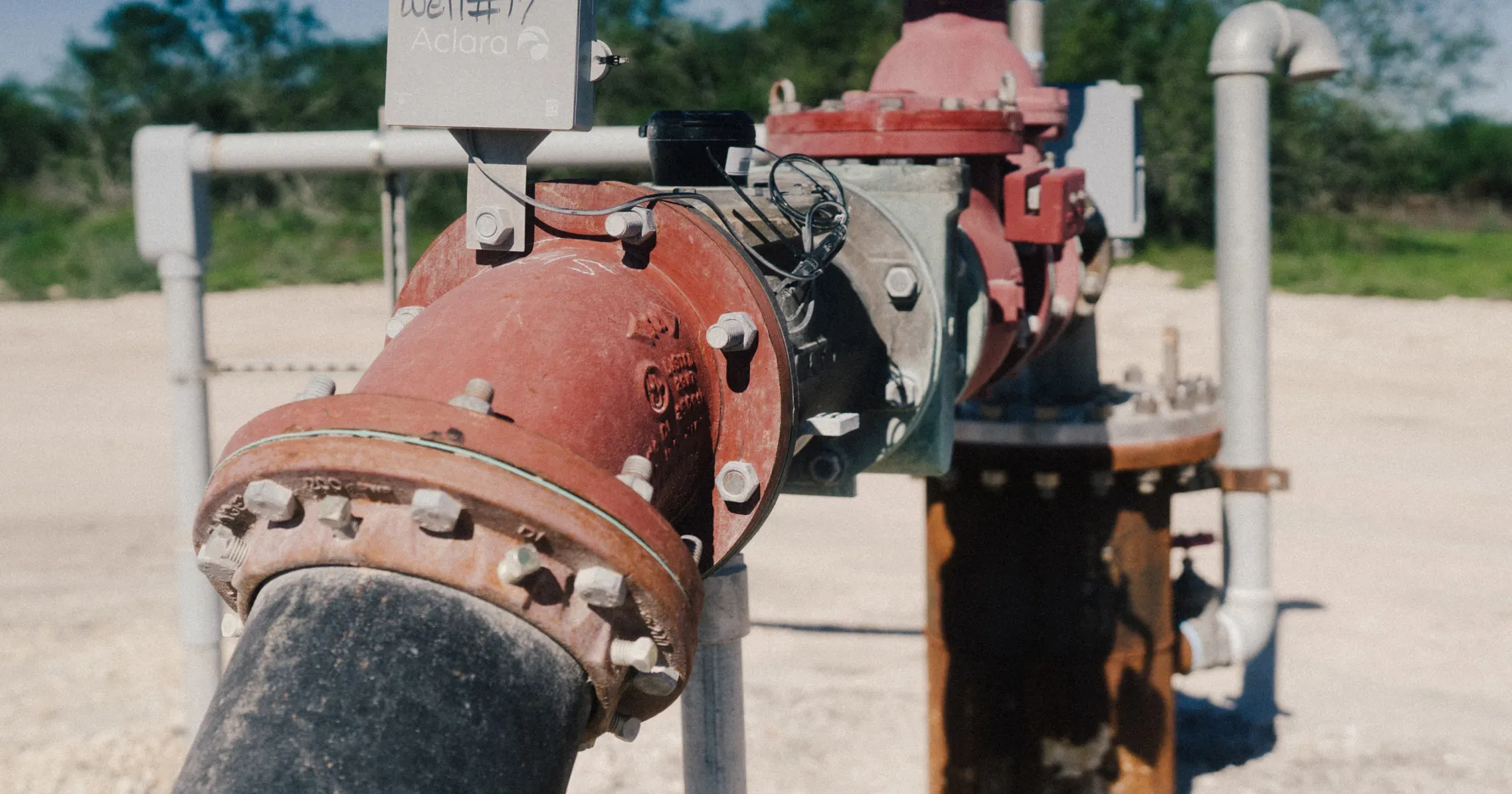
Late in 2024, Corpus Christi, Texas, was desperate for water after years of drought. So city officials hatched a plan to tap millions of gallons of water a day from an aquifer that serves dozens of counties across the Texas Gulf Coast.
The city would drill wells — lots of them.
Corpus Christi’s drilling frenzy alarmed rural residents, who worried it threatened their access to water. They mobilized to create a groundwater conservation district that would regulate drilling and, they hoped, limit how much water the city could pump.
Then Corpus Christi officials came up with a peculiar idea. Fearing the residents’ effort could hamper the city’s ambitious plans to tap significant amounts of groundwater, officials asked a local entity to serve as its well regulator.
The advantages: City Council members appoint that entity’s board of directors, and its staff is made up entirely of city employees.
Since that decision last fall, the entity — called the Corpus Christi Aquifer Storage and Recovery Conservation District — has greenlit every city request to drill more wells. In doing so, The Texas Tribune and KRIS 6 found, it fast-tracked its permitting process for the city and overlooked steps that would have slowed down the process for approving the permits — safeguards its own rules require to protect other well users.
A city-commissioned study released this summer found that the drilling plan could cause land around the wells to sink and water levels in other nearby wells to drop significantly. But by then, the district had already approved permits allowing the city to pump up to about 40 million gallons a day from 20 wells, although the city draws less than a third of that daily on average.
The city defended the approvals. It said the district’s rules let the board decide when it has enough information to sign off on a permit and that before it does so, the city gives estimates of how pumping could affect water levels.
But water experts warn that the amount the city is allowed to pump in such a small area is exorbitant. “It’s absolutely unfathomable,” said Drew Molly, the former chief operating officer of Corpus Christi’s water department.
Molly, who is now chief water officer at Houston’s water department, said the district’s “lightning speed” approval of the city’s permits will cause ripple effects locally and across the state.
In Texas, fights over limited groundwater supplies will likely intensify as the population booms. Groundwater comes from aquifers and makes up more than half of the state’s water supply.
Aquifers stretch underground across counties and, sometimes, across states. The aquifer Corpus Christi draws from serves dozens of communities along the Gulf of Mexico, including some in Louisiana. Overpumping from aquifers is a key concern in Texas because they need rain and time to refill. As droughts get longer, the state’s water plan shows larger drops in groundwater’s availability compared with other sources.
Groundwater pumping must be approached with caution, experts say. In worst-case scenarios, excessive pumping “can wipe an aquifer out,” said Jarrod Reynolds, a groundwater resource engineer.
“It can be a stopgap, it can be a supplement, but it’s something that’s got to be managed,” Reynolds said.
Corpus Christi’s rapid expansion of groundwater wells offers a critical, if not extreme, example of the challenges presented by a patchwork system for regulating the water that cities, businesses and citizens can extract from the ground.
The coastal city of more than 300,000 residents nearly reached a crisis point earlier this year after persistent drought and years of inaction. It was months away from being unable to meet water demand and faced harsh restrictions to conserve supplies.
Drilling for groundwater became an important fix. So when the possibility of tougher regulation loomed in the wake of the rural residents’ efforts, city officials turned to Corpus Christi’s storage and recovery district, an entity created two decades earlier with the power to approve well permits.
The storage and recovery district is one of nearly 100 such groundwater districts in the state, but it’s the only one with City Council-appointed leaders. Most groundwater districts are led by leaders who are either elected or appointed by county officials — an important distinction since counties are not water suppliers, so there is less concern about any conflict of interest.
Corpus Christi leaders insisted in a written statement that the close ties the city shares with its well regulator will not hamstring efforts to protect the aquifer.
“There is no conflict of interest. City employees involved with the District have no personal or financial interest in permitting decisions,” said Ashley Marion, strategic business manager for the city water department, in the written statement. She added that, “The City and District share an interest in protecting and sustainably managing regional groundwater.”
Marion also said the city tracks water levels and physical conditions at the wells and adjusts pumping rates based on daily data and long-term modeling.
But the arrangement has drawn concern from water experts across the state, an outgoing state lawmaker and at least one of the storage and recovery district’s own board members.
“That’s the fox guarding the henhouse,” said Robert Mace, executive director at Texas State University’s Meadows Center for Water and the Environment, which focuses on water and environmental management policy.
“It tells me that the district is looking out for Corpus Christi’s interests and not necessarily the interests of other landowners that might be affected.”

Years of Inaction Lead to a City in Crisis
Corpus Christi’s decision to begin drilling wells reflects how the city’s approach to finding water swings wildly during drought.
The city currently relies on three drought-vulnerable reservoirs for most of its supply. Despite warnings that it needed to diversify its water sources, the city has repeatedly waffled on whether to invest in long-term solutions.
Since 2025, a divided City Council has twice declined to move forward with a city-run desalination plant, even though the state had approved $757 million in loans for the project and Corpus Christi officials had selected contractors to begin the work. The city has said the plant could produce around a third of the city’s daily demand.
After the most recent vote in September, outgoing Gov. Greg Abbott chastised Corpus Christi leaders for having “once again failed to secure reliable water.”
Desalination was not the city’s only missed opportunity to increase its water supply. Two decades ago, Democratic state Sen. Juan “Chuy” Hinojosa authored legislation that created the Corpus Christi Aquifer Storage and Recovery Conservation District. The district’s purpose is in its name: The city had plans to inject and store excess drinking water and treated wastewater underground to save for emergencies. Hinojosa did not respond to a request for comment for this story.
In the years that followed, the district studied the idea, drilled test wells and drew up plans. But nothing ever happened.
As the region’s main reservoirs were drying up in late 2024, city leaders found themselves searching for solutions again. Molly, then the city’s water director, had a “wild idea.” He reached out to John Michael, an engineer long involved in the city’s water projects, to ask if the city could drill wells along the Nueces River, according to a recent memo in which Michael recalled the conversation.
It was possible, and the city quickly started drilling. But this was always supposed to be a temporary solution.
While the wells were “a viable option to supplement water resources during the current drought, I never envisioned that the wells would be used for anything other than emergency supply,” Michael wrote in the June 26 memo.
In a written response to the newsrooms, the city called the groundwater program “a key component” of its strategy to diversify the region’s water supply.
Then officials learned of rural residents’ efforts to form their own groundwater conservation district. This posed a “potential danger” to the city’s plans, said then-Corpus Christi City Attorney Miles Risley at an October 2025 City Council meeting.
So the city moved quickly to ask the storage and recovery district to expand its boundaries to include its well fields outside city limits in Nueces County.
“Do you think we’d be able to carry that out without being biased?” council member Everett Roy asked the city’s water resource manager, Esteban Ramos, as the council debated asking the entity to regulate the wells.
“Yes, I do,” answered Ramos, who is also the storage and recovery district’s general manager.
When the storage and recovery district approved the city’s well permits last year, board members attached several protective requirements, such as creating plans to monitor water quality in its well fields and to reduce harm to neighbors’ wells.
None of those requirements prevented or slowed the city from moving forward with its drilling plans.
The city has not “fully satisfied” some of those requirements nine months later, according to a document two board members prepared for the district. The city said the district asked it to provide more information on its monitoring and mitigation plan. It said it is working with the district to meet the conditions and that the city’s compliance reports are public.
A private research company named Intera raised several red flags about the city’s groundwater pumping in a study the city released in June. It estimated that the ground around the city’s western well fields could sink about 20 inches over the next 30 years.
As water is withdrawn, just a few inches of sinkage can do costly damage to infrastructure, including pipelines, foundations, roads and bridges.
This type of sinkage, caused by compacting sand, rock or sediment, can reduce the amount of water an aquifer can hold long term, according to the American Geosciences Institute.
A drop in the aquifer’s levels would first be felt by rural residents, whose wells are not as deep as the city’s. The study said a drop of up to 100 feet was possible within five years near the city’s wells. In its response to these findings, the city maintained that they are just projections and don’t reflect how much it’s pumping on average.
But the city can easily pump more in emergencies, like when pipes break or during long dry spells.
That’s the fear of rural residents like Scott Barraza, who lives on 20 acres about 20 miles from downtown Corpus Christi with his wife, Julie; teen daughter, Grace; five dogs; three goats; and a horse named Rosie.
He recently purchased a $9,000 water purification system and a trailer to haul water from the city for his family and neighbors. Barraza acknowledges it’s probably excessive but says it’s best to be prepared.
“When you live out in the country, you don’t have a city water supply. Your well is your water supply,” he said.
Molly said the city’s decision to increasingly rely on groundwater rather than investing in a seawater desalination plant means Corpus Christi “basically put all their eggs in a terrible basket.”


Who Guards Groundwater?
What’s happening in Corpus Christi and the surrounding area raises critical questions about how the state manages its limited groundwater resources and who regulates them.
Republican state Rep. Denise Villalobos was so concerned about the unusual dynamic in Corpus Christi that she planned to file a bill to abolish the storage and recovery district in the upcoming legislative session. She also drafted another bill to create, in its place, a more traditional groundwater district that would regulate wells across all of Nueces County.
Then she lost her seat to Democrat Stephanie Guerrero Sáenz in the recent midterm elections. The incoming lawmaker, whose term begins in January, was less certain about her approach when interviewed by the newsrooms, saying she needs to talk with her new constituents first. She said any legislation she supports “must strike the right balance between protecting rural groundwater rights and addressing the urgent water needs of our region.”
In the meantime, some members of the storage and recovery district are starting to push back, including Michael, the engineer. He was appointed to the board five weeks after the district approved the city’s first 20 well permits.
Next month, the board is set to consider a resolution that would cap the city’s pumping to 6.5 million gallons a day — half of the city’s current average — until it meets the regulatory requirements meant to protect the aquifer’s health.
Michael and board member Jeff Edmonds, who is also the city’s director of engineering, proposed the measure, which is set for discussion Dec. 3. They said the current rate of the city’s pumping could cause “irreversible offsite impacts.” They also point to civil penalties the city risks if it continues to not comply with the rules.
For now, the recent water crisis in Corpus Christi has been averted after rains this summer temporarily refilled the reservoirs the city depends on. But projections show the city could be back in a water emergency by September 2029.
It’s a reminder of the reality that faces the entire state. The Texas Water Development Board has said Texas does not have enough water to meet demand if it faces a historic drought.
What’s happening with the storage and recovery district is “a microcosm of examples of what’s happening around the state,” Michael told the newsrooms, because Texas’ population is growing as available water resources are dwindling.
“We have to manage these districts in a sustainable manner,” he said, “and decisions have to be made on science and not emotions.”
