


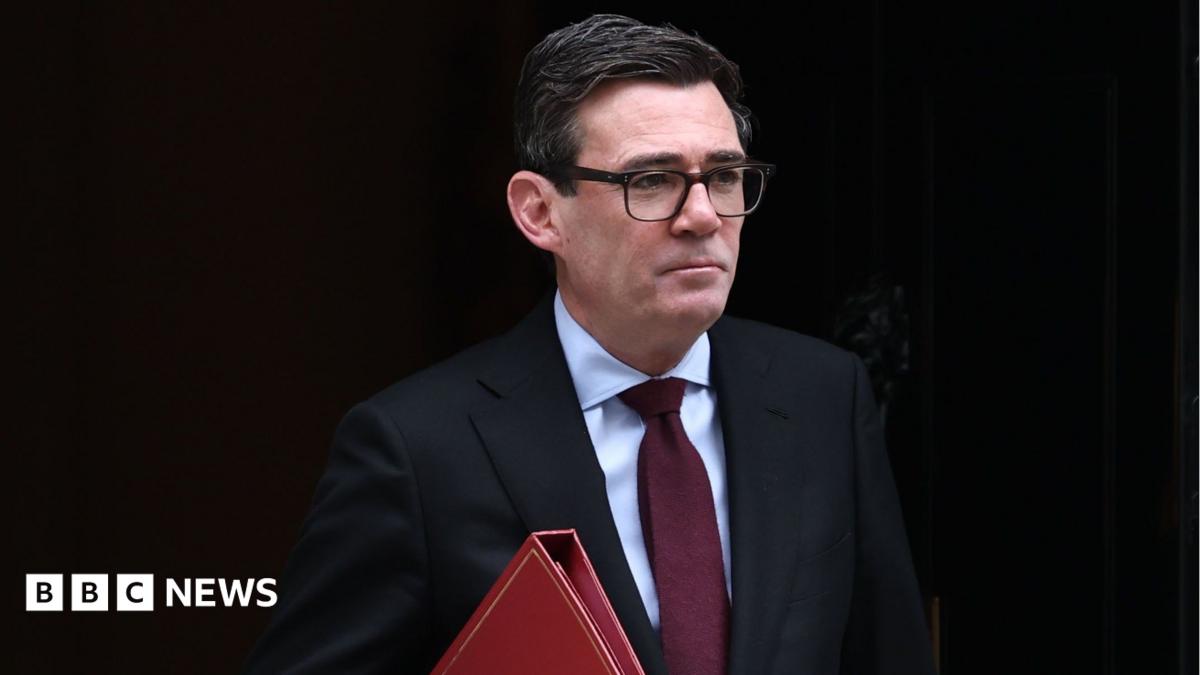
Negotiations between the EU and UK are “going down to the wire” ahead of Friday’s summit in Brussels, Downing Street has said.
The summit is aimed at reaching new agreements between the two sides on food trade rules, visas for young people and carbon emissions pricing.
The prime minister’s spokesman said that if a deal is secured, the government will introduce legislation to Parliament next week to implement changes.
Conservative leader Kemi Badenoch accused Prime Minister Andy Burnham of “reopening the divisions and debates” of the Brexit referendum.
Speaking to the BBC’s Today programme, she said she wanted to see easier trading with the EU, but added “not trade at any cost”.
She also said the new deals could see UK companies having to follow EU rules, even those that do not trade with the bloc.
Burnham’s spokesman said Brexit had done “more harm than good”.
“The choice over the coming days is clear: stand with Boris Johnson and Kemi Badenoch defending a broken status quo, or with Andy Burnham delivering change, cutting costs for business, helping with the costs of the weekly shop and creating opportunities for young people,” he added.
One of the deals expected to be reached on Friday includes a new youth mobility scheme, which would make it easier for young people to work and travel in the EU and UK.
The UK already has schemes in place with 13 non-EU countries including Australia, Canada and India.
In 2024, the EU proposed allowing 18 to 30 year-olds to work or study in the EU and UK for up to four years.
Labour, which was then in opposition, rejected the deal arguing it amounted to reinstating freedom of movement.
Since coming to government, the party has suggested it would consider a more restricted scheme with a time limit, a cap on the numbers coming to the UK and a ban on participants from claiming benefits.
The UK’s request to limit numbers has proved to be a sticking point in the talks, along with the EU’s request that EU students should pay the same tuition fees at UK universities as domestic students.
An agreement on trade could also remove checks and paperwork faced by food companies exporting to the EU.
The government argues this could add £5bn to the economy and cut food prices.
However, it could mean the UK will have to follow certain EU rules on products, for example on gene-edited crops or labelling.
On immigration, Burnham has said the UK and EU could link up their law enforcement efforts, including sharing more data and criminal records of foreign nationals.
The prime minister has also said the summit would allow the UK to raise concerns about the Made in Europe scheme, which is designed to protect industries from unfair Chinese competition.
Burnham has previously suggested he could commit Labour to building a closer long-term future relationship with Europe, including asking to rejoin the organisation as a full member – however, he has ruled out major changes before the next election.
The party’s 2024 manifesto promised not to return to the EU, the single market, customs union or freedom of movement, which allows EU citizens to live and work elsewhere in the bloc without a visa.
Earlier this week, former deputy prime minister David Lammy urged the prime minister to go into the next general election promising to rejoin the EU.
However, the subject has divided his cabinet with one minister warning of the costs that would come with reversing Brexit.
