


Reporting Highlights
- Scant Scrutiny: After people died or were hospitalized soon after riding Six Flags’ X2 roller coaster, California regulators often did minimal or no inspection.
- Riders’ Responsibility: California regulators have regularly accepted Six Flags’ assertions that riders’ injuries could not be the fault of the X2.
- Insufficient Inspectors: A 2025 audit found that the state agency enforcing roller coaster safety had been short-staffed for years.
These highlights were written by the reporters and editors who worked on this story.
A 17-year-old boy died after riding the extreme X2 roller coaster at Six Flags Magic Mountain in California this summer, just weeks before two more people suffered severe brain injuries after riding the same attraction, ProPublica and L.A. Material have found.
A homicide detective investigating Christopher Gibson’s death in June sent an email to the California official responsible for ensuring roller coaster safety. But records show that the official did not reply until nearly two months later. The lack of action raises the question of whether the brain damage suffered by the two riders the following month could have been avoided.
Christopher’s death, which has not been previously reported, also raises questions about Six Flags, its flagship X2 ride and the way in which California regulates roller coasters.
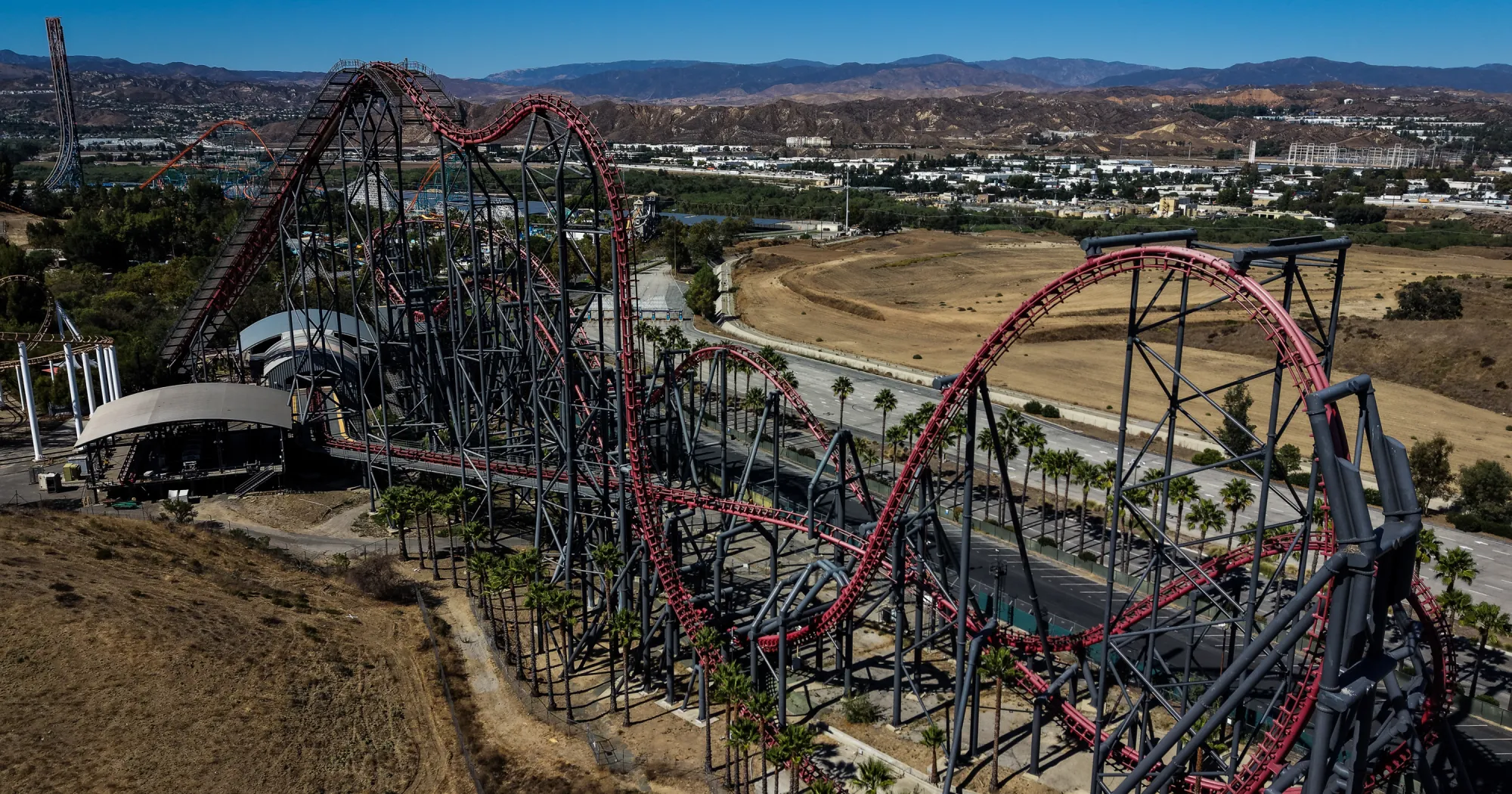
Billed as a “fourth-dimension” roller coaster, the X2 drew more than 16 million riders attracted to extreme thrills. It featured seats that swiveled in all directions as the ride hurtled and twisted along the track, sometimes at a rate of up to 76 mph.
The X2 was shut down temporarily after two separate brain hemorrhages in July. In August, CNN reported that the X2 had been “linked to more than a dozen reports of serious injuries” and two deaths over nearly two decades.
Christopher’s is a third.
A ProPublica and L.A. Material investigation has found that state regulators have repeatedly failed to take swift action in the face of reported deaths and head injuries on the X2. On at least 70 occasions since 2010, Magic Mountain reported head injuries to the little-known unit within the California Division of Occupational Safety and Health responsible for ensuring roller coaster safety.
But rather than responding to those reports with vigorous inspections or safety checks, the regulators often did minimal or no investigation, according to a ProPublica and L.A. Material analysis of court filings, public records and internal regulatory documents.
“How many more people have to die before you think, ‘Well, maybe we should look at that?’” said Mariusz Ziejewski, a biomechanical engineer who has worked with the military to reduce brain injuries and was an expert witness in a lawsuit against Magic Mountain. “I think one is already way too much.”
CalOSHA and Magic Mountain instead frequently blamed riders for their injuries and in more than 35 cases alleged that people had somehow ridden the attraction incorrectly by failing to hold their heads in the right position. In one case, when a 14-year-old was hospitalized last year after losing consciousness on the ride, officials attributed it to the teenager’s menstrual cycle.
Six Flags and CalOSHA did not respond to detailed questions from ProPublica and L.A. Material. However, Denisse Gómez, a spokesperson for the state department that oversees CalOSHA, said in a statement that when theme park injuries are reported, regulators evaluate whether the ride was operating correctly and according to state safety rules. The agency is “committed to public safety,” she said, adding that “because that investigation is ongoing, we are not commenting on matters involving X2 at this time.”
Six Flags provided a statement that noted that the X2 had consistently passed safety tests, and its parks undergo preventative maintenance and a comprehensive, third-party inspection program. They also said their investigation of the ride remains ongoing, and that they are fully cooperating with CalOSHA. “Safety is our ethos and is at the heart of everything we do,” a spokesperson said.
When Six Flags has been sued for wrongful death or injuries related to the X2, it has maintained that injuries are rare and the ride is highly regulated by CalOSHA. In a recently settled lawsuit related to 22-year-old Christopher Hawley, who died after riding the X2 in 2022, Magic Mountain’s director of public safety said in a declaration that the state has never notified the park of any “patron safety-related concerns related to the acceleration forces on the X2.”
Christopher Gibson was an autistic but healthy teen when he and his mother, Leanndra Fascaldo, drove from their Colorado home to California to celebrate his high school graduation at Magic Mountain.
The pair rode roller coasters for several days starting on May 31, including the X2 and the Viper, which Christopher called a “neck breaker,” according to a sheriff’s report. On their fourth day at the theme park, the teen once again rode the X2 and then the Great American Revolution before complaining of a headache. By early afternoon, they returned to the hotel.
That night, the pain grew worse. His mother gave him Advil. Eventually, he moved to the hotel room’s closet, where it was darker, and went back to sleep. His mother assumed he was just exhausted, but around 2 p.m. the next day she noticed that he had stopped snoring. She looked into the closet and saw that his lips were blue and his face was covered with “white and pink foam.” She called 911. Paramedics pronounced him dead at 3:16 p.m. on June 4.
Within a month, a sheriff’s homicide detective reached out to the California state office that regulates roller coasters, writing that “it is possible that he suffered an injury during his visits to the theme park.” The detective did not receive a reply until she contacted the office again two months later.
It’s been a deadly year for Six Flags. In addition to the California incident, an Atlanta school worker died in October after riding one of the theme park’s “hypercoasters” at Six Flags Over Georgia, prompting the company to temporarily close nine attractions at six theme parks across North America.
Theme park rides are regulated by states, not the federal government. In 2000, the legislature gave CalOSHA, the agency responsible for worker safety in California, oversight of roller coasters. Millions of people flock to the state’s theme parks each year, and the move came after a series of high-profile accidents in the 1990s. Under the law, state officials were given new power to conduct annual inspections, and theme parks must report accidents that result in serious injury to the agency.
But ProPublica and L.A. Material found that officials in CalOSHA’s Amusement Ride and Tramway Unit have frequently determined that investigations are unnecessary when accidents happen on the X2.

In 16 instances involving people who wound up in the hospital after riding the X2 between 2009 and 2022, CalOSHA invoked identical or similar language after checking a box on accident reports that said state action was not called for. “At this time, this accident does not warrant an investigation,” said one typical form. “The condition which developed while the patron was riding does not appear to be related to the maintenance or operation of the ride.” The report was filed in response to a woman who was hospitalized in 2016 with a head injury after riding the X2.
This also held true in cases where people lost their lives. When Hilda Farias suffered a massive brain hemorrhage after riding the X2 in October 2010, CalOSHA officials adopted similar language and conducted no inspection. The state regulator’s report did not even note that the 28-year-old mother of a 5-year-old had died, according to records obtained by ProPublica and L.A. Material. Farias’ family sued the theme park, and the case settled in 2015.
When Hawley died in June 2022 after riding the X2, Magic Mountain initially told CalOSHA that the cause appeared to be heatstroke, according to a state report. The coroner later determined that Hawley, like Farias, had died of a massive brain hemorrhage. On that occasion, CalOSHA shut the ride down briefly while Six Flags conducted tests to measure the impact of g-forces on the rider and examined maintenance records. It ultimately determined that the ride was operating normally, according to a CalOSHA inspection obtained by ProPublica and L.A. Material.

Christopher Gibson wore a Batman hoodie to school almost every day.
Diagnosed with autism when he was 5 or 6, Christopher was “high-functioning and verbal,” his mother told a sheriff’s detective. He had recently graduated high school and was headed to Colorado Mesa University to study theater.
As part of a family tradition, the teen’s mother let each of her five children pick the location of a celebratory senior trip. Chistopher wanted to ride roller coasters, and mother and son discussed a trip to Disneyland or Disney World. After some online research, Christopher chose Six Flags Magic Mountain, known for its thrill rides and DC Comics characters.
“He wanted to see Six Flags,” said Chadwick McGrady, an attorney representing the family in Christopher’s death. “The marketing worked.”
Magic Mountain sits about 35 miles north of downtown Los Angeles, in Valencia, the last notable stop before Interstate 5 climbs a steep stretch known as the Grapevine and drops down into the San Joaquin Valley. The park is aptly named: Roller coasters built into the mountainous terrain hurtle riders down hillsides and through trees, with disorienting turns taken at high velocity.
Christopher rode the X2 on June 2 and again on the morning of June 3. Soon after, reeling from a headache, he texted his mother from a park restroom: “I don’t think I can do any more today. My head is hurting me.”
They went back to the hotel. He had two days to recover before one of the big draws of the trip: DC Heroes and Villains Fest. Christopher “was a huge fan of DC Comics and was looking forward to meeting Batman on Friday, when DC Comics characters would be at the park,” sheriff’s detective Yoon Nam would later write in her report. Friday, June 5, was its opening day, and Christopher was determined not to miss it.

But on the morning of June 4, his head was still hurting him. He had taken refuge in the hotel room’s closet. His mother wasn’t unduly alarmed, because Christopher often retreated to dark spaces at home, a longstanding self-soothing ritual. She listened to the sound of his snoring — until at some point in the afternoon, the sound stopped.
In a statement released through her lawyer, Fascaldo said that her son “had so many dreams, and had his whole life ahead of him.”
After an autopsy, the County of Los Angeles Medical Examiner found a large subdural hemorrhage. The cause of death: “blunt force head trauma.” The reason for the injuries was noted as a “history of theme park rides.”
Nam and the medical examiner spoke by phone with Fascaldo, Christopher’s mother, on June 6.
According to a source familiar with the investigation, Fascaldo was composed, recounting a precise chronology of the rides Christopher had ridden. Among them were Full Throttle and the Viper, and, at least twice, the X2.
Nam contacted CalOSHA. She knew that it was responsible for regulating the state’s roller coasters and wanted to make sure the agency was aware that the Magic Mountain rides could have contributed to Christopher’s death.
“I cannot attribute his death to his roller coaster ride experiences with 100% certainty,” Nam wrote in a July 2 email to Bobby Park, who runs the CalOSHA unit regulating roller coasters. “However, at this time, it is possible that he suffered an injury during his visits to the theme park.”
The detective offered to help. “Please let me know if this case warrants additional follow-up by your office,” she wrote. “Feel free to call, text, or email with any questions or concerns.”
In the days after that unanswered email, more parkgoers suffered injuries after riding the X2.
On the evening of July 5, three days after the homicide detective sent her email, Pamela Guillen, 39, rode the coaster with her daughter.
When the car she was riding in trundled back into the station, Guillen’s daughter saw that her mother was “sitting with a vacant stare and her mouth open,” according to a lawsuit the family recently filed. Six Flags has not yet filed a response.
Guillen, who was visiting from Hawaii, managed to stumble off the ride, but a few minutes later park EMTs found her lying unconscious at the exit ramp. Two hours later, Gary Newman, the park’s vice president of maintenance, phoned CalOSHA to report the accident, relaying that a relative had said: “My cousin seemed out of it when she got off the ride so we took her to a bench and she went unconscious.”
The next morning, Scott Prather, a senior safety engineer with CalOSHA’s theme park unit, emailed his boss. According to a state official who has viewed the email, Guillen had been diagnosed with a brain bleed and was going into surgery. The email also said that the ride had been closed for inspection and g-force testing to ensure it was operating as intended.

Six Flags hired a firm that specialized in amusement park rides to conduct the test, according to a CalOSHA source familiar with the investigation.
State officials reviewed the results and authorized Magic Mountain to reopen the ride, the source said.
Then, on July 9, there was another incident, according to CalOSHA records reviewed by ProPublica and L.A. Material. A woman from Nevada was visiting Magic Mountain with her family and others. They were roller coaster enthusiasts and had saved the X2 for their last ride of the day.
As soon as the ride started, the woman sensed something was wrong, according to an email she later sent to CalOSHA’s general inbox.
“The back of my head was repeatedly and forcefully slammed against the back of the seat,” she wrote in the email, which was reviewed by ProPublica and L.A. Material. “I tried holding my head forward and tried pushing it back against the seat to stop the banging, neither worked.”
When the ride stopped, she wasn’t sure whether she could stand. She couldn’t turn her head from side to side. She had nausea, sensitivity to light and a headache that reached “approximately 9 out of 10.”
She wasn’t the only one. “Three of the eight people riding together experienced similar difficulty with their heads repeatedly striking the backs of their seats,” she wrote in August.

She also filed a formal complaint with Six Flags in July but has not received a response, she told ProPublica and L.A. Material.
Two days after the Nevada woman rode the X2, there was another, more serious injury.
Naomi Greer-Wilkinson, a healthy 25-year-old from Los Angeles, rode the X2 on the night of July 11.
According to a lawsuit her family filed in September against the park, Greer-Wilkinson came off the ride “confused and having difficulty walking.” She stumbled off and then lost consciousness. She has since had multiple emergency brain surgeries. The lawsuit says she “remains bedridden, ventilator dependent, unable to speak.” Six Flags has not responded to the lawsuit.
On July 12, the X2 was temporarily shut down. It has not reopened.

In the wake of the ride’s closure, many amusement park patrons are asking how regulators could have missed so many signs of danger.
California law requires CalOSHA to audit records related to every permanent ride each year, including reports of accidents. When amusement park patrons are seriously injured on rides, the theme park must notify regulators immediately.
And yet, again and again, records show, regulators accepted Six Flags’ assertions that the injuries people suffered were not the fault of the X2. ProPublica and L.A. Material reviewed the state’s reports on X2 riders who were taken to the hospital from 2009 to 2022. In more than two-thirds of the cases, or 17 out 23, CalOSHA checked “no” on the form that would determine whether an investigation was warranted.
In September 2022, less than three months after Hawley died, a 28-year-old woman passed out as she exited the ride and hit her head, according to Magic Mountain’s account of the accident in a report filed with the state Paramedics took her to Henry Mayo Newhall Hospital.
Two days after the woman’s injury, Park determined no investigation was necessary. Park wrote: “Patron has pre-existing TBI [traumatic brain injury], diabetes, and has not eaten or consumed anything throughout the day.”
The woman, who survived the incident, sued Six Flags, which denied fault. The case settled in 2025.
The pattern of regulators citing preexisting conditions or rider behavior went back years. In 2011, the state noted that a 21-year-old woman had “a history of panic attacks,” so no investigation of the ride was necessary after she complained of a head injury.
In 2016, a 49-year-old woman hit her head against the headrest and asked for an ambulance. CalOSHA noted that her condition “does not appear to be related to the maintenance or operation of the ride,” adding that she “did not keep her head back” as riders are instructed.
Park declined to comment.
Some of the failures appear related to staffing shortages at CalOSHA. According to a 2025 staffing study by a Sacramento consulting firm commissioned by the state, audits of amusement park rides can be brief. The annual audit for a ride in X2’s class — a review meant to cover accident reports, training and maintenance reports and inspections — lasted an average of 3.7 hours.
The study also found that CalOSHA’s ride unit had been short-staffed for at least three years, with vacancies for its top job and two of four supervisor posts. There were “insufficient” supervisors for “thorough field supervision” and “inspection report review,” the report found.
Documents obtained by ProPublica and L.A. Material show Park had voiced frustration about staffing for his division since at least 2019. In an email he sent last week to his supervisor and the state department that oversees CalOSHA, Park wrote: “We have done workload studies, classification studies, begged, pleaded, and warned of the impending doom, and we are still no further along than we were 11 years ago.”
He continued: “We have failed. I have tried to do this, but I cannot continue as the dwindling supply of tools has run out.”
Park had been the CalOSHA official who received the news of Christopher Gibson’s death from Nam, the homicide detective, in early July.
In late August, after the X2 had been closed for more than a month, the detective sent a follow-up email to Park about the teen’s death.
“I never heard back from you regarding my previous email,” Nam wrote. “I saw news about multiple injuries involving the X2 ride at the Six Flags. Is there anything else I need to do?”
Park finally wrote back: “Apologies, I thought we responded.”
Park told the detective that since Christopher had died in a hotel room, there was no way to confirm which roller coasters the teen had ridden and “it would be difficult to determine which ride to assign this to or if it even is associated with a ride.”

Still, a few weeks later, state officials ordered a more sophisticated g-force test of the ride, citing a series of injuries and a death over the summer. CalOSHA said in a statement that there are limits to commonly used ride testing. The standard test focuses on the torso and does not “necessarily establish the full range of movement or physical impacts experienced by an individual rider, including the potential effects on the head and neck,” the agency said. The order for new g-force testing didn’t mention anyone by name, but it did refer to an incident on June 3, the day Christopher left the park with a headache and eventually retreated to his hotel room’s closet, where he died.
The test results are pending.
Later in September, Six Flags announced the ride’s permanent shuttering without acknowledging the injuries or deaths connected with the roller coaster. “While X2 consistently passed a multitude of safety tests, we have decided to close the ride because we believe it’s the right thing to do,” Magic Mountain president Brian Oerding said in a statement. “Ride safety is a cornerstone of our business, and when we see guest confidence affected, we take it seriously.”
