


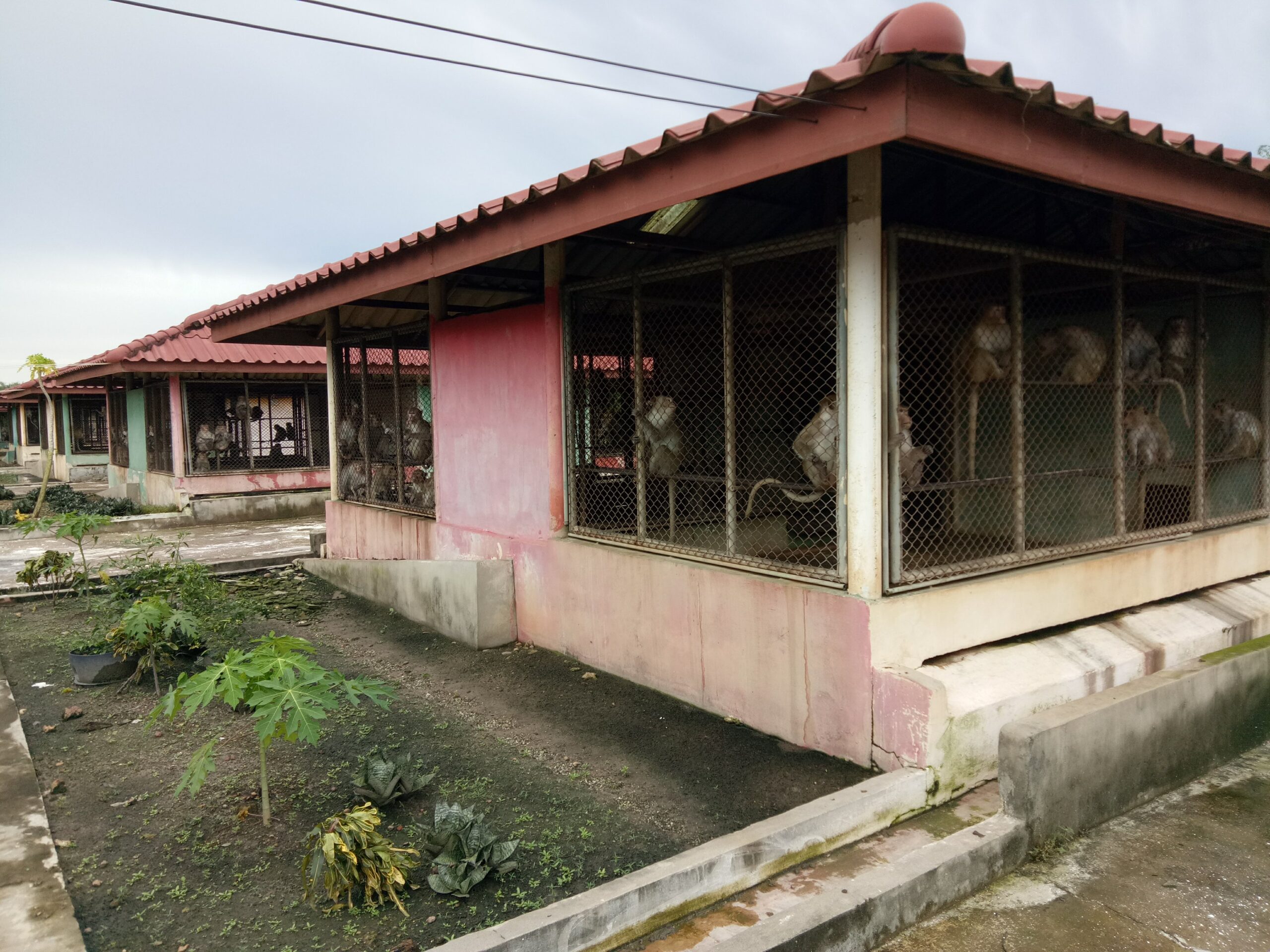
- Global wildlife trade regulator CITES has lifted sanctions imposed on Laos in 2023 for its failure to control criminal networks trading illegal wildlife products and other regulatory issues.
- Laos will now be able to trade in CITES-listed animals without special restriction, but will be monitored on an ongoing basis.
- Conservationists say the decision should mark a new chapter for the country and not a return to “business as usual”, in particular in relation to Laos’ history of trading long-tailed macaques.
- At a CITES meeting in November, Laos agreed to further safeguards related to the monkey trade.
CHIANG MAI, Thailand — Global wildlife trade regulator CITES has lifted trade sanctions against Laos, opening the door for the Southeast Asian nation to resume trade of long-tailed macaques and other species.
Some conservationists called the move “premature,” arguing that Laos must do more to curb the illegal wildlife trade, which is estimated to be worth billions of dollars a year globally.
Laos was sanctioned in 2023 for its failure to rein in criminal networks trading illegal wildlife products with near-impunity and to regulate bear bile and tiger farms.
But the country has made “significant progress” in addressing these issues, CITES’ Standing Committee said in Geneva on Nov. 4.
While Laos will now be able to trade in CITES-listed animals without special restriction, it does not end the review process for Laos. Ongoing monitoring of Laos’ adherence to CITES rules will determine its ability to continue exporting species listed under the convention.
“We recognize that sustained progress requires continued investigations, prosecutions, demand reduction and effective oversight of wildlife facilities,” Somvang Phimmavong, director-general of Laos’ Department of Forestry, wrote in an email to Mongabay.
In 2025, a joint Mongabay investigation with NGO GI-TOC identified 35 illegal wildlife shopping sites in Vientiane and Luang Prabang selling ivory, rhino horn, pangolin scales and other illegal wildlife products to Chinese tourists. By July 2026 the number of shops had grown.
Shortly after that, however, most of the shops had closed, with only six or seven believed to be operational as of August 2026, sources monitoring the trade in Laos told Mongabay.
Somvang of the Forestry Department told Mongabay that authorities had inspected 25 shops, ordered six to close and detained 27 foreign nationals. He requested the list of 35 shops identified by Mongabay to compare details.
Laos has provided CITES with a list of enforcement actions in an annual illegal trade report, according to a document prepared for the standing committee’s meeting in early November. The report is said to highlight 13 seizures made between December 2024 and June 2026 and another seizure of more than 1,755 kilograms (3,869 pounds) of ivory in Bolikhamxay province in August.
Somvang declined to share the report with Mongabay, saying he would need to review it for sensitive information before doing so.

The report’s findings seemed to have convinced CITES of the progress made — and conservationists agreed that significant shifts have happened internally within Laos.
“Wildlife law enforcement authorities have undoubtedly made considerable advances, particularly in addressing the illegal trade in wildlife products associated with exclusive Chinese tour group operations,” one regional conservationist told Mongabay in a message, speaking on condition of anonymity due to their ongoing work in the region.
But Laos must keep up the pressure on criminal groups, the conservationist said, emphasizing that whether any high-level offenders are brought to justice would be a test of Laos’ commitment.
“The lifting of the suspension should mark the beginning of a new phase of accountability, not a return to business as usual,” the conservationist said.

Trade is allowed, but conditional upon continued reform
The change in CITES’ policy towards Laos will have widespread and immediate ramifications for the region’s wildlife trade – both legal and otherwise – but the CITES Standing Committee did set certain conditions related to Laos’ ability to trade in the endangered long-tailed macaque (Macaca fascicularis).
Sources familiar with the Laos government have long suggested that the authorities’ ambition for getting off the CITES blacklist was largely fueled by a desire to trade in long-tailed macaques, which are bred in captivity in at least 10 facilities have been identified by Mongabay across the country, including those run by Vannaseng Trading Co. Ltd., which has long been accused of involvement in the illegal trade of lions, tigers, bears, monkeys, ivory and more.
In the Nov. 4 morning session at the CITES meeting, representatives from Germany proposed a shift in language of the CITES recommendations for Laos that would require Laos to show it has targeted not just illegal wildlife traders, smugglers or poachers, but also “organizers, financiers, and other key actors in the criminal networks involved.”
Likewise, the CITES representative from the U.K. stated it would support the lifting of the trade suspension, but only if Laos agreed to further safeguards related to the monkey trade.

“While we support the withdrawal of the recommendation to suspend commercial trade, we do consider that an additional recommendation might be warranted to ensure that appropriate safeguards … are in place before exports of captive-bred live specimens of Macaca fascicularis recommence,” the U.K. representative said at the meeting.
The recommendations from both parties were accepted by CITES and by Laos.
Breeding facilities in Laos and elsewhere for long-tailed macaques, which are used in biomedical research, have repeatedly been found to pass off wild-caught monkeys as captive-bred.
According to Somvang at the Laotian Department of Forestry, exports of monkeys will not resume until certain conditions are met.
“[T]he additional recommendation adopted by the Committee requires the necessary safeguards to be fully operational before any exports are approved,” he told Mongabay. “These include annual export quotas for the three registered breeding facilities, reliable individual identification and traceability, reconciliation of stock records, pre-export verification and compliance with live-animal transport requirements.”

Until Laos can prove to CITES that these policies have been implemented, the country’s long-tailed macaques will not be sold internationally, according to Somvang. Despite best estimates from 2022 suggesting a wild population of 300-500 long-tailed macaques in Laos, a study conducted by the National University of Laos in 2024 estimated that the country is home to 30,586 individuals — a figure many conservationists have questioned.
“Available field evidence suggests wild populations may be substantially lower than figures cited in support of further quotas, with surveys indicating that the species is absent from many habitats, and that only a few hundred individuals may remain nationwide,” said Mark Jones, head of policy at Born Free, an animal rights NGO, while addressing the CITES Standing Committee.
Mongabay also spoke to sources who suggested Laos had already begun seeking companies to export long-tailed macaques ahead of the CITES meeting in Switzerland.
“I cannot confirm at this stage that [Laos-based monkey farm operators] Vannaseng Trading, Sookvannaseng Integrated or Laos Acer Biotechnology will receive export permits in 2027,” Somvang said in response to questions about Laos’ plans for monkey exports. “Withdrawal of the suspension does not itself authorize exports by any company. Any application must satisfy the applicable national and CITES requirements, including verification of legal origin, captive-bred status and the safeguards adopted at [the CITES meeting].”

Performative or transformative enforcement?
Debbie Banks, campaigns manager at the Environmental Investigation Agency (EIA), a London-based NGO, said that while Laotian authorities had taken action against illegal wildlife shops catering to Chinese tourists, more remains to be done.
“It’s not that nothing’s happened, but it’s too early to say whether that’s performative enforcement or whether it’s truly transformative enforcement, and that’s what we need to see,” she said in an interview.
For years, she said, the EIA had shared intelligence on animal trafficking networks with Laotian authorities, only to see them continue to operate as normal.
She called for Laos to “move beyond arrests and seizures” and go after “the companies and persons involved at the top” of trafficking syndicates.
“We feel it was premature for the trade suspensions to be lifted, because the trade suspensions have clearly provided the political impetus to get us to this point, and we need that pressure to be maintained to see it through to effective enforcement.”
Additional reporting by Spoorthy Raman.
Banner image: Long-tailed macaques at a breeding facility in Laos. Image supplied by source.

