


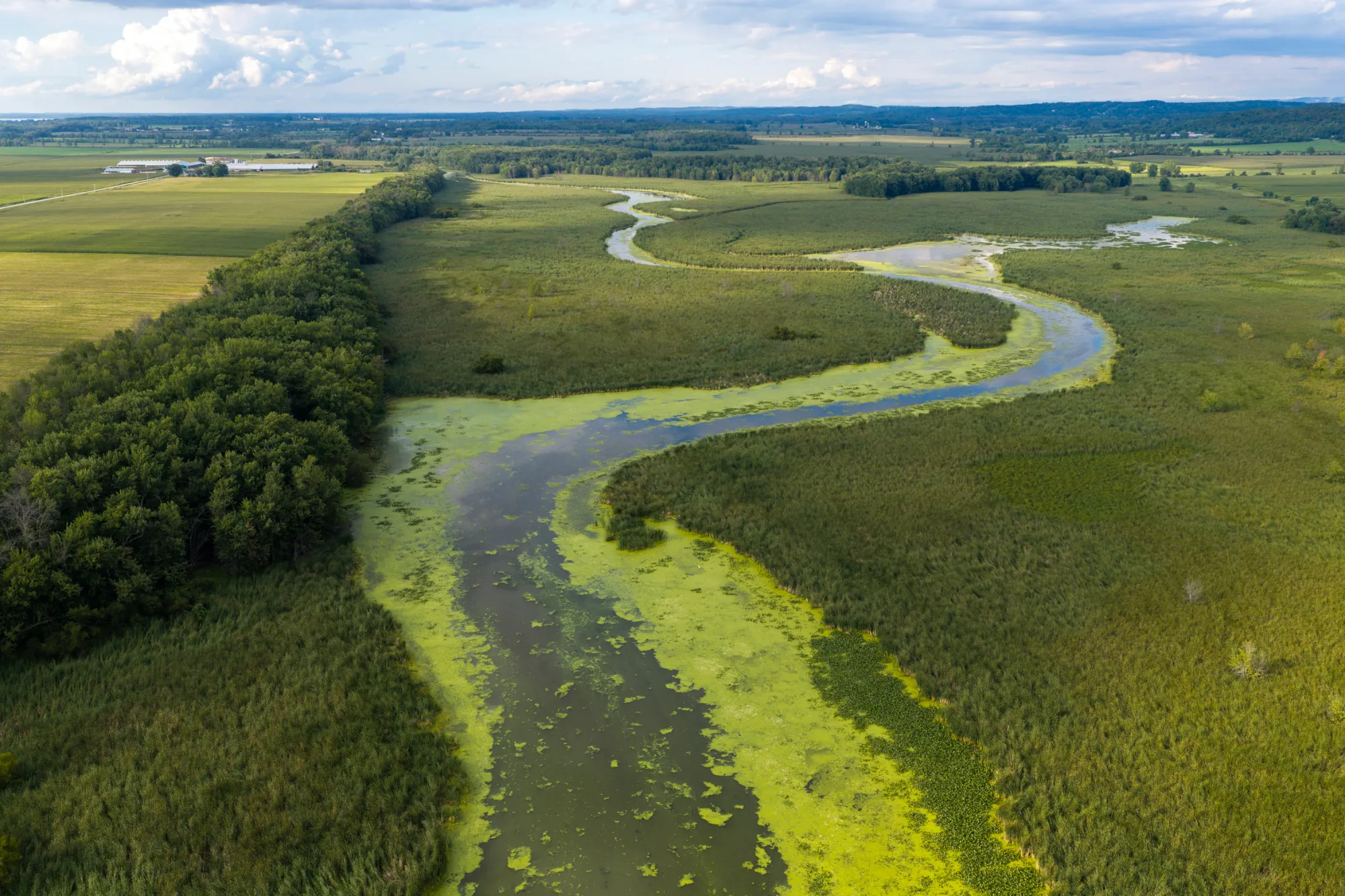
This summer, Vermont’s Clean Water Board celebrated a milestone: Over the past decade, the state has invested nearly a billion dollars to clean up its polluted streams, rivers and lakes. The vast majority of that money has gone toward Lake Champlain.
“I think that’s something to be extremely proud of,” said Douglas Farnham, the board’s chair.
Vermont was supposed to get an independent evaluation of what it has gotten for all that money. But that study was never done.
A decade ago, Vermont lawmakers mandated that the board submit an audit from an outside environmental consultant to determine whether the projects the state had invested in to improve water quality were working. The audit also was meant to examine whether the state’s agriculture and natural resource agencies are doing enough to enforce water quality regulations on farms, which are the biggest source of phosphorus in Lake Champlain.
Seven Days and ProPublica have teamed up to investigate the cleanup of Lake Champlain. Have you been affected by this issue? We’d like to hear from you.
Lake Champlain has been overloaded with phosphorus-laden runoff from farms, roads and urban sewers for decades. That pollution fuels potentially toxic blue-green algae blooms that have raised health concerns and hurt the state’s tourism industry. Under sustained pressure from citizens, environmental advocates and the U.S. Environmental Protection Agency, Vermont’s leaders embarked on an ambitious initiative to improve the lake’s water quality, enshrined in the state’s landmark 2015 Clean Water Act.
Now, halfway through a 20-year cleanup effort mandated by the EPA, some lawmakers worry they don’t have enough information to ensure that the state is pursuing the most cost-effective cleanup strategies.
When lawmakers approved the clean water law, they took the major step of establishing a fund to pay for the cleanup and a board to administer it. Since 2016, Vermont has disbursed $928 million — $755 million in state funding and $173 million in local and federal dollars — on water quality projects and programs. That’s nearly as much as what Vermont has spent on paving and resurfacing state highways over the past decade.
As part of the law, the legislature also required the board’s leaders to provide it with a full program audit by January 2021.
But the board received no responses to an initial request for proposals in 2020. Lawmakers extended the deadline to 2023. Yet again, no outside firms bid on the audit.
Farnham said the board received informal feedback from some firms that the audit’s scope was too broad and complex. He reported back to fellow board members that he and Julie Moore, secretary of the Vermont Agency of Natural Resources, had asked legislators what to do next but didn’t receive any clear suggestions.
The board never issued a new request or revisited the matter (until Seven Days and ProPublica recently asked about it), and Vermont’s legislature never followed up to narrow the scope.

Former state Rep. David Deen, who sponsored the clean water law and retired in 2018, said he was dismayed to learn that the audit never happened.
“Personally, I find it amazing that they haven’t done that audit and that somebody in the legislature did not hold them to account to conduct that audit,” he said.
Rep. Amy Sheldon, the longtime chair of the House Committee on Environment, recalled hearing about the audit challenges but noted that it’s difficult for the legislature to follow up because Vermont’s lawmakers don’t have staff. In the other chamber, former state Sen. Chris Bray, who chaired the natural resources committee until 2025, said he did not recall hearing about the missing audit.
In an interview, Farnham acknowledged that an outside audit would be helpful. But he said the board already has robust tools for assessing progress through a yearly performance report compiled by the Vermont Department of Environmental Conservation, which coordinates and tracks most of the state’s clean water spending.
“We’ve got enough eyes coming at it from different angles that I think that mutes the need for that comprehensive audit,” he said.
The annual reporting process has improved greatly since the audit was mandated, and the DEC’s website “provides a lot of transparency,” about how the state is spending clean water money and the results, said Emily Bird, director of the department’s Water Investment Division.
But some current and former state officials say that approach isn’t a substitute for an audit to determine whether Vermont is getting adequate and cost-effective returns on its huge water quality investments.
The last independent assessment of clean water spending was a 2019 report from the state auditor. It found that a disproportionate amount of money was being spent on wastewater treatment plants, which contributed by far the smallest share of phosphorus pollution, instead of targeting bigger sources such as agriculture.
That mismatch persists seven years later. Agriculture is the largest source of phosphorus runoff, yet agricultural water quality programs receive less than a third of the total clean water funding in the current budget.
“I’d like to think they’re getting something done,” said Doug Hoffer, state auditor since 2013, referring to state agencies and legislators. “But the only way to know that is to hire someone who is independent to study that. And it’s really concerning that hasn’t been done. It really raises questions about accountability on both sides.”

An audit would do a few key things that the department’s performance reports do not, Tee Thomas, a former water finance director for the state of Vermont who now runs her own environmental consulting firm, noted via email. The reports rely on models for how effective each type of project is at reducing phosphorus. An audit would analyze water quality monitoring data from rivers and lakes to check those estimates. It would also scrutinize how well Vermont has managed projects and whether it’s gotten results, she said.
The Clean Water Fund gets, on average, $25 million to $30 million each year from the state’s rooms and meals tax, a surcharge applied to some property transfers and deposit money that consumers pay on cans and bottles. That money is paired with between $6 million and $12 million from the state’s annual capital bill, which finances infrastructure projects. The funds have gone to programs and projects to restore wetlands, expand natural buffers around fields, shore up rural roads against erosion, upgrade stormwater drains and improve manure storage on dairy farms.
The state treasurer in 2017 estimated that the cost of Vermont’s 20-year initiative would be $2.3 billion.
But finding that money could be difficult as state government spending outpaces tax revenue and cooling housing and tourism markets squeeze clean water funding sources.
Without the audit, the governor and legislators responsible for coming up with the next billion dollars’ worth of projects may not have a clear understanding of what Vermonters have gotten for the last billion, lawmakers said.
Jane Kitchel, who as longtime chair of the state Senate’s Committee on Appropriations was known for her encyclopedic knowledge of the Vermont budget, noted that a billion dollars is a significant sum for the small state. Had she not retired from the body two years ago, she said, reviving the audit “would be one of the things I’d put on my to-do list.”
The next legislative session starts in January. State Sen. Anne Watson, who chairs the Committee on Natural Resources and Energy and serves on the Committee on Appropriations, told Seven Days and ProPublica that she would likely discuss whether to revive the audit with her colleagues.
“If we value having a clean lake,” she said, “then we need to put our resources toward places that are going to make a difference, and it’s unclear to me right now that what we’re doing is effective.”

