


The positive tone “was intentional,” said Loubet. “There’s a sense of gloom in the country. We need to offer a little hope, a vision, a direction.”
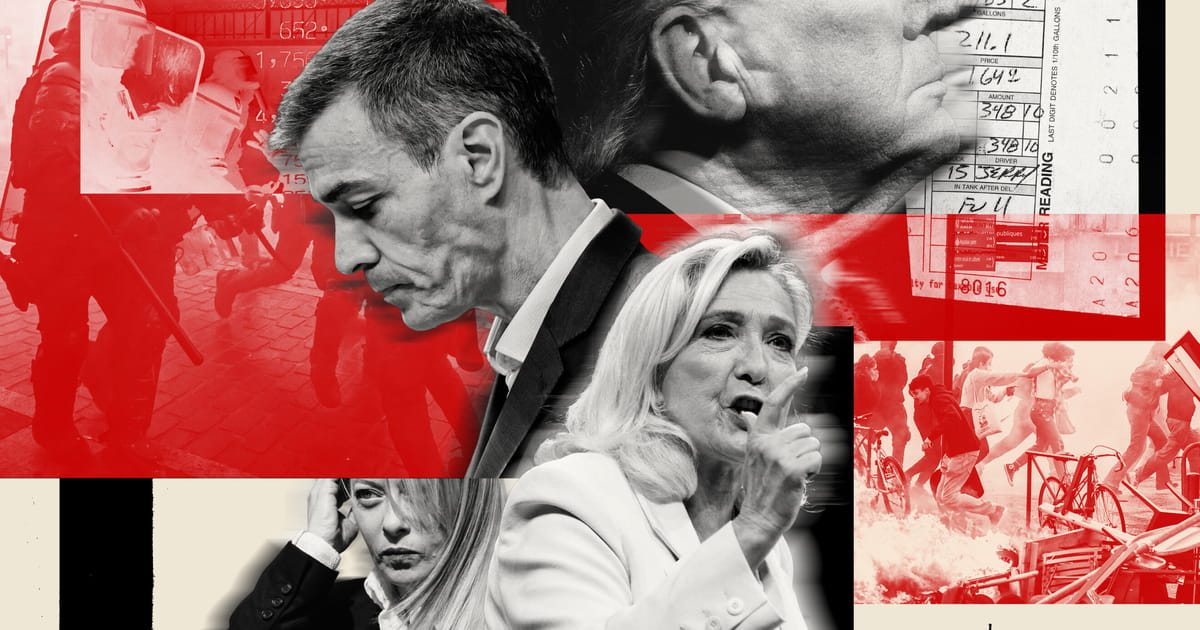
The recent protest movements that have swept Spain, France, Italy and, to a lesser extent, Germany, have centered around complaints about the cost of living, especially for the young. They echo anger in the U.S., where polls showed young Americans felt their economic situation was deteriorating as the country headed in the wrong direction.
“The affordability debate in the United States breaks on class lines,” said Penny Naas, a senior vice president at the transatlantic think tank German Marshall Fund. “If you’re an American and you are not well off and energy plays a much bigger part in your household income, you’re feeling much more hurt by the current situation.”
“There are some similarities with what’s going on in Europe,” she added, pointing at school protests in France that started in the relatively poor outskirts of cities.
So far, centrist candidates have struggled to find the right messaging on the issue. Le Pen’s top centrist challenger, former Prime Minister Edouard Philippe, has struggled to gain traction with a pitch centered on economic realism.
In Germany, Chancellor Friedrich Merz’s conservative Christian Democrats are also feeling the squeeze after suffering a series of electoral defeats, losing to the far right in eastern states and the radical left in Berlin.
