


Nothing in almost five years of Russia’s war on Ukraine did more damage to the Kremlin’s hold on Russian public opinion than when Russian President Vladimir Putin signed a decree to forcibly mobilize 300,000 men for the war on Sept. 21, 2022. Levada’s monthly mood survey, run continuously since the 1990s, recorded the sharpest one-time collapse in its history: The share of Russians describing their general mood as “great” fell from 15 percent to 7 percent almost overnight, while those reporting fear more than tripled. The share who believed the war was “progressing successfully” dropped from 73 percent in May to 53 percent by the end of September. An estimated 300,000 to half a million men of fighting age left the country within two weeks of the decree, more than had fled during all of the war up to then. Kazakhstan alone recorded some 400,000 arrivals from Russia by late November that year. At the Verkhny Lars border crossing into Georgia, cars were lined up for days.
So acute was the fallout from the 2022 mobilization drive that many concluded it was too risky for Putin to repeat—even in an authoritarian police state where citizens’ opinions matter little. Thus, the biggest question surrounding Russia’s sham parliamentary elections last month was never who would win, but whether another extremely unpopular mobilization would have to wait until after the vote.
The election itself was depressingly predictable. Putin’s party, United Russia, won roughly 58 percent and 349 of 450 seats, its largest majority ever. The other parties are all Kremlin-approved, with true opposition parties quickly banned. Kremlin insiders told Meduza that participation in this sham was secured “through very dirty means”: state employees ordered to report their own votes, teachers made to track which parents had voted and report every two hours, managers calling out nonvoters in group chats.
More than five weeks later, there is no mobilization decree. The Kremlin, of course, has been denying any such plan all along—18 times in the three months before the vote, according to the Moscow Times’ count. On Sept. 1, Putin called the rumors “chush sobachya” (roughly, “dogshit”) and an “information attack.” Two days later, he said: “There is no scenario today that would require mobilization.”
As Russia observers like to scoff, something isn’t true until the Kremlin denies it. Two days before Putin’s 2022 mobilization decree, then-Duma Defense Committee chair Andrey Kartapolov assured Russians they had no reason to fear that such a thing might happen. Kremlin spokesperson Dmitry Peskov also issued a high-profile denial just before it was announced.
This time around, however, asking whether there will be another mobilization decree may be asking the wrong question. That nothing has been announced does not mean that a new mobilization wave is not happening. Those expecting a grand announcement followed by another stampede to the border will probably be disappointed—because there is no need for another decree.
For one, the old mobilization never quite ended. In May 2023, the Russian Supreme Court ruled that a mobilization period runs from the day it is declared until a decree formally ends it. No such end-of-mobilization decree exists, and the state keeps legislating on that basis. In July, for example, parliament expanded the pool of convicts eligible for military service in a law that explicitly applies “during mobilization, martial law, or wartime.” In August, a Supreme Court ruling mentioned “the period of mobilization” as an aggravating circumstance when it upheld a five-year sentence against a Chita man convicted over a comment on social media. Legally, Russia has been continuously mobilized since 2022. Nothing requires Putin to sign anything new.
Nor is the Kremlin desperate enough for manpower to abandon the methods that have worked so far: financial inducements and ad hoc coercion instead of a dramatic nationwide call-up. Even as Ukraine now imposes around 30,000 to as many as 40,000 casualties on the Russians each month, recruitment is strained but not breaking. According to Janis Kluge, who tracks Russian recruitment numbers by looking at regional budget payments, about 263,000 new contracts were signed in the first nine months of 2026, down from 292,000 during the same period last year, with September running at roughly 1,000 a day. The average sign-up bonus has climbed to almost 2 million rubles (or almost $25,000) per contract, nearly 30 percent more than last year. In the Khanty-Mansi region of Siberia, for example, the one-time sign-up bonus is roughly 30 times the average local monthly wage.
With recruitment struggling to replace battlefield losses, the authorities have increasingly resorted to force. Since June, independent Russian outlets have documented draft raids where plainclothes men in unmarked vans, sometimes with regional government license plates, grab men off the street or out of workplaces and take them to enlistment offices to sign contracts under duress. By late August, three legal-aid groups told Verstka that they had complaints from at least 17 regions. Idite Lesom, a hotline for draft dodgers, took three times as many calls in August as during the same month one year earlier. Its director, Grigory Sverdlin, describes who gets targeted in the recruitment raids: men, largely in poor, remote regions, who are burdened with debt, under police investigation, or facing other exploitable circumstances.
In Nizhny Tagil, authorities reportedly paid private “recruiters” 400,000 rubles per man delivered, and a local prosecutor has complained that violent gangs and corrupt police have joined the trade. Kluge told CNN that coercion of this kind is probably not directed from Moscow, which only sets recruitment quotas for each region to fulfill. Passing responsibility down to governors, employers, and private agents—and not asking questions about how the targets are met—keeps the Kremlin, and in particular Putin, from being associated with the abuses.
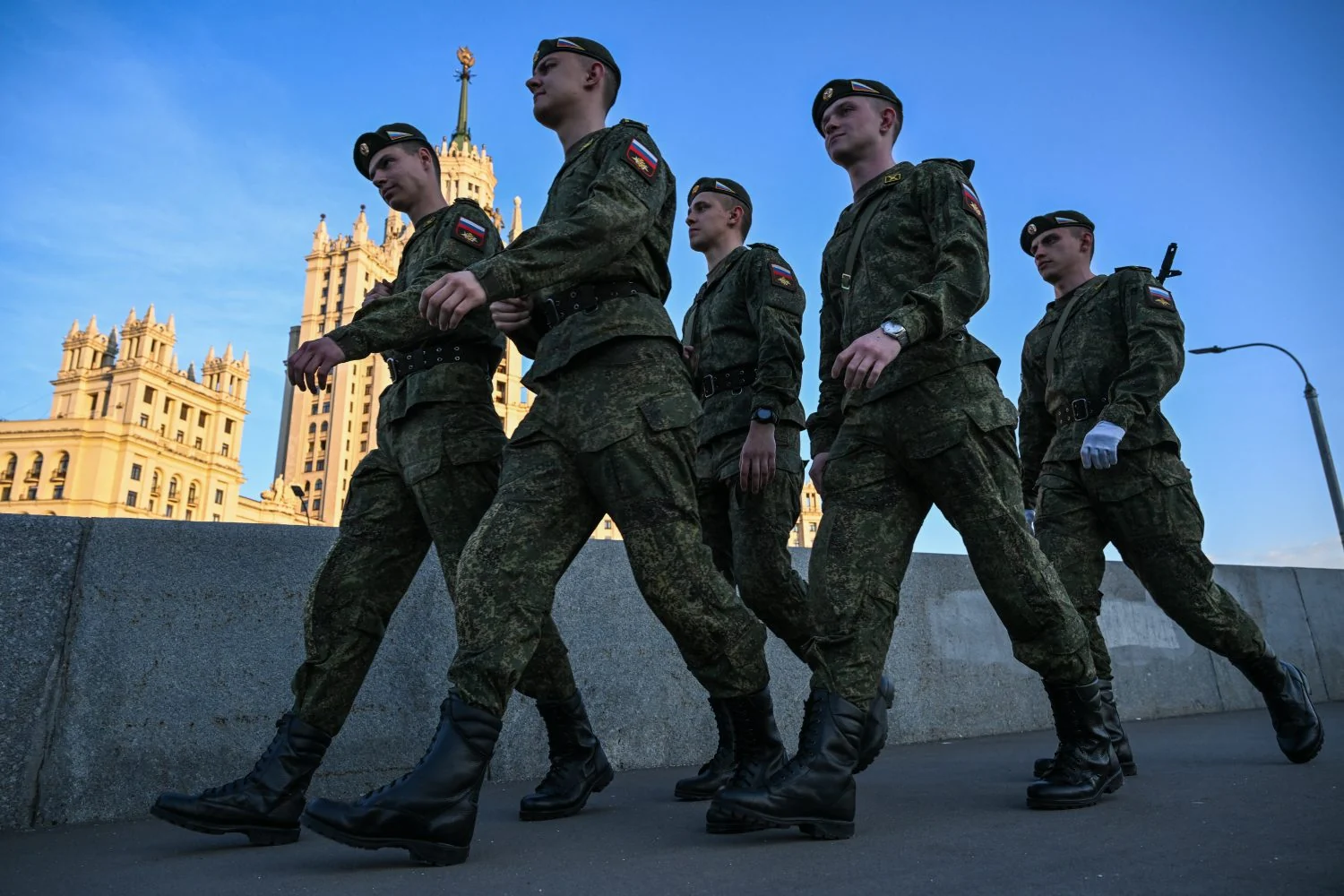
The line between regular conscripts—young draftees who normally don’t serve in war—and the contract soldiers who do is also blurring. Since January, Russia has run a perpetual draft, with call-ups year-round and dispatches to units each spring and fall. The General Staff of the Russian Armed Forces said about 120,000 conscripts from the fall cycle began heading to their units on Oct. 10, allegedly none posted to Ukraine. But Putin has repeatedly pledged not to send conscripts or reservists to fight. Only six months after Putin first made that pledge in March 2022, the reservists were called up. Similarly, conscripts barely out of bootcamp were dispatched to repel the Ukrainian incursion into Russia’s Kursk region in August 2024, where many died or were captured.
That teenage or 20-something conscripts aren’t sent to fight and die in Ukraine remains technically true while missing the point, since they are routinely pressured into signing contracts. These contracts are then effectively indefinite due to the 2022 mobilization decree, still active, that makes it all but impossible for them to quit. Their coerced signature on a contract, in other words, removes the distinction that Putin’s pledge to young conscripts and their families relies on. Idite Lesom logged dozens of appeals in August from conscripts (and their relatives) facing persuasion, threats, or worse.
The population targeted by the ongoing mobilization has barely changed since 2022. At that time, the men were disproportionately drawn from non-ethnic-Russian republics such as Buryatia, Dagestan, Tuva, and Yakutia, where poverty, high unemployment, low salaries, few alternatives, and a sign-up bonus made military service a relatively attractive option. The women-led protests against the war that followed were concentrated there as well, as were the harshest crackdowns. The current wave of draft raids has followed a similar pattern so far. It is concentrated in poor, remote, and administratively sidelined places like Penza and Izhevsk, although draft-age men are now also being stopped in the streets of Moscow.
None of this proves that a formal call-up won’t come. If the situation at the front deteriorates sharply or recruitment numbers plummet, Putin could sign a new decree. But that would be a public admission that the quiet system has failed, and any nationwide announcement would bring back the shock—and potential exodus—of September 2022. Until then, Russia will keep feeding its war machine as it does now: With a recruiter intent on meeting his quota and getting his cut, snatching men into an unmarked van with tinted windows in a crumbling post-industrial town thousands of miles from Moscow.
