


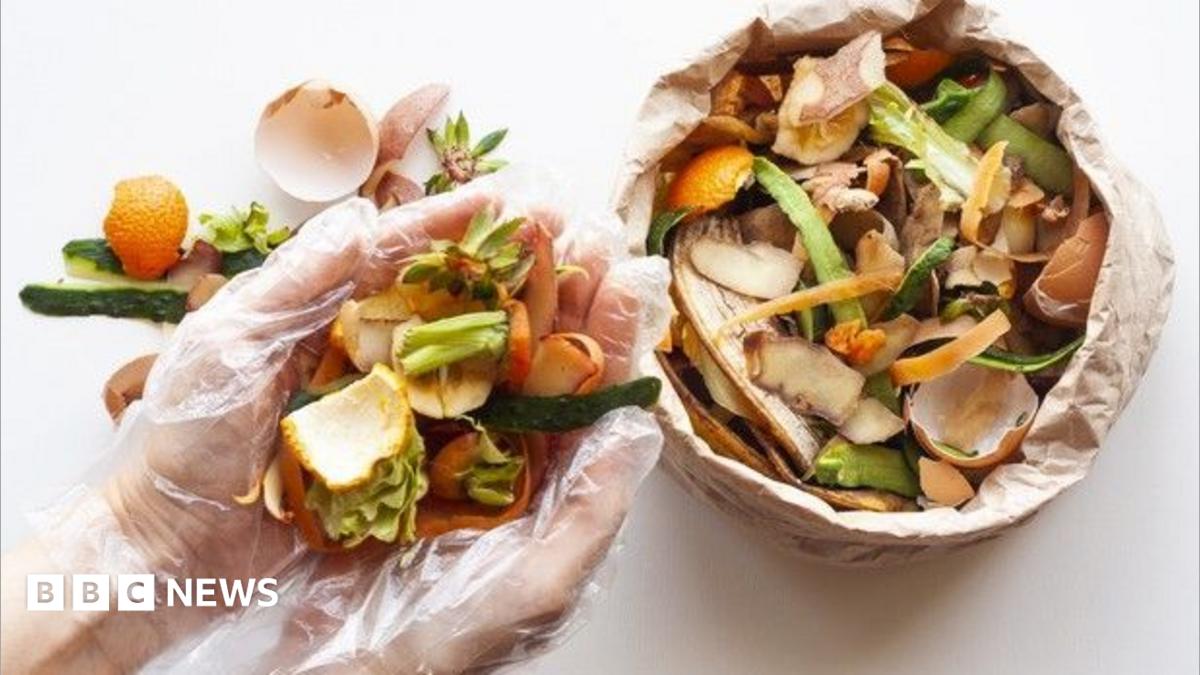
The college has been experimenting in its canteen, external, offering staff and students root-to-tip meals, such as banana skin curry.
At home, people might want to try leaving skins on kiwi fruit, using broccoli stalks in stir-fries, or adding bell pepper seeds to dishes, the researchers suggest.
While cooking can change the fibre content, it doesn’t usually destroy it all.
Steaming, microwaving, or quick sautéing tends to preserve nutrients best.
Dr Gibson said: “This isn’t about perfection and this isn’t about forcing people to eat unpalatable food – it’s about recognising the nutritional value in components we’ve been conditioned to discard.”
She acknowledges some may be hesitant to try.
Some diners raised concerns during the canteen trial.
Over the nine-week period, ‘root-to-tip’ dishes made up a third of total daily hot menu sales at the university.
Those choosing the new dishes were less likely to finish their meals than diners eating from the conventional menu.
Kirsten Jackson, a dietitian with the British Dietetic Association who specialises in irritable bowel syndrome (IBS), says the food hacks are useful as long as produce is washed thoroughly.
She suggests blending pineapple cores into smoothies, but says the tough skins are not something she would recommend.
Some stalks may need to be cooked or finely chopped to make them more palatable, she adds.
“Just because a broccoli stalk doesn’t fit into tonight’s meal doesn’t mean it needs to go in the bin. Chop it up, freeze it and add it to a soup or stir-fry another day,” she said.
She advises increasing fibre intake gradually to avoid bloating, noting that people with IBS may find it harder to tolerate.
And there are some things to avoid entirely, said the British Nutrition Foundation.
Green potatoes and rhubarb leaves contain toxic compounds, while tough stalks and seeds may not be suitable for young children.
