


Reading Time: 3 minutes
Click here to read highlights from the story
- The gap in Wisconsin voter turnout between voters with and without disabilities is among the largest in the nation.
- The state has “many excellent accessibility requirements,” but it’s a challenge ensuring people are aware of them and that they’re implemented correctly, said Lisa Hassenstab of Disability Rights Wisconsin.
- Wisconsin Watch intern Baylee Alger, who lost his sight at 2 years old, reports on his perceived barriers to voting and what he learned while reporting this story.
Of Wisconsin’s 3.8 million voters, 25% – or an estimated 950,000 – have a disability, according to Disability Rights Wisconsin.
Yet Wisconsin’s voter turnout gap between voters with and without disabilities is among the largest in the nation at 11.7%, according to a Rutgers University analysis of 2022 voter turnout data.
I have been blind since I was 2 years old. A brain tumor destroyed my optic nerves, and luckily, the tumor hasn’t spread. I’ve lived a very productive life since then: I’ve worked, I’ve gotten an education, I published a book, and I am a contributing member of society.
Yet as ashamed as I am to say it, I’ve never voted, and I’m almost 27 years old.
Here are my major barriers to voting: If I mail in my vote, I need to ask someone for help checking the boxes on the ballot. If I vote at the polls, I need to ask for help choosing my candidate from the screen – or so I thought.
Sign up for Northeast News, our free email newsletter focused on northeast Wisconsin.
I’m not alone.
Lisa Hassenstab, public policy manager at Disability Rights Wisconsin, said the topics people call about most frequently include transportation to polling places, obtaining a photo ID, polling place accessibility and questions about guardianship and voting.

Her organization mainly focuses on curbside voting, electronic ballot marking equipment and accessible absentee ballot return assistance, she said.
Disability Rights Wisconsin is involved in litigation to make absentee ballots “properly accessible,” Hassenstab said. In August, a judge ruled that Wisconsin’s current absentee ballot violates the Americans with Disabilities Act.
However, there wasn’t time to implement a change ahead of the November election, and the judge has not yet ruled on a replacement. Due to this, Hassenstab said she doesn’t know what the new ballot will look like or when it will be implemented.
“There are many excellent accessibility requirements in the electoral process, particularly in Wisconsin, Hassenstab added. “One of the challenges is ensuring they are implemented appropriately and that people know they are available.”
Disability Rights Wisconsin offers education and outreach geared toward voters with disabilities and those who support them, including care staff, families, guardians and other disability rights organizations.
Help is also available to municipal clerks through the Wisconsin Elections Commission’s Accessibility Supply Program, which “provides accessibility tools for election purposes at no cost to counties and municipalities,” Hassenstab said.
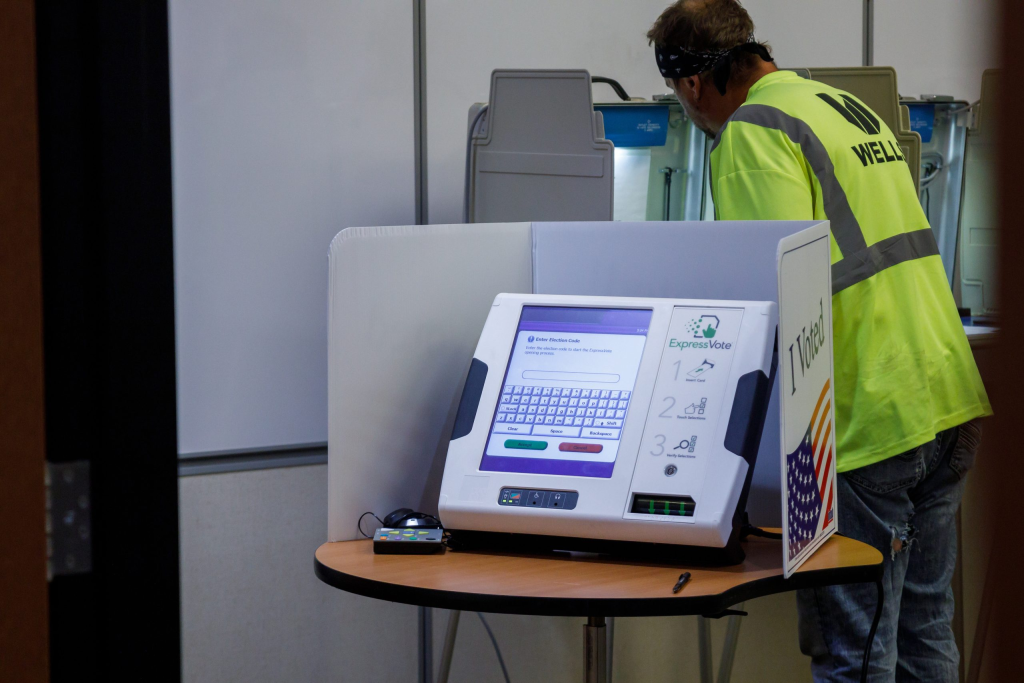
Michelle Seidl, Bellevue clerk-treasurer, said all municipalities are required to have curbside voting, accessible buildings and parking, as well as a machine called the ExpressVote. ExpressVote machines allow voters to mark ballots electronically, enlarge the print on the screen and use screen readers if they bring headphones.
I wasn’t aware of this until I started this story, and it is promising. I still wonder if it’s the right answer for me. Unfortunately, I wasn’t able to visit an ExpressVote machine before publication to test it, but I’m glad to know the machines exist. Now, we just need to keep moving upward.
Learn more
Visit the Wisconsin Disability Vote Coalition website at disabilityvote.org to find resources, including a toolkit to make voting plans.
Have a question about accessibility at the polls? Call the Disability Rights Wisconsin Voter Hotline at 1-844-347-8683 or email your question to info@disabilityvote.org.

Wisconsin Watch is a nonprofit, nonpartisan newsroom. Subscribe to our newsletters for original stories and our Friday news roundup.
Outreach, education key to voting accessibility, Wisconsin advocates say is a post from Wisconsin Watch, a non-profit investigative news site covering Wisconsin since 2009. Please consider making a contribution to support our journalism.
