

Close Menu
NCIJ Network NCIJ Network
    What's Hot

    Keystone to Destroy 18,835 Hardware Wallets After Hackers Steal Device Verification Key

    October 27, 2026

    The Philippine lawyer who beat an oil giant: Rose Liza Eisma-Osorio on defending Tañon Strait

    October 27, 2026

    Space Junk Is a Problem We Know How to Solve

    October 27, 2026
    Facebook X (Twitter) Instagram
    Trending
    • Keystone to Destroy 18,835 Hardware Wallets After Hackers Steal Device Verification Key
    • The Philippine lawyer who beat an oil giant: Rose Liza Eisma-Osorio on defending Tañon Strait
    • Space Junk Is a Problem We Know How to Solve
    • Did priest killed by falling crucifix steal $2M in church funds? There’s no proof
    • French government mulled blocking social networks and mobile internet amid protests – POLITICO
    • Vendor Key Leak Puts Data of 238,000 Denver Health Plan Members at Risk
    • Dinosaur skeleton goes to auction in New York with £4.5m price tag
    • Five new mussel species reveal how much biodiversity US rivers still conceal
    • About
      • Our Team
      • Editorial Policy
      • Editorial Independence
      • International Support
    • Trust & Standards
      • AI Usage Policy
      • Conflict of Interest Policy
      • Corrections Policy
      • Ethics Policy
      • Fact-Checking Policy
      • Source Protection
    • Get Involved
      • Guide for Sources
      • Support Independent Journalism
    • Legal
      • Cookie Policy
      • Privacy Policy
      • Terms of Use
    Facebook X (Twitter) Instagram
    NCIJ Network NCIJ Network
    Tuesday, October 27
    • Home
    • World
    • Ai
    • Business
    • Politics
    • Health
    • Crypto
    • Science
    • Technology
    • Cybersecurity
    • Defense & Security
    • Economy
    • Energy
    • Europe
    • More
      • Fact Check
      • Investigations
      • Opinion & Analysis
      • Environment
    NCIJ Network NCIJ Network
    Home»Cybersecurity

    Microsoft Authenticator Flaw Let Permissionless Android Apps Steal Work Account Tokens

    NCIJ NETWNCIJ NETWORKBy NCIJ NETWNCIJ NETWORKOctober 27, 2026 Cybersecurity No Comments4 Mins Read
    Share
    Facebook Twitter LinkedIn Pinterest Email

    Swati KhandelwalOct 27, 2026Vulnerability / Mobile Security

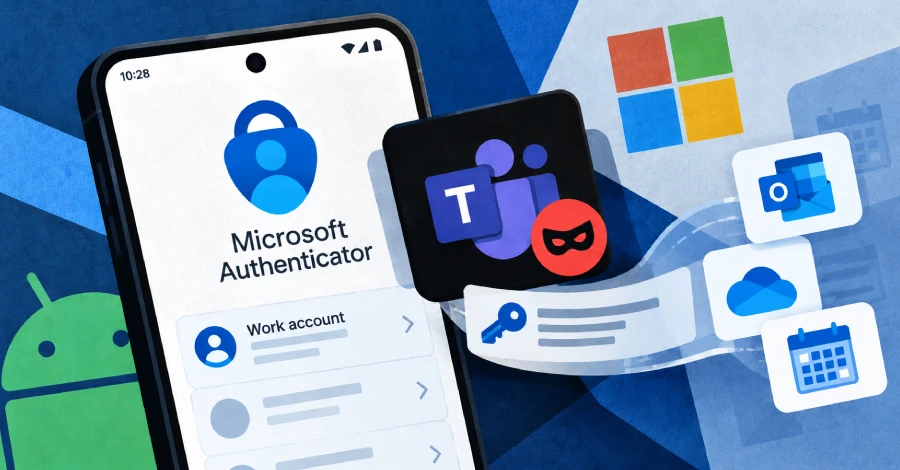
    Microsoft has fixed a flaw in its Authenticator app for Android that let a malicious app with no permissions pose as a trusted Microsoft app, such as Teams, and collect sign-in tokens for a victim’s work account.

    Microsoft tracks the flaw as CVE-2026-80097 and fixed it in Authenticator for Android version 6.2606.4246, so anyone using the app should update.

    In the researchers’ tests, the tokens gave full access to the account’s email, files, and calendar. Microsoft says exploitation also needs the victim to complete a sign-in step in Authenticator, and that the flaw has not been used in attacks.

    The research comes from Ofek Levin, working through a fellowship program at the security firm Enclave, which published the technical details on October 23, 2026. Microsoft assigned the CVE on September 8 and rated it 8.6 on the CVSS scale, which it labels “Important.”

    Cybersecurity

    On Android, Authenticator does more than show six-digit codes. It also acts as a broker: when Teams, Outlook, or another Microsoft app needs to sign a user in, it asks Authenticator, and Authenticator hands back a token, a digital pass that proves the user is logged in. Because the broker controls access to the entire account, it should be careful about which app it grants a token to.

    The flaw let the wrong app get one. Authenticator exposes a component, an activity named AccountChooserActivity, that any app on the device can start. When the attacker’s app started it, Authenticator built its token request from values the attacker’s app supplied, including the name of the app it claimed to be. The app said it was Teams, and the broker believed it.

    A signature check was supposed to stop this, but it did not. The check looked up the real signature of the app being impersonated and confirmed the request matched it. Because Teams was genuinely installed on the device, its real signature was there to read, so the check passed.

    Authenticator could also see which app had actually made the request, Enclave found, but it did not use that to decide whether to hand over a token.

    In Enclave’s tests, posing as Teams and requesting Microsoft Graph tokens returned permissions to read and send mail, read and write files, and read and write calendars, among others.

    Microsoft describes the result more generally: a successful attacker could authenticate as the signed-in user and reach that user’s resources. The tokens apply to the work account signed into Authenticator on that device, not to other accounts.

    The two accounts disagree on one point a reader should weigh. Enclave reported that its proof of concept returned tokens without any user interaction, other than the presence of a signed-in account.

    Cybersecurity

    Microsoft’s advisory says exploitation requires installing a malicious app on the device and convincing the user to complete an authentication flow in Authenticator. Its CVSS score also indicates that the flaw requires user interaction.

    Microsoft says the flaw has not been exploited and was not publicly disclosed before the fix, and rates exploitation as “less likely.” It was part of the company’s September 2026 Patch Tuesday and was not one of the two Windows flaws flagged that month as already under attack. The vulnerability is not listed in the U.S. CISA Known Exploited Vulnerabilities catalog as of October 26, 2026.

    The fix is to update Microsoft Authenticator for Android to version 6.2606.4246 or later, as linked in Microsoft’s advisory. Organizations that manage Android devices can require that minimum version through their device management. Microsoft’s advisory gives the fix but does not say whether updating cancels any token a malicious app may already have obtained, so that remains unclear from the available sources.

    account Android apps Authenticator Flaw Microsoft permissionless Steal tokens Work
    NCIJ NETWNCIJ NETWORK
    • Website

    Keep Reading

    Keystone to Destroy 18,835 Hardware Wallets After Hackers Steal Device Verification Key

    Did priest killed by falling crucifix steal $2M in church funds? There’s no proof

    Vendor Key Leak Puts Data of 238,000 Denver Health Plan Members at Risk

    Australia Gets Into Amadey Malware Backend, Cuts Off Access to 180,000 Infected Computers

    Scientists discover a hidden flaw that challenges 40 years of superconductor science

    Risks Spelled Out for Anthropic Investors Include Possible Harms From Runaway AI

    Add A Comment
    Leave A Reply Cancel Reply

    Editors Picks

    Keystone to Destroy 18,835 Hardware Wallets After Hackers Steal Device Verification Key

    October 27, 2026

    The Philippine lawyer who beat an oil giant: Rose Liza Eisma-Osorio on defending Tañon Strait

    October 27, 2026

    Space Junk Is a Problem We Know How to Solve

    October 27, 2026

    Did priest killed by falling crucifix steal $2M in church funds? There’s no proof

    October 27, 2026
    Latest Posts

    Bitcoiners Warned Of Wrench Attacks After Tax Authority Leak

    August 15, 2026

    Why tech bosses keep sharing their manifestos about AI

    August 15, 2026

    Westminster council threatens Charing Cross soup kitchen with closure | Homelessness

    August 15, 2026

    Subscribe to News

    Get the latest sports news from NewsSite about world, sports and politics.

    NCIJ Network is an independent digital news platform delivering trusted investigative journalism, European and global news, in-depth analysis, and fact-based reporting with accuracy, transparency, and integrity.

    Facebook X (Twitter) Instagram Pinterest YouTube

    Keystone to Destroy 18,835 Hardware Wallets After Hackers Steal Device Verification Key

    October 27, 2026

    The Philippine lawyer who beat an oil giant: Rose Liza Eisma-Osorio on defending Tañon Strait

    October 27, 2026

    Space Junk Is a Problem We Know How to Solve

    October 27, 2026

    Subscribe to Updates

    Get the latest creative news from FooBar about art, design and business.

    Type above and press Enter to search. Press Esc to cancel.