


- The International Seabed Authority (ISA), a U.N.-associated body, has long managed activities related to deep-sea mining in international waters. But after the Trump administration issued an executive order in 2025 calling for the U.S. to develop its deep-sea mining sector, companies have been applying to the U.S. for rights to explore and exploit the international seabed, challenging the ISA’s authority.
- In the Clarion-Clipperton Zone of the Pacific Ocean, a hotspot of mining interest in international waters, a Mongabay analysis shows that companies have either applied to the U.S. or already been granted rights to areas of the seabed equal to about half the expanse already designated for mining activities by the ISA.
- Several of these claims overlap, as depicted in our interactive map, raising concerns about the management of the international seabed.
- Critics already concerned that deep-sea mining could have detrimental effects on the marine environment said U.S.-led acceleration of the industry would only benefit the U.S. and U.S. companies, rather than benefiting developing nations, as the ISA is mandated to do.
U.S. ambitions to mine the deep sea are rapidly expanding across the ocean, not only in the country’s own waters, but also on the high seas — the vast expanse of ocean outside any one country’s jurisdiction. In the Clarion-Clipperton Zone of the Pacific Ocean, a hotspot of mining interest in international waters, a Mongabay analysis shows that companies have either applied to the U.S. or already been granted rights to areas of the seabed equal to about half the expanse already designated for mining activities by the international community. Most of the applications to the U.S. occurred within the past year and a half, a fraction of the 25 years the multilateral U.N.-affiliated International Seabed Authority (ISA) has spent issuing seabed mining exploration licenses.
U.S. applicants are not only seeking rights to explore the deep seabed, but some are also applying for commercial recovery permits. If approved by the U.S. National Oceanic and Atmospheric Administration (NOAA), these recovery permits would allow the companies to extract and eventually sell the minerals. While the ISA can also accept mining exploitation applications, no company has yet submitted one to the organization. No other country or institution is known to unilaterally accept applications to mine in international waters, and commercial-scale seabed mining has not yet begun anywhere in the world.
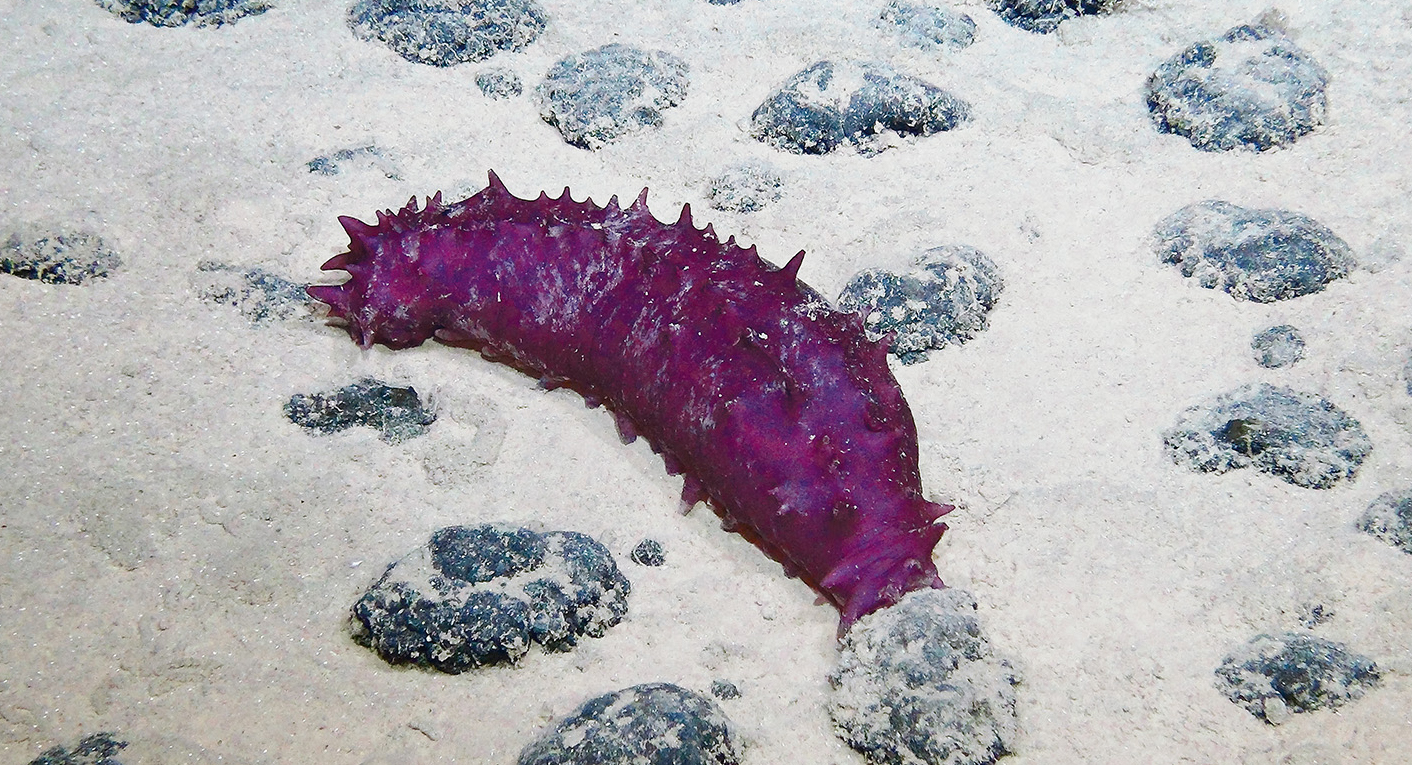
Deep-sea mining companies are interested in many parts of the international seabed, but Mongabay’s analysis focused on the Clarion-Clipperton Zone (CCZ), an extensive stretch of the Pacific Ocean between Mexico and Hawai‘i that holds vast quantities of polymetallic nodules — mineral-rich rocks that resemble burnt potatoes.
Mongabay’s analysis also revealed overlaps between claims in the CCZ. U.S. applicants are seeking rights to seabed areas that overlap with areas the ISA has already contracted, as well as areas the ISA holds in reserve for future mining and to benefit developing countries. There are overlaps between ISA and U.S. applicants, and overlaps between U.S. applicants.
The scale and locations of the U.S. claims, as well as the potential overlaps, are raising legal and regulatory questions about who has authority over the seabed in international waters, which are global commons beyond any nation’s sole jurisdiction. Some experts expressed concern that a U.S. move to unilaterally permit mining in the high seas could weaken or even topple multilateral systems that have long governed the oceans. Others said the U.S. push to mine might also trigger a premature start of commercial mining. Forty-six countries have called to put the brakes on the industry due to concerns about the potential damage to the marine environment, the need for further research, and a lack of international rules to govern the activity.
“If NOAA goes ahead and starts issuing [exploration] licenses, and then also proceeds to issue exploitation permits, that is a direct affront to multilateral ocean governance, and basically the entire international law system,” Lori Osmundsen, an independent environmental attorney based in the western U.S. city of Seattle, told Mongabay. “Because the United States is then saying … ‘We’re not concerned about international repercussions, and we have the right under our own law to go and do this.’”
Kim Doster, NOAA’s communications director, outlined the agency’s position in an emailed statement responding to questions from Mongabay. “It is the legal opinion of the United States that exploration for and commercial recovery of hard mineral resources of the deep seabed are freedoms of the high seas subject to a duty of reasonable regard to the interests of other states in their exercise of those and other freedoms recognized by general principles of international law,” she wrote.
Doster also pointed out that the U.S. in 1980 passed the Deep Seabed Hard Mineral Resources Act (DSHMRA), under which the government has justified issuing these licenses for the seabed mining in international waters, giving experts “forty-six years to study and express their concerns.”
“The emerging deep sea mining industry is understandably ready to move as quickly as feasible to establish this industry and recover these abundant mineral resources for the benefit of the United States,” Doster said. “NOAA is proud to be an example of a government agency that truly works for its constituents and the American people,” she added. “Our team continues to work expeditiously to ensure that bureaucracy is no longer an obstacle to sustainable economic development.”
The rules governing the deep seabed
In 1982, nations agreed upon the United Nations Convention on the Law of the Sea (UNCLOS), a landmark international treaty often referred to as the “constitution of the oceans” that sets a legal framework for most ocean activities, including the possible extraction of minerals. One mandate of UNCLOS was the creation of the ISA, an international body tasked with overseeing all activities on the international seabed, managing seabed mineral resources, and ensuring the protection of the marine environment. When UNCLOS took effect in 1994, so did the ISA, which is headquartered in Kingston, Jamaica.
To date, 172 parties — including 171 countries and the European Union — have ratified UNCLOS, meaning they’re legally bound by its provisions. Ratification also grants automatic membership in the ISA. The U.S., however, remains one of the few major maritime powers that hasn’t ratified UNCLOS. That said, the U.S. does have observer status at the ISA, which means it can participate in meetings but not in decision-making.
The ISA began issuing exploration contracts for international seabed areas in 2001 and has since approved 32 contracts (although one was renounced). In the CCZ alone, 17 ISA-issued exploration contracts cover 1.23 million square kilometers (476,444 square miles) — an area three times the size of the U.S. state of California.
In 1980, years before UNCLOS entered into force, the U.S. established its own legal pathway for deep-sea mining in international waters through the enactment of the DSHMRA. The federal law was actually meant to be an interim measure, allowing U.S. companies to explore and potentially exploit minerals from the deep seabed in areas beyond the country’s national jurisdiction while the international community negotiated the framework of UNCLOS. But since the U.S. didn’t ultimately ratify UNCLOS, the DSHMRA has remained the country’s legal mechanism governing deep-sea mining activities in international waters.
After the DSHMRA’s enactment, NOAA, which administers the law, issued four exploration licenses in 1984, although two were relinquished in the 1990s. The other two remain active and are still held by weapons giant Lockheed Martin.

In the past year and a half, however, the U.S. has stepped up its game. In April 2025, the Trump administration issued an executive order calling for the U.S. to accelerate its development of the deep-sea mining industry, both in international waters and in areas under U.S. jurisdiction. Shortly after, Canadian deep-sea miner The Metals Company (TMC) announced that its newly established U.S. subsidiary, TMC USA, had applied to NOAA for “two exploration licenses and one commercial recovery permit” in international waters. At least half a dozen other companies have followed in TMC USA’s footsteps, filing their own NOAA applications.
“DSHMRA establishes the framework through which the U.S. government authorizes citizens to pursue these freedoms in a manner providing reasonable regard to the interests of states as consistent with the general principles of international law,” Doster told Mongabay.
But the legal basis for U.S. unilateral mining has been disputed by the ISA, the European Commission, and some Chinese authorities. Many legal experts also say that such a move would invite litigation, not only internationally but also domestically within the U.S., creating what Coalter Lathrop, a lawyer specializing in maritime law at U.S.-based consultancy Sovereign Geographic, described as a “total legal mess.” One lawsuit has already been launched: U.S. conservation groups are suing NOAA over its decision to “certify” one of the applications submitted by TMC USA, arguing that the agency violated the legal procedures set out under the DSHMRA. NOAA will certify an application when it believes a company has demonstrated its scientific, financial, and technical ability, and that its proposed exploration and commercial recovery plans are sufficient, according to a press release from the agency. Certification, however, does not mean the license has been granted.
Besides the legal questions around the industry, seabed mining has generated considerable controversy, with critics warning that it could cause irreversible damage to deep-sea ecosystems that remain among the least understood on the planet, and that the negative impacts of the industry could also affect larger parts of the ocean. On the other hand, those in favor of the industry say it’s necessary to procure critical minerals for modern technologies, including green energy and defense applications, and can be developed with less environmental harm than terrestrial mining.

Mongabay found evidence that at least seven companies (two with the same parent company) have submitted about a dozen applications to NOAA since April 2025 to explore or exploit the international seabed, all of them for areas in the CCZ or elsewhere in the Pacific. Of these, nine applications appear to be currently active. NOAA has published six of these active applications in full on the U.S. Federal Register. Companies announced they submitted the other three applications, but these are currently unavailable to the public.
Doster did not respond to Mongabay’s questions about whether NOAA had received additional applications.
Of the nine active applications, seven, submitted by six companies, request rights to seabed areas in the CCZ, making this region a focal point of U.S. interest in international waters.
Mongabay’s analysis of application data from the Federal Register and information publicly disclosed by the companies indicates that U.S. companies are seeking rights to around 727,738 km2 (280,981 mi2) of the CCZ. Combined with Lockheed Martin’s existing exploration license areas, also in the CCZ, which cover 234,896 km2 (90,694 mi2), the total area that could come under U.S. control for either seabed exploration or exploitation in the CCZ might swell to 962,634 km2 (371,675 mi2), if NOAA were to approve all applications without revisions.
That would be equivalent to around 50% of the seabed area in the CCZ currently overseen by the ISA for mining purposes, including both exploration contract areas and reserved areas. Measured just against the ISA’s current exploration contract areas in the CCZ, U.S. applications and Lockheed Martin’s existing licenses in the CCZ already amount to nearly 80%.
These figures only count overlapping areas between U.S. applicants once. They also exclude one of the nine known active applications targeting the CCZ: An application for 147,430 km2 (56,923 mi2) that the U.S. subsidiary of Canada-based Deep Sea Minerals Corp. announced it had submitted. The announcement did not provide geographic data for the proposed mining areas, so including this application risked introducing errors if its requested areas overlap with those of other U.S. applicants. The map accompanying this report likewise excludes this application. However, its omission also means our figures underestimate the true size of U.S. deep-sea mining ambitions in the CCZ.

Mongabay’s analysis also does not account for mining areas requested in international waters outside of the CCZ: Two companies have requested mining rights to areas in the South Pacific, close to the exclusive economic zones of the Cook Islands, Kiribati, and French Polynesia.
The speed with which the U.S. footprint in the CCZ has expanded is striking. The ISA has taken roughly 25 years to assemble its portfolio of exploration contracts,while the recent U.S. applications have materialized in only the last year and a half.
The ISA secretariat did not directly respond to Mongabay’s questions about the scale of U.S. deep-sea mining applications or the speed at which they are being filed. It did, however, refer Mongabay to a document detailing its appeal to member states to approve its request to seek an advisory opinion from the Seabed Disputes Chamber of the International Tribunal for the Law of the Sea about how to deal with possible mining outside of the UNCLOS legal system. In other words, the ISA is searching for legal advice about how to deal with the onslaught of applications to the U.S. for rights to the international seabed.
Overlapping claims
Doster said NOAA would find a solution to potential conflicts where U.S. applicants are seeking mining rights in areas that overlap with ISA reserved areas and exploration contract areas in the CCZ.
“To the extent any DSHMRA application proposes activities that would unreasonably interfere with the interests of other states in their exercise of the freedoms of the high seas, as recognized under general principles of international law, NOAA regulations provide the process by which the Agency, in consultation and cooperation with State Department and other Federal agencies, would seek to resolve such conflict,” Doster said.
While Doster did not elaborate on how NOAA would resolve such conflicts, Lathrop pointed to what he described as a “conflict avoidance provision” in the DSHMRA that requires NOAA to acknowledge overlapping claims.

“The NOAA administrator can’t issue a license if somebody else already holds that area,” Lathrop told Mongabay. However, he said NOAA may not recognize ISA claims on the grounds that the DSHMRA was enacted before those ISA licenses came into effect, plunging the situation into “unknown” legal territory.
Based on available data, Mongabay found that areas requested by SeaX Inc. and American Metal Resources (AMR) LLC., both subsidiaries of Texas-based American Metal Inc., overlap with a combined 79,213 km2 (30,584 mi2) of ISA reserved areas in the CCZ. The ISA has set these reserved areas aside for potential future use by developing countries that are parties to UNCLOS, or for future use by the ISA’s own commercial mining arm, known as the Enterprise.
A report published by the ISA in the lead-up to ISA meetings that took place in July in Kingston notes that these overlaps should be of “very serious concern to the Enterprise as it has the potential to undermine the future ability of the Enterprise to participate directly in activities in the Area.”
“The inability of the Enterprise to engage in activities in the Area would also undermine the principle of the common heritage of humankind,” the report noted. “In addition, it would affect the clear balance that the Convention and the 1994 Agreement has created to ensure that developing countries also participate in activities in the Area.”
Some of the areas SeaX has requested from the U.S. not only overlap with ISA reserved areas, but also with areas sought by an ISA applicant. In September 2025, a Bahraini subsidiary of U.S.-based company Impossible Metals submitted an application to the ISA seeking exploration rights to 74,761 km2 (28,865 mi2) of seabed across six blocks. SeaX’s requested areas overlap with nearly half of this claim. The ISA has not yet approved Impossible Metals’ application.

TMC USA is also pursuing U.S. approval to mine areas that nearly match the areas its parent company has already secured exploration contracts for from the ISA, through two different subsidiaries.
A spokesperson for TMC, who declined to be named citing company policy, told Mongabay in an email that TMC USA was “proceeding responsibly under the United States’ longstanding seabed mining regime, supported by its clear and consistent position that it is not bound by rules created under a treaty it never joined.”
The ISA did not respond to Mongabay’s questions about how these conflicting claims would be handled. The ISA did, however, renew one of the TMC subsidiaries’ two exploration contracts in July.
Besides overlaps with areas earmarked for potential mining, The Pew Charitable Trusts, a U.S.-based nonprofit organization focused on policy, has also raised concerns about SeaX and AMR requesting rights to areas directly adjacent to areas of particular environmental interest (APEIs). These are zones that the ISA began setting up in 2012 to protect biodiversity and ecosystem functions in the CCZ should mining proceed. In a letter to NOAA, Pew said the proximity of the application areas to the APEIs calls into question how “mining impacts into the APEIs from US-based applicants will be measured or monitored.” That being said, several ISA contract and reserved areas already border APEIs, and in December 2021, the ISA established its 13th APEI in an area overlapping with one of Lockheed Martin’s U.S.-issued exploration licenses.
Within the CCZ, there are also overlapping claims among U.S. applicants TMC USA, AMR, and SeaX. Doster of NOAA said the DSHMRA indicated that applicants would be given “priority of right” for licenses in the order they submit their applications, provided the applications are in “substantial compliance” with DSHMRA requirements.

‘Too dangerous and too destructive’
If and when deep-sea mining begins, Chris Robbins, the associate director of scientific initiatives at the Ocean Conservancy, a U.S.-based nonprofit focused on ocean protection, said the industry could have a severely negative impact on deep-sea communities and ecosystems.
“These deep ocean ecosystems are just not used to massive amounts of disturbance, which is exactly what deep sea mining would result in,” Robbins told Mongabay. He added that he viewed deep-sea ecosystems as a “house of cards,” in which the loss of even a few species could “potentially lead to the collapse of local food webs or communities.”
Arlo Hemphill, the project lead for Greenpeace USA’s campaign to stop deep-sea mining, told Mongabay that Greenpeace maintains that neither the U.S. nor the ISA should be pursuing mining in the CCZ, or anywhere else in the global ocean.
“Deep sea mining should just not occur,” Hemphill said. “It’s just too dangerous and too destructive, and we don’t need it.”
However, Hemphill added that from a justice point of view, he believed it would ultimately be more harmful for the U.S. to lead the way with deep-sea mining.
“The U.N. Convention on the Law of the Sea was built upon the principle that the international seabed is the common heritage of humankind, and there’s tenets in it that anything mined from the deep sea needs to benefit all humanity at some level,” Hemphill said. He noted that the U.S. process does not treat the international seabed as common heritage, and as a result, does not have mechanisms to benefit developing nations.
“The Trump administration’s drive is not based on equity and justice at all,” he added. “It’s all about financial gain and power and growing wealth and resources of a singular nation — the United States. So, in that sense, it is worse.”
Banner image: A deep-sea cucumber among polymetallic nodules in the Clarion-Clipperton Zone. Image courtesy of ROV-Team GEOMAR/ROV KIEL 6000/GEOMAR.
Elizabeth Claire Alberts is a senior staff writer for Mongabay and was a 2024-2025 fellow with the Pulitzer Center’s Ocean Reporting Network. Find her on Bluesky and LinkedIn.
Jelter Meers contributed to the reporting of this story.
