


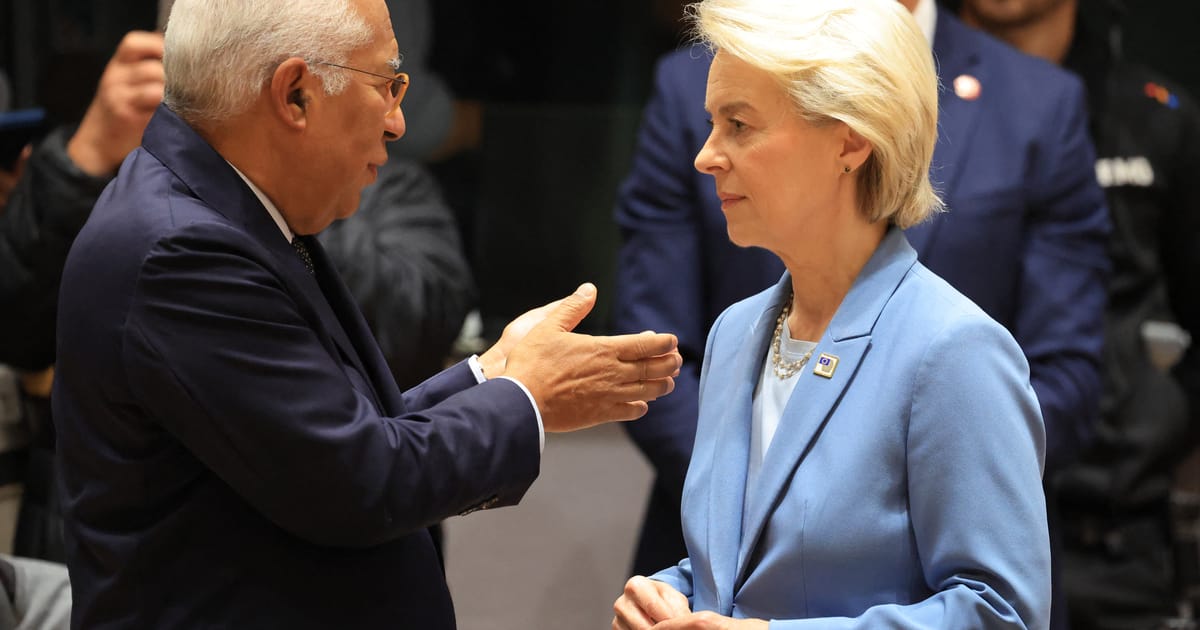
German Chancellor Friedrich Merz — the unofficial leader of the frugal camp — said that the Irish proposal has achieved progress despite reductions still being needed, said two EU diplomats briefed on the discussions.
He pointed to EU payouts to poorer regions, as opposed to farmer’s subsidies, as an avenue for cuts.
On the other side of the spectrum, Spanish Socialist Prime Minister Pedro Sánchez — who will try to cling on to power in an election on Nov. 29 — insisted that the budget is way too small.
“It is a distribution of misery,” he told fellow leaders during the discussions, according to the diplomats. He was joined by Italy’s right-wing Prime Minister Giorgia Meloni — an ideological foe on most issues, but an ally of sorts in the budget battle. She insisted that no further cuts to the budget will be accepted.
To bring sides together closer to a deal, Costa promised to advance progress on EU-wide taxes, or own resources, to finance the next seven-year budget and reduce national contributions.
He will explore the European Parliament’s proposed taxes on crypto firms, online gambling and tech giants as well as a Greek idea to funnel future national sales of 6G mobile spectrum to the EU budget.
But given the level of opposition, getting EU countries to agree to any of these options will no be no mean feat.
“It is time to be realistic and work on what is plausible and reasonable, instead of wishful thinking,” said another EU diplomat.
