


People watching U.S. television last month may have seen a rehashed television advertisement from the 2024 campaign featuring President Donald Trump. In the so-called public service announcement, which has been especially controversial because it was funded by the U.S. government, the president walks down a hallway as audio plays of him declaring that “this is the final battle” against communists, Marxists, fascists, and the “fake news media.” He promises to “throw off the sick political class that hates our country” and “liberate America from these villains, once and for all.”
The spot is classic Trump.
At Republicans’ midterm convention in Dallas, Vice President JD Vance delivered a blistering keynote speech in which he attacked Democrats as the “party of hatred” and extremism. “This fall, the Democrats are running candidates who will tell your children what they’re allowed to say, how they’re allowed to live, and importantly, who they ought to hate,” he said on Sept. 10. “The Democrats are the party of hatred. They are the party that despises America and the people who built it. They are the party that can find sympathy for the terrorists who perpetrated 9/11.”
Both the advertisement and the speech grow out of the basic strategy that Republicans have embraced in the final weeks leading up the midterm elections. Given that Trump is facing historically low approval ratings, including on the economy, and that Republicans are struggling in states that are usually considered safe for the GOP (like Kansas), they can’t focus on a positive vision for the future.
Instead, they are clinging to Trump’s playbook from his first campaign: When you can’t persuade the public to like who you are or what you’re doing, concentrate on shaping how voters see your opponent. Through fear and smear, make the electorate hate the other team more than it hates you. There is no reason to appeal to hearts and minds. Rather, the path to power revolves around appealing to hate and anger. Doing this requires candidates to capitalize on and exacerbate partisan division rather than trying to appeal to the center.
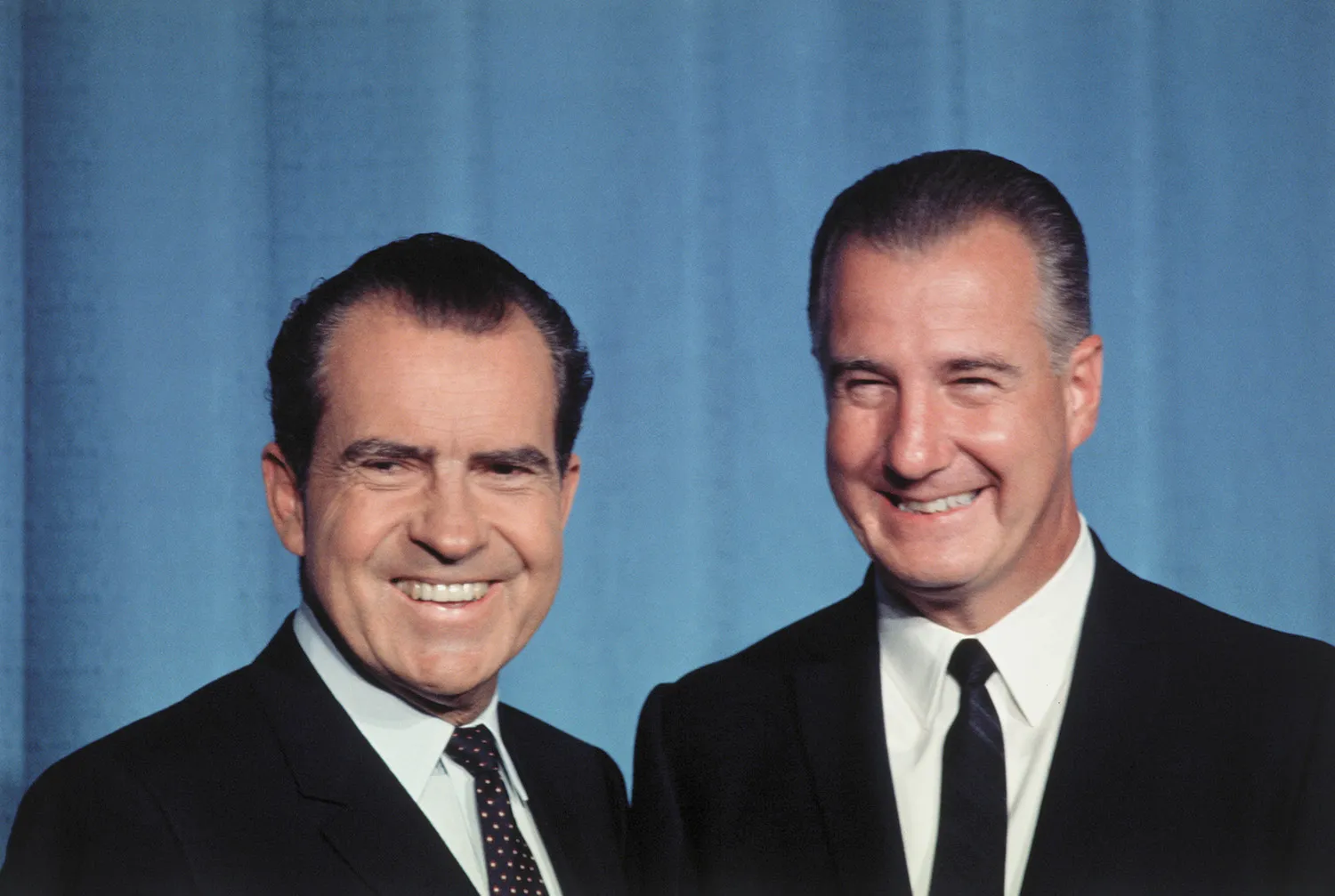
The strategy is essentially the foundation of MAGA Republicanism, but it did not start with Trump. Beginning in 1969 and continuing through the 1970 midterms, Vice President Spiro Agnew promoted a politics that he defended as “positive polarization.” The GOP drew sharp lines of division heading into that November, portraying Democrats as radical, anti-war, elitist, and immoral people in contrast to a Republican Party depicted as serving law-abiding, patriotic Americans.
President Richard Nixon had been involved in politics long enough to know that the 1970 midterms would not be easy. His victory in 1968 over Vice President Hubert Humphrey and the independent candidate and former Alabama Gov. George Wallace had been extraordinarily narrow, making it difficult to claim much of a mandate. Though Nixon’s approval ratings remained above 50 percent, they had been slipping amid the revelation of the U.S. incursion into Cambodia and the deaths of four student protesters at Kent State University. Moreover, with the exception of 1934, midterm elections had consistently gone poorly for the president’s party, while Democrats had controlled both chambers of Congress since 1955.
But Nixon was eager to expand his power on Capitol Hill, recognizing that significantly shifting public policy would require weakening the liberal Democratic majorities that controlled the House and Senate.
Agnew emerged as the point man for the strategy that the White House and the Republican Party would pursue. It was a logical choice. A former Maryland governor once known as a moderate Republican, Agnew had changed his tune in 1968, responding to Black urban unrest in Baltimore with fiery denunciations about law and order meant to appeal to working class, white ethnic voters who had traditionally been Democrats. His emerging style caught Nixon’s attention and landed him a place on the national ticket. “The selection of Spiro Agnew revealed Nixon at his worst,” wrote Nixon biographer John Farell. “It was a cynical nod, a race-baiting wink.” What was most appealing to Nixon, noted columnist Robert Novak, “was Agnew at his public worst—administering a demagogic public tongue-lashing to black leaders in Baltimore after the riots following the death of Martin Luther King.”
Once in office, Agnew turned up the volume. In several speeches during 1969, the vice president laid out a framework for Republicans to tarnish the image of Democrats. He dismissed liberal intellectuals and the anti-war movement as an “effete corps of impudent snobs.” Speaking on national television, Agnew turned his attention those covering the administration, particularly the television networks, whom he attacked for their alleged liberal bias and skewed coverage. “The upshot of all this controversy is that a narrow and distorted picture of America often emerges from the televised news,” he said. “A single, dramatic piece of the mosaic becomes in the minds of millions the entire picture.” Most famously, Agnew would later attack his critics, particularly members of the news media, as “nattering nabobs of negativism.” According to Time magazine, the directives to Agnew were coming from the president himself. One top aide said, “The President has felt that the time has come when he could no longer try to hold everybody in the tent.”
When his opponents charged that Agnew was recklessly polarizing the nation, the vice president did not back down. In fact, he embraced the charge, eventually defending what he called “positive polarization.” He argued that the “silent majority,” as Nixon famously called his supporters, needed to understand who they were up against. He was essentially reviving a style of Red Scare politics, identifying radical leftism with a threat to U.S. institutions.
The vice president traveled across the country campaigning for Republican candidates around these themes. In speeches written by aides like Pat Buchanan, Agnew lashed out against “pusillanimous pussyfooters” and “radiclibs,” whom he portrayed as threats to the basic fabric of the nation. “Division can be constructive,” Agnew explained, and partisanship “must be pursued zealously, vigorously, without hesitation.”
In November, the benefits of Agnew’s strategy proved limited. While Republicans had a net gain of one seat in the Senate, they lost a dozen seats in the House as well as several key gubernatorial races. For all the talk about left-wing radicals, voters still seemed more concerned with inflation, climbing unemployment, and the continuing war in Southeast Asia.
Though the short-term effects were less than Nixon hoped for, Agnew’s strategy became an enduring political playbook. In a 1971 New York Times interview, he said that, according to the media, “dividing the American people has been my main contribution to the national political scene since assuming the office of Vice President over two and one half years ago.”
He went on: “I not only plead guilty to this charge, but I am somewhat flattered by it.”
The attacks were woven into Nixon’s extraordinarily successful 1972 reelection campaign against Democratic Sen. George McGovern, which produced a presidential landslide comparable to Franklin Roosevelt’s victory in 1936 and Lyndon Johnson’s in 1964.
In October 1973, Agnew resigned and pleaded no contest to one count of federal income-tax evasion as part of an agreement under which he avoided prosecution on allegations of bribery, extortion, and other corruption. In August 1974, Nixon was pressured into resigning after Senate Republicans suggested a trial in the upper chamber over whether to remove him from office—should the House approve articles of impeachment stemming from the Watergate scandal—would not go well.
In the decades that followed, Republicans would come to champion Agnew’s vision. In the 1980s and 1990s, Rep. Newt Gingrich, who was elected speaker of the House in 1995, rallied Republicans by calling on them to be tougher and fiercer against Democrats by abandoning traditional norms of bipartisanship and civility in favor of a blistering, smashmouth style of partisanship. When Barack Obama was president, Tea Party Republicans entered Washington and took Gingrich’s methods to a new level, culminating in the triumph of MAGA Republicans who are even more extreme.
Agnew’s so-called positive polarization has been an increasingly important part of the Republican playbook during the past 10 years under Trump. Seeing an electorate that was deeply divided between red and blue, Trump abandoned conventional aspirations to break through the divide—which Obama had called for in his keynote speech at the 2004 Democratic National Convention—and instead concentrated almost exclusively on playing to the base and vilifying his opponents at every turn. He has used all of his political muscle to keep Republicans in line, understanding that partisan discipline on Capitol Hill and in the electorate has been essential to his power.
Positive polarization is a strategy that has destructive effects. In a deeply polarized nation where voters are naturally divided into different camps on key issues, political leaders have a responsibility to push back against the worst of these divisions. Partisanship is a natural, indeed healthy, element of democratic politics, allowing important differences to manifest themselves and work their way through the established political process. But guardrails must remain in place to keep partisan conflict within responsible bounds, and political leaders must be willing to tell supporters when to pull back.
Under Agnew’s strategy, political leaders do the opposite. They intentionally fuel, deepen, and harden the worst feelings that members of one party feel toward another. Jettisoning efforts to persuade voters with a vision of U.S. society and public policy, they instead concentrate on poisoning how parts of the country see the opposition. Over time, those images stick, making it much harder, if not impossible, to pull back from the dangerous precipice separating total hyperpartisan destruction from healthy partisan competition.
