


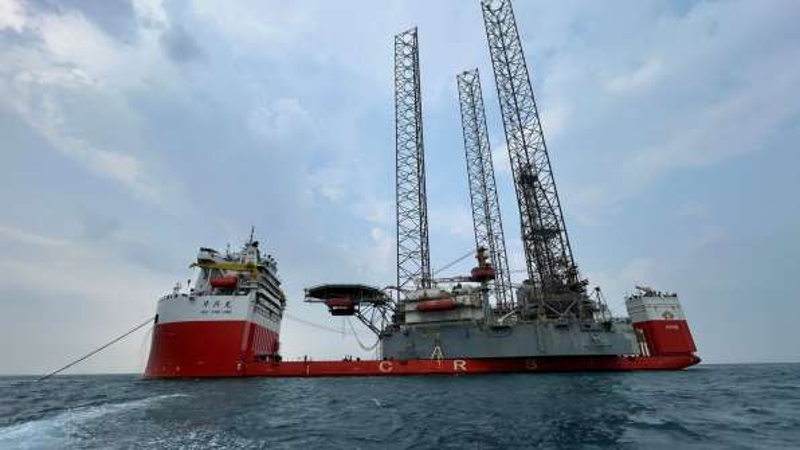
Peter Botten, Conrad’s Executive Chairman, commented: “The past few weeks have marked an important period of progress for the Mako gas project, with several critical milestones completed and the project continuing to track to first gas in the fourth quarter of 2027 and within budget.
“The successful transit and arrival in Batam of the Valaris 104 donor rig was a significant logistical achievement, requiring detailed planning, extensive regulatory coordination and careful management of the operational risks associated with the route.”
Conrad’s MOPU contractor, PT Duta Marine/PT Pakarti Tirtoagung (Duta Marine), engaged GAC Logistics, a maritime operator with recent successful operational experience in the Strait of Hormuz, together with relevant regional authorities, naval task forces, classification bodies and marine warranty surveyors to enable the transit.
The fabrication of the MOPU topside modules is underway, with a formal first cut ceremony targeted for early November, as the arrival of the rig enables the project to progress into the next phase of physical MOPU conversion and integration.
The Asian company underlines that engineering and procurement for the conductor support frame (CSF) and subsea umbilical, riser and flowline (SURF) packages are progressing on schedule.
Botten added: “The significance of Mako extends beyond the project itself. Batam and the wider Singapore-Johor-Riau region are experiencing strong growth in power demand, including from the rapidly expanding data centre sector, while reliable and competitively priced gas-fired power remains an important part of the region’s energy mix.
“With the Mako gas sales arrangements and infrastructure in place, Conrad, together with our partner, Nations, is well positioned to contribute to the region’s growing energy requirements, and is also assessing opportunities to increase gas supply to Batam from its broader West Natuna portfolio.”
Conrad emphasizes that the Mako development remains on budget and on track for first gas in the fourth quarter of 2027, with fabrication and construction activities now progressing across multiple major project workstreams.
