

Close Menu
NCIJ Network NCIJ Network
    What's Hot

    Nace AI Open-Sources Drex 1.5: A 9B Decision Model That Scores Options, Not Text

    October 10, 2026

    How to keep AI agents within their permissions

    October 10, 2026

    Treasury Secretary Threatens To Freeze $1B Of Iran’s Crypto

    October 10, 2026
    Facebook X (Twitter) Instagram
    Trending
    • Nace AI Open-Sources Drex 1.5: A 9B Decision Model That Scores Options, Not Text
    • How to keep AI agents within their permissions
    • Treasury Secretary Threatens To Freeze $1B Of Iran’s Crypto
    • Fishmeal factories take Senegal’s fish from the dinner table
    • ‘We’re not asking for luxury’: school protesters in Paris suburb feel abandoned by French state | France
    • How This Tiny Startup Built the World’s Safest Bike Helmet
    • Microsoft AI Releases Microsoft-Decision-1: A Qwen3.5-9B Decision-Scoring Model
    • FBI arrests another suspected ShinyHunters hacker after agency breach
    • About
      • Our Team
      • Editorial Policy
      • Editorial Independence
      • International Support
    • Trust & Standards
      • AI Usage Policy
      • Conflict of Interest Policy
      • Corrections Policy
      • Ethics Policy
      • Fact-Checking Policy
      • Source Protection
    • Get Involved
      • Guide for Sources
      • Support Independent Journalism
    • Legal
      • Cookie Policy
      • Privacy Policy
      • Terms of Use
    Facebook X (Twitter) Instagram
    NCIJ Network NCIJ Network
    Saturday, October 10
    • Home
    • World
    • Ai
    • Business
    • Politics
    • Health
    • Crypto
    • Science
    • Technology
    • Cybersecurity
    • Defense & Security
    • Economy
    • Energy
    • Europe
    • More
      • Fact Check
      • Investigations
      • Opinion & Analysis
      • Environment
    NCIJ Network NCIJ Network
    Home»Environment

    These women are bringing Darwin’s rheas back to Chilean Patagonia

    NCIJ NETWNCIJ NETWORKBy NCIJ NETWNCIJ NETWORKOctober 10, 2026 Environment No Comments4 Mins Read
    Share
    Facebook Twitter LinkedIn Pinterest Email

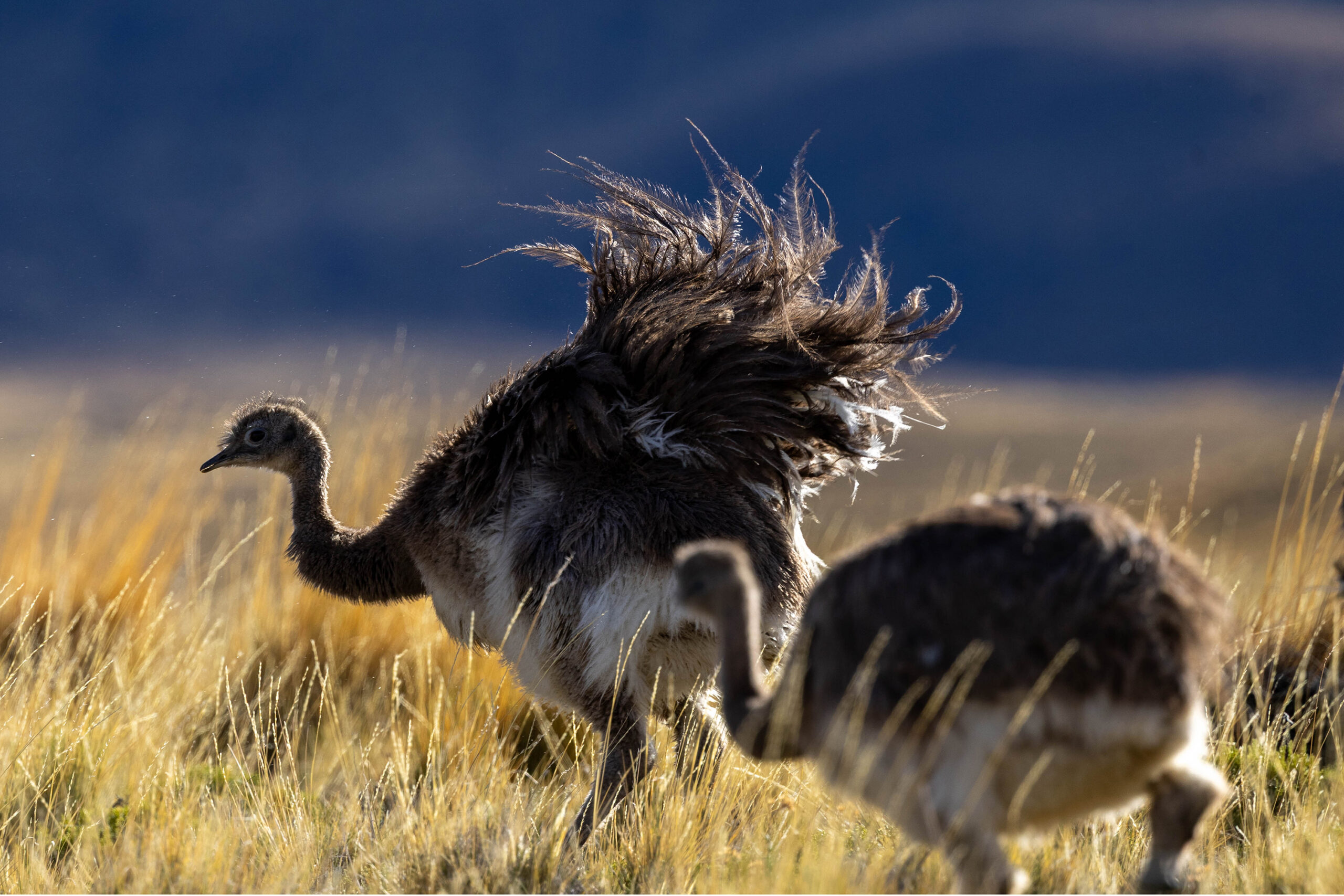
    PATAGONIA NATIONAL PARK — Chile. Mongabay traveled to Chile’s Patagonia National Park to follow a women-led team on a mission to bring 13 Darwin’s rheas back to the wild in April 2026.

    Working with Rewilding Chile Foundation, these dedicated rangers care for the birds around the clock, facing harsh weather, predators like pumas, illegal livestock grazing, and other threats to the park’s fragile ecosystem.

    For more than a century, the Chacabuco Valley, where the park is located, was dominated by sheep and cattle ranching. Fences fragmented the vast Patagonian steppes and rheas (Rhea pennata) nearly disappeared.

    But one of South America’s most ambitious rewilding efforts is helping to turn the tide.

    Tompkins Conservation, the organization behind Rewilding Chile, acquired former ranchlands and began removing thousands of kilometers of fencing, allowing native wildlife to reclaim the landscape.

    Now, the team is preparing for another milestone: Releasing 13 Darwin’s rheas into the wild.

    Mongabay followed the rangers in the days leading up to the release, documenting their preparations, the challenges they faced, and their determination to give these birds the best possible chance of survival.

    Will they succeed? Watch the video to find out.

    Mongabay’s Video Team wants to cover questions and topics that matter to you. Are there any inspiring people, urgent issues, or local stories that you’d like us to cover? We want to hear from you. Be a part of our reporting process—get in touch with us here!

    Banner image: Darwin’s rheas. ©Romi Castagnino.

    Notice: Transcripts are machine and human generated and lightly edited for accuracy. They may contain errors.

    No, this one. There it is.

    Over here!

    Chick!

    Over here.

    I’ve been working for Patagonia National Park,

    more specifically in

    the Rheas Reproduction Center

    for 10 years.

    This release will be the third release of the year.

    It’s a process

    that takes practically an entire year of work.

    Here, they go through

    about two months of acclimation

    before they can be released.

    We also live in a landscape where

    pumas are the main predator.

    We’re always making sure

    they don’t get into the corrals.

    This kind of fence also has an angle

    that reduces the possibility

    of a puma crossing it by jumping.

    We make sure the animals

    which are being released

    are in the best possible condition.

    Good nutrition,

    good body condition.

    Come on, baby.

    There you go.

    One, two, three, four.

    Can you see that shed?

    There are rheas behind it.

    Six.

    They are animals that constantly walk

    in search of food,

    they move around a lot and have large home ranges.

    At first, we installed it [the camera trap]

    because of the rheas.

    This is a passage

    where we see chicks year after year.

    It went the other way.

    The other one has more feathers.

    A chick!

    There were surveys estimating

    a very small number,

    only around 11 to 15 individuals.

    When I arrived in 2016, you simply didn’t see many rheas.

    For me, the rhea is the gardener of the steppe.

    We’ve found many different seeds

    in their droppings.

    This shows us they’re excellent seed dispersers.

    We believe their role is extremely important.

    for restoring the steppe.

    We’ve seen more chicks over the years.

    More interactions between guanacos and rheas.

    More natural dynamics returning.

    Fences are still a major problem

    because they don’t affect only rheas.

    These changes take time.

    After more than a century of ranching,

    you can’t expect people to understand

    that the park has to be protected

    in just 10, 20 years.

    Our biggest concerns are the environmental conditions

    on release day.

    We’re in an area where winds are very strong.

    And we have drastic temperature changes.

    If the wind remains like this,

    we might release them over there

    close to the guanacos.

    The rheas share a lot with the guanacos.

    Let’s use the largest one.

    Look, the first one, the largest one.

    We get stressed about stressing them.

    We don’t want to harm them

    when we put them in the transport boxes.

    As a science teacher,

    we thought it was very important for students to come

    visit a National Park,

    where conservation actions as powerful

    as a release are carried out.

    The lid is small.

    You raise the first one.

    And then you take the second one off.

    Three, two, one.

    Go.

    It was a very emotional moment.

    It was super calm.

    They’re eating.

    The animals were super calm.

    We immediately saw them grazing, eating,

    and for us, that’s a very good sign.

    They explored and are already

    kilometers and kilometers away.

    Releasing wildlife is an emotion

    you can’t really explain.

    You feel it from deep inside.

    What matters most to them

    is the group, not the individual.

    I think that’s an important lesson

    for us as humans

    who have always believed ourselves

    to be so superior.

    bringing Chilean Darwins Patagonia rheas women
    NCIJ NETWNCIJ NETWORK
    • Website

    Keep Reading

    Fishmeal factories take Senegal’s fish from the dinner table

    Michigan Spill Prompts Federal Probe of Energy Transfer Pipelines’ Safety

    Forever chemicals at former Oxfordshire fuel depot ‘have been removed’

    Lawmakers in Suriname call for investigation, stricter oversight amid new mining activity

    Northern California Community Wants Stronger Oversight of Dangerous Refineries Nearby

    Paraguay meets UN deadline for improving governance in Chaco Biosphere Reserve

    Add A Comment
    Leave A Reply Cancel Reply

    Editors Picks

    Nace AI Open-Sources Drex 1.5: A 9B Decision Model That Scores Options, Not Text

    October 10, 2026

    How to keep AI agents within their permissions

    October 10, 2026

    Treasury Secretary Threatens To Freeze $1B Of Iran’s Crypto

    October 10, 2026

    Fishmeal factories take Senegal’s fish from the dinner table

    October 10, 2026
    Latest Posts

    Reform donor Arron Banks urged to set out extent of surveillance of journalists | Arron Banks

    August 10, 2026

    The Canadian Secessionists Who Love Trump

    August 10, 2026

    How ‘Harry Potter’ Fans Protected Dobby’s Grave From the Path of a U.K.-Ireland Power Line

    August 10, 2026

    Subscribe to News

    Get the latest sports news from NewsSite about world, sports and politics.

    NCIJ Network is an independent digital news platform delivering trusted investigative journalism, European and global news, in-depth analysis, and fact-based reporting with accuracy, transparency, and integrity.

    Facebook X (Twitter) Instagram Pinterest YouTube

    Nace AI Open-Sources Drex 1.5: A 9B Decision Model That Scores Options, Not Text

    October 10, 2026

    How to keep AI agents within their permissions

    October 10, 2026

    Treasury Secretary Threatens To Freeze $1B Of Iran’s Crypto

    October 10, 2026

    Subscribe to Updates

    Get the latest creative news from FooBar about art, design and business.

    Type above and press Enter to search. Press Esc to cancel.