

Close Menu
NCIJ Network NCIJ Network
    What's Hot

    The DOJ Is Weighing Perjury Charges Against Cassidy Hutchinson

    October 9, 2026

    P7 DarkSword iOS Exploit Kit Adds Crypto Wallet Data Theft and Remote Commands

    October 9, 2026

    UTXO’s Loren Asmus: The $300T Bond Market Is Bitcoin’s Next Frontier

    October 9, 2026
    Facebook X (Twitter) Instagram
    Trending
    • The DOJ Is Weighing Perjury Charges Against Cassidy Hutchinson
    • P7 DarkSword iOS Exploit Kit Adds Crypto Wallet Data Theft and Remote Commands
    • UTXO’s Loren Asmus: The $300T Bond Market Is Bitcoin’s Next Frontier
    • Scientists find hidden materials that could improve batteries and solar fuels
    • Prize-winning image which sparked backlash was AI-generated, Nikon rules
    • Mawled by England’s pronunciation police | Class issues
    • No evidence the PM is setting up an ‘Emergency Register’ of civilians fit to fight in a war – Full Fact
    • Trump establishes committee to investigate Fed governor Lisa Cook | Federal Reserve
    • About
      • Our Team
      • Editorial Policy
      • Editorial Independence
      • International Support
    • Trust & Standards
      • AI Usage Policy
      • Conflict of Interest Policy
      • Corrections Policy
      • Ethics Policy
      • Fact-Checking Policy
      • Source Protection
    • Get Involved
      • Guide for Sources
      • Support Independent Journalism
    • Legal
      • Cookie Policy
      • Privacy Policy
      • Terms of Use
    Facebook X (Twitter) Instagram
    NCIJ Network NCIJ Network
    Friday, October 9
    • Home
    • World
    • Ai
    • Business
    • Politics
    • Health
    • Crypto
    • Science
    • Technology
    • Cybersecurity
    • Defense & Security
    • Economy
    • Energy
    • Europe
    • More
      • Fact Check
      • Investigations
      • Opinion & Analysis
      • Environment
    NCIJ Network NCIJ Network
    Home»Science

    How the Grand Canyon could have lost 1 billion years of geologic history

    NCIJ NETWNCIJ NETWORKBy NCIJ NETWNCIJ NETWORKOctober 9, 2026 Science No Comments4 Mins Read
    Share
    Facebook Twitter LinkedIn Pinterest Email

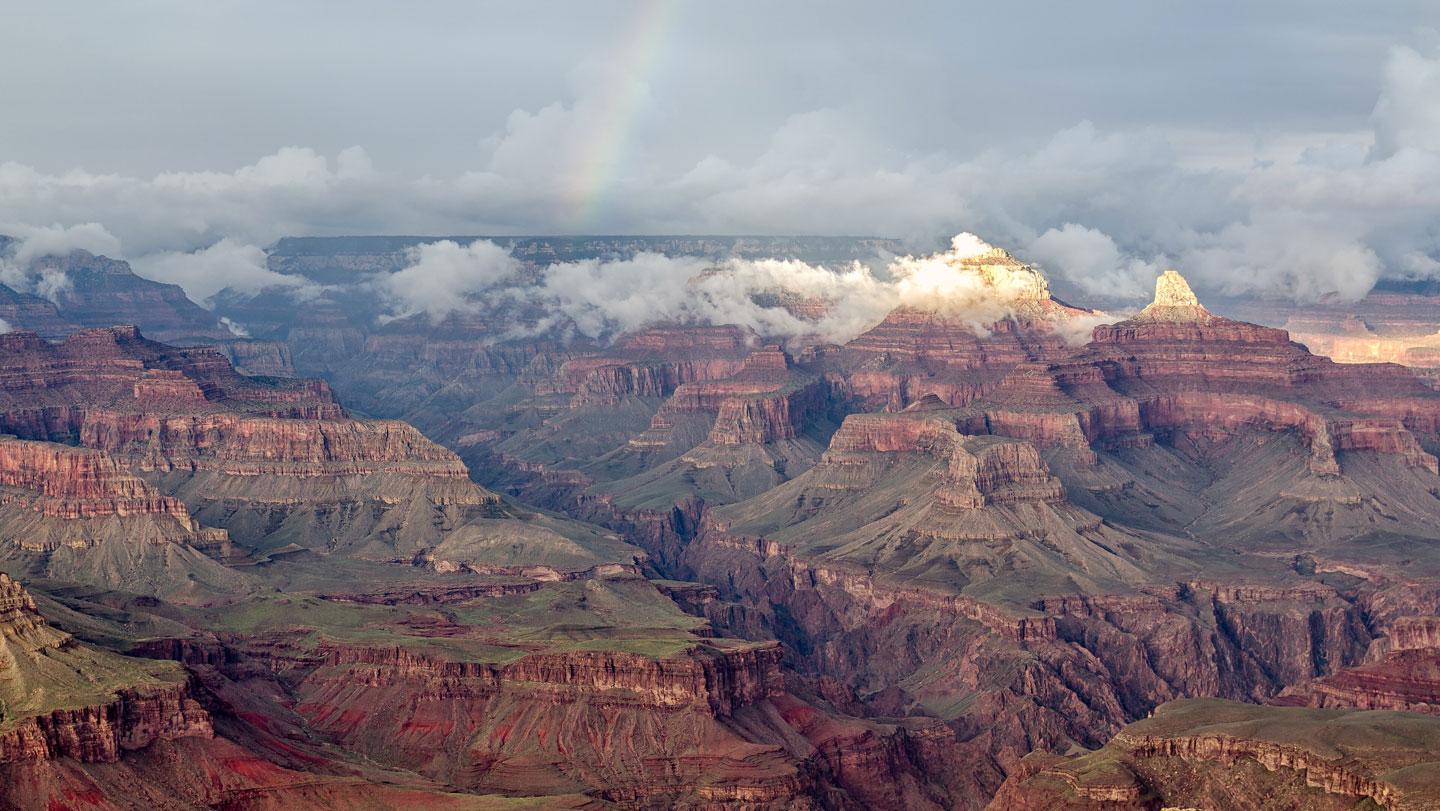
    In the Grand Canyon, rock layers preserve a relatively continuous record of Earth’s geologic history going back about 2 billion years. But between 520 million and 1.8 billion years, the record is noticeably empty. It’s as if someone broke into a museum and made off with almost an entire wing’s worth of rocks, and sorting out “whodunnit” is one of the coldest cases in all geology.

    Now, scientists studying the Grand Canyon’s rocks say that a gigantic Earth-spanning cliff  —with a global glaciation as its accomplice — could be to blame for the heist.

    Sign up for our newsletter

    We summarize the week’s scientific breakthroughs every Thursday.


    The giant cliff started forming about 800 million years ago as an ancient supercontinent called Rodinia split apart, Thomas Gernon, an earth scientist at the University of Southampton in England, and colleagues report August 17 in Geology. Forces like rain and ice weathered and eroded the rock and, like waves at the beach steadily erasing one layer of sand after another, deleted a billion years of Earth’s history.

    The group used computer models to simulate how ancient Earth evolved over hundreds of millions of years. They watched as the cliff — known as an escarpment — formed around the time in Earth’s history when rocks in the region vanished.

    The escarpment most likely extended across much of a continent called Laurentia, the ancient precursor to North America. It stretched from what was to become Alaska all the way to Arizona and would have been about one to two kilometers high.

    Spanning a continent

    Some 65 million years ago, the Great Escarpment of Laurentia would have stretched across much of North America, including the spot that would one day become the Grand Canyon and the site of an enduring geologic mystery. The escarpment itself is thought to have formed around 800 million years ago.

    T.M. Gernon et al/Geology, 2026; Ron Blakey/Deep Time Maps

    “No study has previously suggested the existence of a continental-scale escarpment in the Grand Canyon region. Our study shows it’s a plausible, straightforward explanation for the immense erosion that took place in the Grand Canyon,” Gernon says. Such an immense cliff created steep slopes that were ideal places for the elements to loosen and make off with exposed rock.

    And the escarpment had a lot of help when it came to its disappearing act: ice, lots and lots of ice. The theft of the rocks coincided with an extreme period of glaciation called Snowball Earth. Massive ice sheets formed and may have extended all the way from the poles to equatorial latitudes. As the ice expanded, it would have eroded great quantities of rock, helping create the gap in the record.

    And the escarpment, due to its high elevation, would have created ideal conditions for Snowball Earth glaciers and ice sheets to form. In a separate study published in Science, Gernon and a team explained how an escarpment created by tectonic activity was responsible for the formation of the East Antarctic Ice Sheet starting some 34 million years ago. “The exposed rocky peaks of the escarpment would have acted as glacier factories,” Gernon says.

    It remains unclear, however, whether the erosion that erased the rocks occurred before, during or after the Snowball Earth glaciations. “That’s the real hole that needs filling: pinning down the erosion history in space and time, continent by continent, precisely enough,” Gernon says.

    Sponsor Message


    Linking the disappearance of the rocks to verified events in Earth’s history such as the breakup of Rodinia bolsters the case, says Alan Collins, a geologist at Adelaide University in Australia who was not involved in the new study. Not only that, but Gernon’s team points to modern-day examples where similar erosive processes are at work, including a similar escarpment in Antarctica as well as one in South Africa.

    Maybe not quite case closed yet, but “I find this very convincing,” Collins says.

    Billion Canyon geologic Grand History lost years
    NCIJ NETWNCIJ NETWORK
    • Website

    Keep Reading

    Scientists find hidden materials that could improve batteries and solar fuels

    Here’s a look at the Nobel Prizes for science

    Shell to take a slice of Equinor’s $10 billion oil project in Canada

    NASA, Energy Department Advance New Era of Nuclear-Powered Exploration

    In Other News: AI Used in Korean Bank Breaches, Poem-Guided Botnet, Empire Admin Gets 40 Years

    Webb Measures Distance to Farthest Fast Radio Burst, Suggesting Origin

    Add A Comment
    Leave A Reply Cancel Reply

    Editors Picks

    The DOJ Is Weighing Perjury Charges Against Cassidy Hutchinson

    October 9, 2026

    P7 DarkSword iOS Exploit Kit Adds Crypto Wallet Data Theft and Remote Commands

    October 9, 2026

    UTXO’s Loren Asmus: The $300T Bond Market Is Bitcoin’s Next Frontier

    October 9, 2026

    Scientists find hidden materials that could improve batteries and solar fuels

    October 9, 2026
    Latest Posts

    Reform donor Arron Banks urged to set out extent of surveillance of journalists | Arron Banks

    August 10, 2026

    The Canadian Secessionists Who Love Trump

    August 10, 2026

    How ‘Harry Potter’ Fans Protected Dobby’s Grave From the Path of a U.K.-Ireland Power Line

    August 10, 2026

    Subscribe to News

    Get the latest sports news from NewsSite about world, sports and politics.

    NCIJ Network is an independent digital news platform delivering trusted investigative journalism, European and global news, in-depth analysis, and fact-based reporting with accuracy, transparency, and integrity.

    Facebook X (Twitter) Instagram Pinterest YouTube

    The DOJ Is Weighing Perjury Charges Against Cassidy Hutchinson

    October 9, 2026

    P7 DarkSword iOS Exploit Kit Adds Crypto Wallet Data Theft and Remote Commands

    October 9, 2026

    UTXO’s Loren Asmus: The $300T Bond Market Is Bitcoin’s Next Frontier

    October 9, 2026

    Subscribe to Updates

    Get the latest creative news from FooBar about art, design and business.

    Type above and press Enter to search. Press Esc to cancel.