


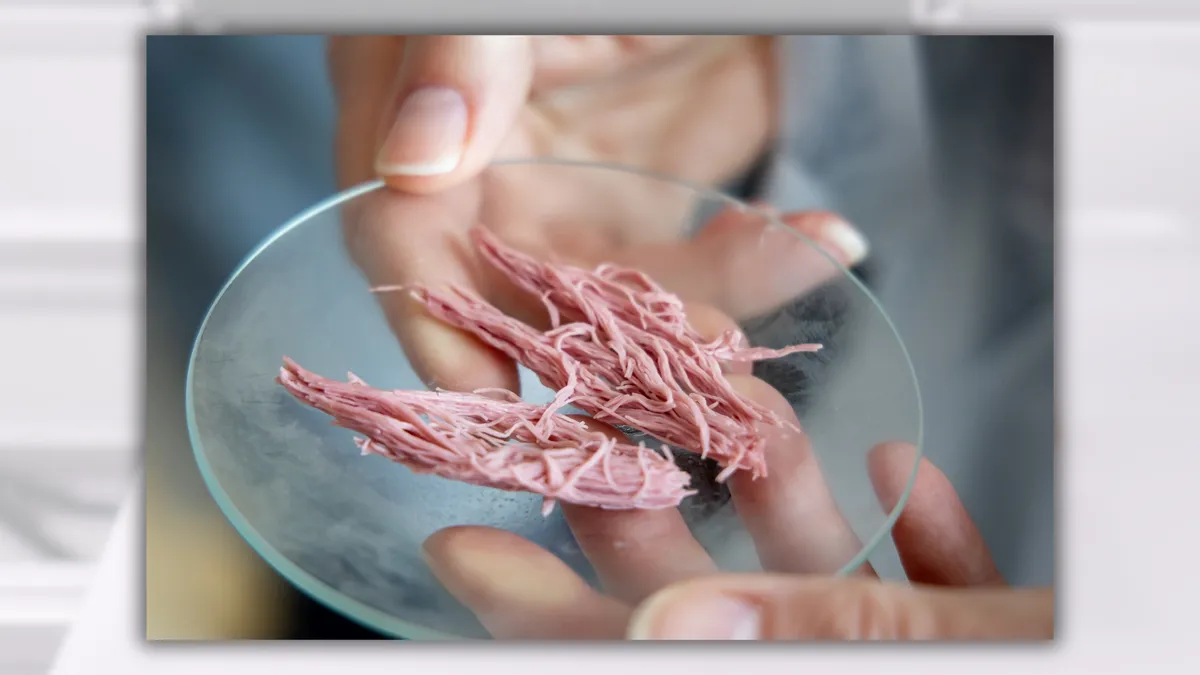
Retail stores in the U.S. are selling 3D-printed meat, as of September.
A company called Steakholder Foods has launched a line of products under the brand name Perfecta. While the meat is 3D-printed, it is made from a formulation of plant material like other plant-based meats are. It is not made from cultured animal cells, which is often what people refer to when they mention “lab-grown meat.” It is not clear which grocery stores or retailers are selling Perfecta-branded food, though the company has said its products have reached shelves in certain Northeastern U.S retail locations.
Between September and October, social media users claimed that 3D-printed, lab-grown meat had started being sold in U.S. stores from early September.
For example, one Facebook post (archived) claims the 3D-printed meat “has federal clearance” but will not have a “lab-grown meat” label on its packaging. The post reads, in part:
The first 3D printed ‘meat’ has federal clearance and is about to be sold in the United States.
Packaging will not say ‘lab-grown meat’ because there is not a law that requires the packaging to say it was printed.
3D-printed plant-based food is already on shelves in the U.S.
Federal labels for cell-grown chicken and pork fat must be pre-approved and have used the words “cell-cultivated.”
The printed food was in stores on September 3 of this year.
The company Steakholder Foods put its Perfecta line into Northeast supermarkets.
The rumor has appeared elsewhere on Facebook (archived) and on Instagram (archived). Numerous Snopes readers also emailed us to ask if the story is true.
In short, on Sept. 3, Israeli company Steakholder Foods, which specializes in making 3D-printing technology for plant-based meats, announced the launch of its 3D-printed, plant-based meat products in Northeastern U.S. retailers under the brand name Perfecta. Therefore, the claim is true.
Steakholder Foods’ news release says its “Premium Plant-Based Meat” products were launched at retail locations in the Northeastern United States on Sept. 3, “marking the brand’s first commercial placement on U.S. store shelves.”
According to the webpage, the launch “focuses on building awareness and consumer trial throughout the Northeast U.S. market while establishing a foundation for broader expansion across additional regions.”
It is not clear which grocery stores or retailers have started selling or stocking the products.
Snopes reached out to the company via a contact form on its website for more information. We will update this article if we hear back.
According to Steakholder Foods, the company uses plant-based ingredients and cultivates
The U.S. Food and Drug Administration and the U.S. Department of Agriculture’s Food Safety and Inspection Service do regulate “lab-grown” meat and require a label for such products. However, this regulation is specifically for food made with cultured animal cells, not for food made with other kinds of cells, which is what Perfecta products consist of.
Snopes reached out to both the FDA via contact form and the FSIS via email to confirm that there are not similar kinds of regulations for food made with other cultured cells, such as plant cells. Additionally, we asked both agencies to confirm if Perfecta products had received federal approval, as the above Facebook post states. We will update this story if we receive responses.
Based on how the product boxes appear on the website, there does not appear to be any text identifying the food as 3D-printed or made with cultured cells. The boxes do clearly identify the meat as “premium plant meat” and “plant-based.”
Manufacturers of plant-based meat products usually have to process their ingredient mixes in a way that allows them to mimic the texture of conventional meat. According to the Good Food Institute’s Asia-Pacific website, the most common processing method requires putting shear stress on the ingredients to align them into a meat-like texture. There are several other methods of processing plant-based meats, including 3D-printing.
For further reading, Snopes previously fact-checked a claim that a plant-based meat manufacturer was 3D-printing meat products in the Netherlands in 2024.
