


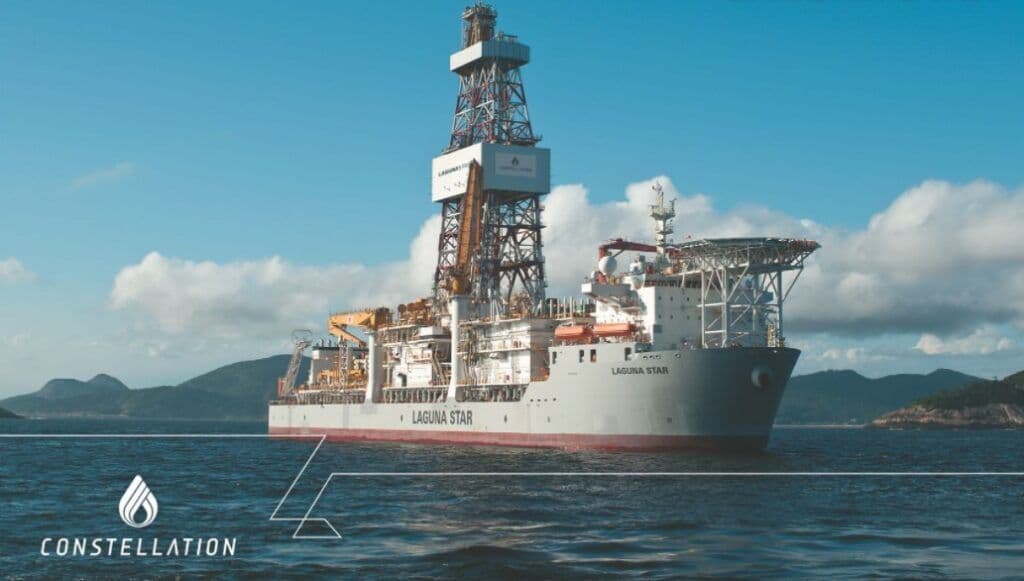
Constellation is making progress on its emission-reduction path with the receipt of an approval in principle (AiP) certificate from the American Bureau of Shipping for its fuel processor project, which is currently undergoing implementation and testing aboard the Laguna Star drillship.
Designed to increase energy efficiency and cut emissions from diesel engines used in offshore units, this technology is currently in its pilot phase with the aim of improving diesel engine combustion efficiency, contributing to lower fuel consumption and reduced emissions associated with offshore operations.
Leonardo Guimarães, Technical Director at Constellation, commented: “Constellation sees disruptive technologies as a key tool for accelerating the decarbonization of its operations. ABS’s recognition reinforces the technical robustness of these initiatives and their contribution to the commitments established in our ESG 2030 Plan.”
The project, contracted at the end of 2025 and expected to run through 2028, is being developed in partnership with Petrobras, using resources from the Brazilian National Agency of Petroleum, Natural Gas and Biofuels (ANP) Research, Development and Innovation (R&D&I) clause.
The initiative also involves Clean Energy Power Systems (CEPS) and PUC-Rio, which serves as an independent third party responsible for validating project results. The 2012-built sixth-generation Laguna Star ultra-deepwater DP drillship was constructed at Samsung Heavy Industries shipyard in South Korea.
The vessel can drill in water depths of up to 10,000 feet and has a drilling depth capacity of up to 40,000 feet. The rig owner explains that the AiP validates the safety and technical soundness of disruptive solutions for which conventional regulations are still under development, helping to enable their safe progression toward operational implementation.
