


Edward (Ed) Waldner knew something was wrong, even though he could not explain exactly what was happening. At age 55, he was constantly exhausted, regardless of how demanding his day had been. At first, he wondered whether sleep apnea might be responsible.
Then he began noticing changes in the way he walked. His heels would sometimes drag, and his movement no longer felt normal. When his symptoms became especially concerning one day, he went to the Emergency Department.
“The doctor said I had a mass on my brain and needed to see an oncologist,” says Waldner.
The mass turned out to be glioblastoma, an aggressive form of brain cancer that is notoriously difficult to treat. Standard care typically combines surgery, radiation, and chemotherapy. Surgeons try to remove as much of the tumor as possible, but glioblastoma cells can spread into surrounding brain tissue, making complete removal extremely difficult. Even after treatment, the cancer commonly returns.
Testing Vitamin B3 Against Glioblastoma
Researchers at the University of Calgary are now investigating whether an unexpected addition to standard treatment could help: high doses of vitamin B3, also known as niacin.
Waldner was invited to participate in the clinical trial.
“I have no problem trying to help anybody. I agreed. I want to help myself too,” says Waldner. “I can tell you being part of this research helps me mentally because we’re trying. When I left the hospital after surgery I was told, that’s it, that’s all we can do.”
The study is being led by two researchers who are members of both the Hotchkiss Brain Institute and Arnie Charbonneau Cancer Institute. Gloria Roldan Urgoiti, MD, is an oncologist who specializes in brain cancers, while Wee Yong, PhD, is a neuroscientist who studies how the immune system affects the brain.
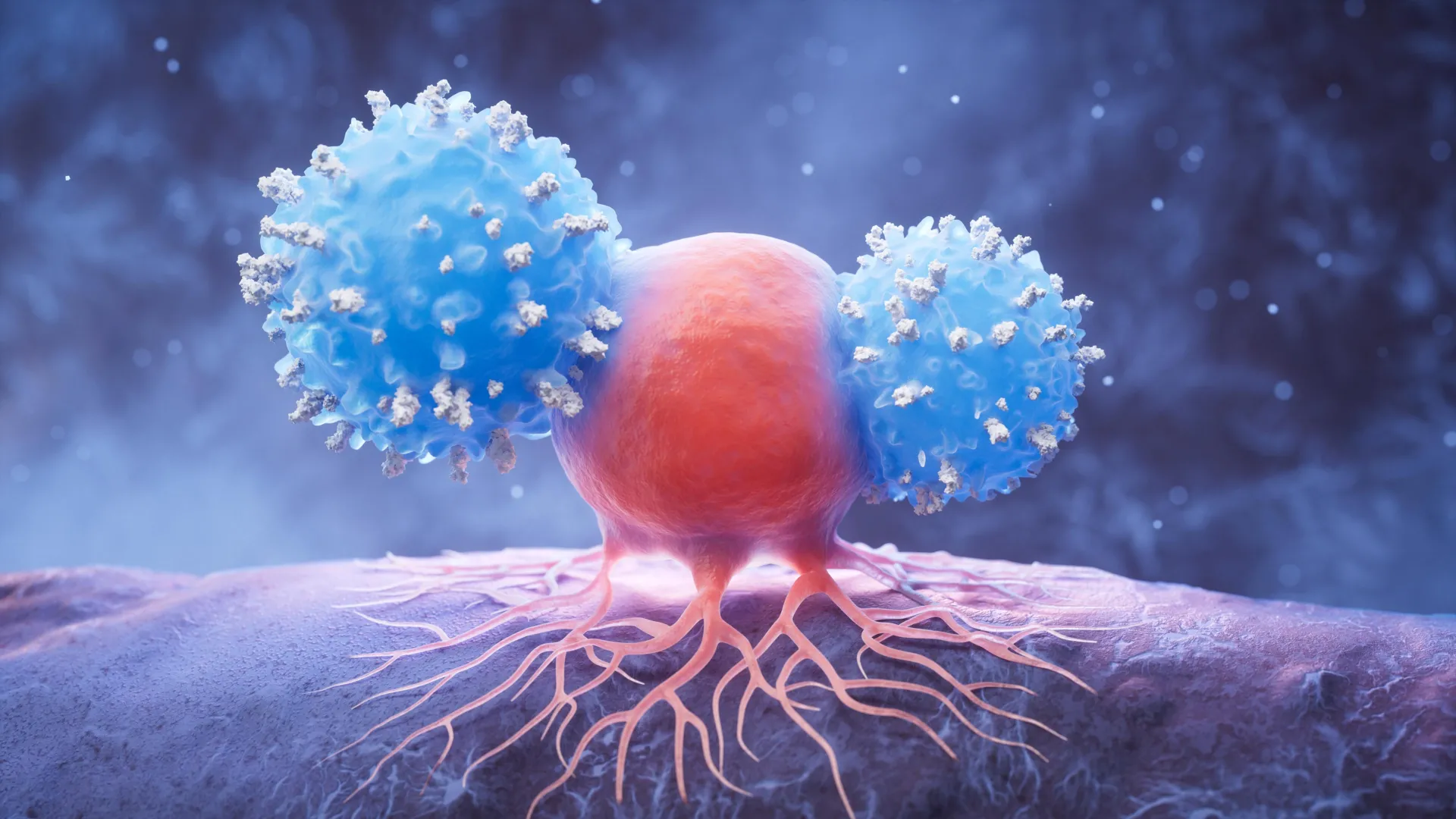
Their research centers on a key problem with glioblastoma: the tumor can interfere with the immune system, weakening the very cells that might otherwise help attack the cancer.
The team designed the study to determine whether niacin could restore some of those impaired immune cells and help them destroy tumor cells.
Reawakening the Immune System
The idea first emerged from experiments in Yong’s laboratory using mice. Those studies found that niacin treatment extended survival, encouraging the researchers to move the approach into a combined Phase I and Phase II clinical trial in people.
Phase I trials generally focus heavily on safety and determining an appropriate dose, while Phase II studies begin looking more closely for signs that a treatment may provide a clinical benefit.
“Normally the immune system will try to counter and prevent tumor growth, however, this brain cancer supresses the immune system,” says Yong, a professor at the Cumming School of Medicine (CSM). “Niacin treatment rejuvenates immune cells so they can do what they are supposed to do, attack and kill the cancer cells. I see it as an ongoing ‘battle for the brain’.”
For the current trial, researchers are studying controlled release niacin given alongside recommended chemotherapy and radiotherapy. One goal is to establish the highest dose that can be used safely. Another is to look for evidence that adding niacin may improve how long patients remain alive without their cancer getting worse.
That measure is known as progression-free survival.
Early Results Show a Promising Signal
Before beginning the study, researchers established a threshold for continuing the trial. They planned to stop if progression free survival at six months failed to improve by at least 20 percent compared with older studies.
Early results from 24 patients surpassed that threshold. At six months, 82 percent of participants had not experienced progression of their cancer. According to the researchers, that represents a 28 percent increase compared with previous studies.
The team describes the early findings as promising for a cancer that remains incurable, but the results are still preliminary and involve a relatively small group of patients.
“Glioblastoma is the most aggressive brain cancer in adults. Survival of patients with this condition hasn’t changed significantly for 20-years,” says Roldan Urgoiti, a clinical associate professor at the CSM. “Anything that may help should be explored, but it requires strict protocols and safety monitoring.”
The findings were published in the Journal of Neuro-Oncology.
High Dose Niacin Requires Careful Monitoring
Although niacin is a vitamin, the researchers emphasize that high doses should not be viewed as harmless simply because the substance is widely available.
Large amounts of vitamins such as niacin can be toxic and may cause harmful effects if they are taken without appropriate medical oversight. The doses and treatment used in the clinical trial are being carefully controlled and monitored by medical professionals.
Researchers ultimately hope to include 48 participants in the trial. They expect to conduct their final analysis by the end of 2026 or in early 2027.
For Waldner, the study has provided another treatment avenue while doctors continue monitoring his cancer.
He says he is feeling very good and is especially grateful whenever his routine scans bring one particular word: stable.
The research is supported by the Canadian Institutes of Health Research and the Alberta Cancer Foundation.
