

Close Menu
NCIJ Network NCIJ Network
    What's Hot

    Baseten Releases Bison-1 and Groundhog-1, Topping Decision Model Index

    November 21, 2026

    The far right is menacing Europe – but it is fragile. What the extremists and voters want isn’t the same | Gordon Brown

    November 21, 2026

    NASA’s Voyager 1 is now so far away that light takes 24 hours to reach it

    November 21, 2026
    Facebook X (Twitter) Instagram
    Trending
    • Baseten Releases Bison-1 and Groundhog-1, Topping Decision Model Index
    • The far right is menacing Europe – but it is fragile. What the extremists and voters want isn’t the same | Gordon Brown
    • NASA’s Voyager 1 is now so far away that light takes 24 hours to reach it
    • It’s time to put Africa’s forest communities on the map (commentary)
    • Five of the Best Movies About the CIA
    • Is the Pentagon unable to account for $2T in taxpayer money? Breaking down its annual audit
    • Microplastics may be more dangerous than we thought. Scientists just discovered why
    • Extreme rainfalls flood Sri Lanka’s coastal city as wetlands, drains vanish
    • About
      • Our Team
      • Editorial Policy
      • Editorial Independence
      • International Support
    • Trust & Standards
      • AI Usage Policy
      • Conflict of Interest Policy
      • Corrections Policy
      • Ethics Policy
      • Fact-Checking Policy
      • Source Protection
    • Get Involved
      • Guide for Sources
      • Support Independent Journalism
    • Legal
      • Cookie Policy
      • Privacy Policy
      • Terms of Use
    Facebook X (Twitter) Instagram
    NCIJ Network NCIJ Network
    Saturday, November 21
    • Home
    • World
    • Ai
    • Business
    • Politics
    • Health
    • Crypto
    • Science
    • Technology
    • Cybersecurity
    • Defense & Security
    • Economy
    • Energy
    • Europe
    • More
      • Fact Check
      • Investigations
      • Opinion & Analysis
      • Environment
    NCIJ Network NCIJ Network
    Home»Environment

    Satellite data reveal massive scale of routine oil pollution in oceans. See the map

    NCIJ NETWNCIJ NETWORKBy NCIJ NETWNCIJ NETWORKOctober 3, 2026 Environment No Comments3 Mins Read
    Share
    Facebook Twitter LinkedIn Pinterest Email

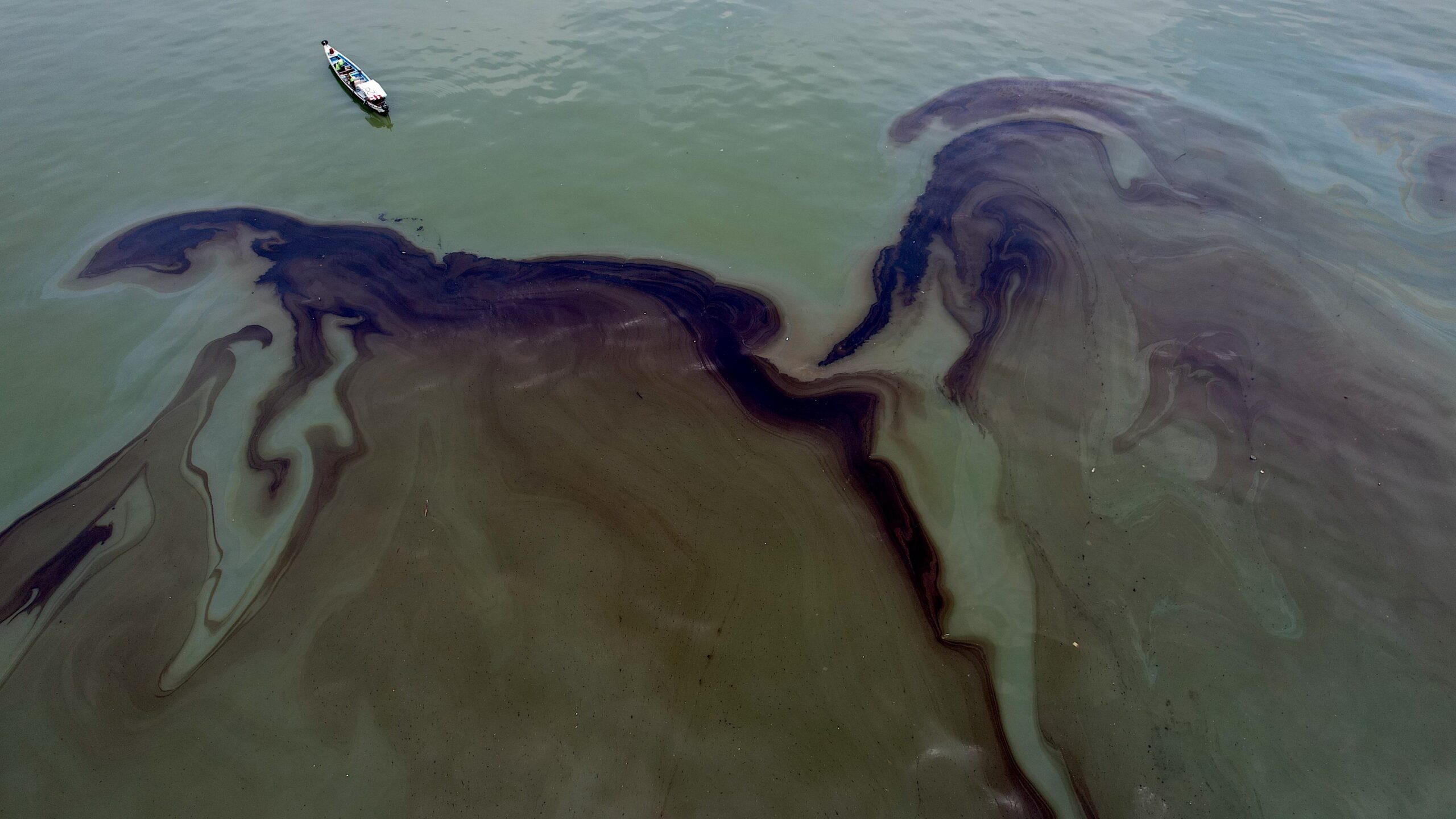
    Oil slicks from ships and offshore oil platforms cover nearly 1.6 million square kilometers (618,000 square miles) of the ocean surface each year, an area slightly larger than the nation of Mongolia.

    The estimate comes from a recent report by Skytruth, a U.S.-based nonprofit that used satellite imagery, machine learning and vessel tracking data to trace global oil pollution in the oceans between 2023 and 2025.

    According to John Amos, CEO of Skytruth, this kind of pollution was largely invisible before satellite imagery made it possible to track.

    “Any vessel operator could be pretty confident that nobody was going to notice what they were doing out in the middle of the ocean,” Amos told Mongabay by phone. “So that’s changed. We can see it now.”

    Much of the vessel oil slicks come from bilge waste, a mix of oil and water that collects in the bottom of a ship’s hull during operation. Tankers sometimes also wash out their cargo holds and flush crude oil residue into the sea.

    “It’s nasty oily dirty gunk that you just want to get rid of,” Amos said. “And the easiest thing to do with it is just pump it out into the ocean while you’re at sea.”

    According to the report, most of these discharges are illegal under MARPOL, the international treaty on pollution from ships. A MARPOL treaty adopted in 1973 allows vessels to discharge bilge water containing no more than 15 parts of oil per million parts of water.

    SkyTruth used modeling to estimate ocean oil pollution between 2023 and 2025.  They found vessels were responsible for 81% of the slick area, mostly cargo ships and tankers, while oil infrastructure such as offshore oil platforms accounted for 18%.

    Indonesian waters had the most verified slicks in the report, with 823, followed by Malaysia, which had 214. Both countries share the Strait of Malacca, one of the busiest waterways in the world.

    “The sheer volume of large cargo ships and oil tankers transiting their waters could be largely responsible,” Amos said.

    SkyTruth could only find ownership records for 9 of the 20 vessels flagged as repeat polluters.

    Two of those belonged to Indonesia’s PT Waruna Nusa Sentana and another two to Nigeria’s Sea Transport Services Nigeria Ltd. Mongabay reached out to both companies for comment but did not receive a response by publication.

    According to Amos, the global estimate is likely an underestimate. A ship that keeps its oily waste on board has to detour to a port with proper disposal facilities, which is expensive. A day at sea can cost a large cargo ship tens of thousands of dollars, and sometimes even more.

    “So you can either do that, or you can just wait until you get out in the ocean where you think nobody’s looking, and then discharge it directly overboard,” he said.

    Banner image: Oil spill in 2024 off Tibaguin Island, Philippines. Image © Noel Celis/Greenpeace.


    data map massive Oceans oil pollution reveal Routine satellite scale
    NCIJ NETWNCIJ NETWORK
    • Website

    Keep Reading

    It’s time to put Africa’s forest communities on the map (commentary)

    Extreme rainfalls flood Sri Lanka’s coastal city as wetlands, drains vanish

    Philippine corn farmers investigate links between chemical farming and soil erosion

    Renovated BUGarium in the US aims to connect people and insects

    Alabama Power Announces $160 Million Rate Decrease for 2027 After Pushback on High Energy Costs

    Birds die in blaze at one of largest foie gras farms in the US

    Add A Comment
    Leave A Reply Cancel Reply

    Editors Picks

    Baseten Releases Bison-1 and Groundhog-1, Topping Decision Model Index

    November 21, 2026

    The far right is menacing Europe – but it is fragile. What the extremists and voters want isn’t the same | Gordon Brown

    November 21, 2026

    NASA’s Voyager 1 is now so far away that light takes 24 hours to reach it

    November 21, 2026

    It’s time to put Africa’s forest communities on the map (commentary)

    November 21, 2026
    Latest Posts

    How ‘gentle power’ can preserve traditional biodiversity in Tokyo

    August 21, 2026

    This weight-loss hormone may protect the liver even without weight loss

    August 21, 2026

    Bitcoin Rally Lifts Crypto Stocks as Canaan Jumps 25%

    August 21, 2026

    Subscribe to News

    Get the latest sports news from NewsSite about world, sports and politics.

    NCIJ Network is an independent digital news platform delivering trusted investigative journalism, European and global news, in-depth analysis, and fact-based reporting with accuracy, transparency, and integrity.

    Facebook X (Twitter) Instagram Pinterest YouTube

    Baseten Releases Bison-1 and Groundhog-1, Topping Decision Model Index

    November 21, 2026

    The far right is menacing Europe – but it is fragile. What the extremists and voters want isn’t the same | Gordon Brown

    November 21, 2026

    NASA’s Voyager 1 is now so far away that light takes 24 hours to reach it

    November 21, 2026

    Subscribe to Updates

    Get the latest creative news from FooBar about art, design and business.

    Type above and press Enter to search. Press Esc to cancel.