


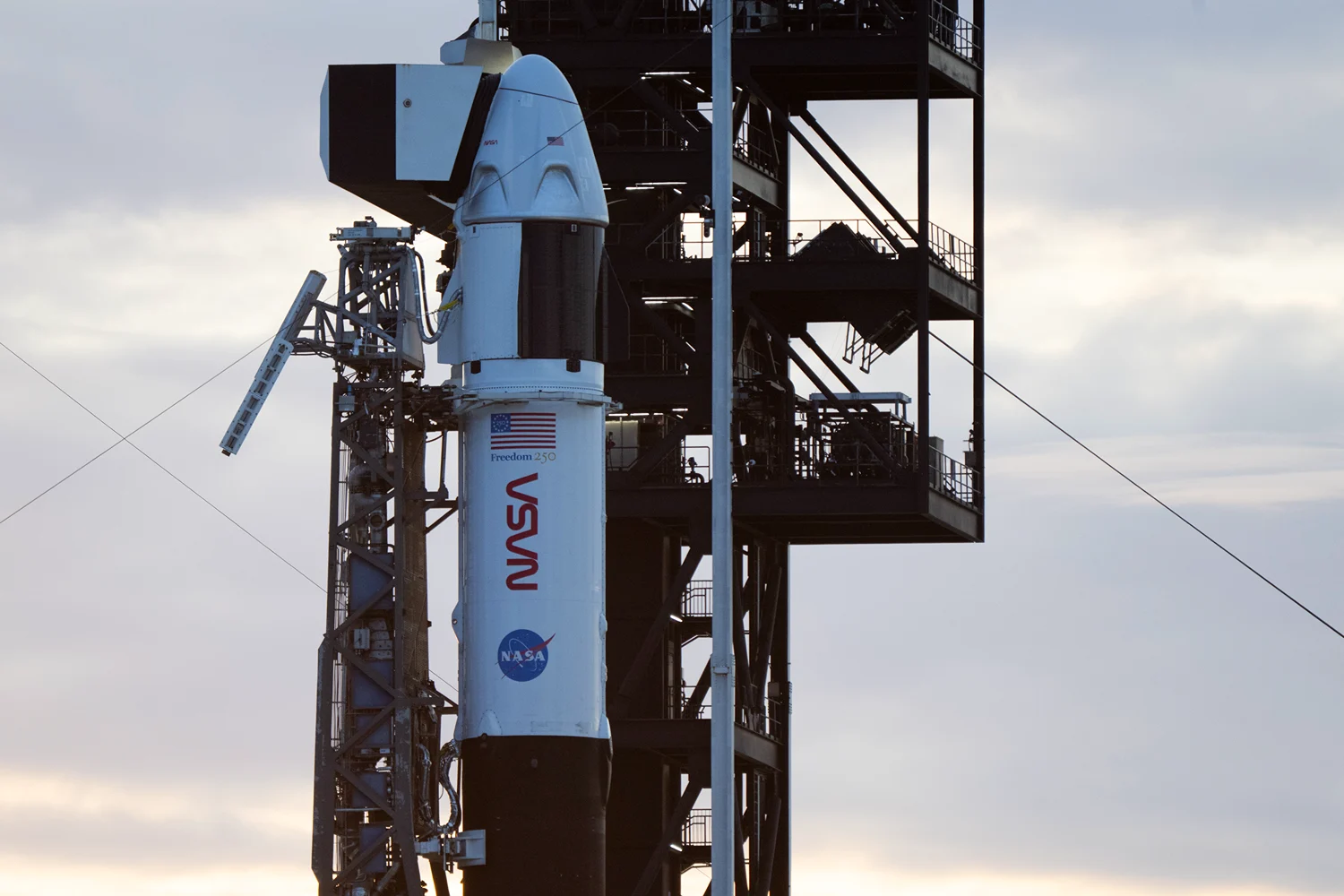
The commercial space market is booming after years of surviving on the fringes of a government-dominated industry. The monster SpaceX initial public offering earlier this year demonstrated the deep interest that public markets have in the industry, and a constellation of companies, building everything from satellites to rockets, has matured in its wake. There is a massive incoming problem, however—all of this industry is dependent on the ability to cheaply and reliably move cargo into space, and that is about to get a lot less certain.
SpaceX has been synonymous with both launch capacity and infrastructure for years because it launches so much more than anyone else. The U.S. commercial launch industry is basically SpaceX; the government industry is also dependent on SpaceX, and internationally, many others are as well. Partially as a function of this scale, SpaceX is also able to compete on price in ways that other launch providers simply cannot; the Falcon 9 is both cheap and reliable in an industry where neither of those is especially common—that rocket has seen the most launches among active launch vehicles (roughly 700) with a success rate of more than 99 percent.
The commercial space market is booming after years of surviving on the fringes of a government-dominated industry. The monster SpaceX initial public offering earlier this year demonstrated the deep interest that public markets have in the industry, and a constellation of companies, building everything from satellites to rockets, has matured in its wake. There is a massive incoming problem, however—all of this industry is dependent on the ability to cheaply and reliably move cargo into space, and that is about to get a lot less certain.
SpaceX has been synonymous with both launch capacity and infrastructure for years because it launches so much more than anyone else. The U.S. commercial launch industry is basically SpaceX; the government industry is also dependent on SpaceX, and internationally, many others are as well. Partially as a function of this scale, SpaceX is also able to compete on price in ways that other launch providers simply cannot; the Falcon 9 is both cheap and reliable in an industry where neither of those is especially common—that rocket has seen the most launches among active launch vehicles (roughly 700) with a success rate of more than 99 percent.
This has been, in turn, one of the most important parts of the industry boom. Without the cost of launch coming down to the extent that it did over the past few decades, a lot of the space industry, especially the commercial space industry, would’ve been dead on arrival.
In 2025, the Falcon 9 was used for almost half of all rocket launches globally. Despite this market domination, SpaceX recently announced plans to stop flying that rocket for rideshare missions, where SpaceX sells slots on the rocket priced on a per kilogram basis. Rideshare missions are necessary for a lot of the commercial space industry because they bring down the cost to get into space quite a bit; without this, companies need to pay for a full launch on their own. This capacity gets booked up pretty quickly, because SpaceX rideshares remain the cheapest; most consistent; and, in many cases, only game in town.
While there are a few years left of missions, the last train from SpaceX leaves in 2028. After that point, the only way to buy a launch directly from SpaceX is via the United States’ Defense Priorities and Allocations System program, which requires prioritizing orders for national defense. There is a little bit of capacity beyond that, though albeit indirectly, and some launch integrators are likely to support the Falcon 9 launch platform through its retirement, slated for around 2030.
After this, however, it’s not so clear who will step up to the plate. Blue Origin is down a launchpad due to an explosion earlier this year, and that was the only operational launch site for its New Glenn rocket. They are pushing to have a launchpad ready by the end of this year, butreaching capacity at scale will take longer, and NASA at least believes that it’ll take a bit longer. United Launch Alliance (ULA), the joint venture between Boeing and Lockheed Martin, has historically been less than reliable in terms of making it to launch.
Across the pond, the picture isn’t much better. Arianespace, based out of France, remains the premiere option, and it has many of the same drawbacks as ULA. Its rockets don’t have a reusable first stage, which in turn drives high launch costs, especially relative to SpaceX, and schedule slip is a fact of life. It also does not have much in the way of capacity—Ariane 6, the company’s newest rocket, is capable of around 10 launches a year—SpaceX does north of 150.
There are some bright new spots in the commercial launch market, both in the United States and in Europe. Isar Aerospace in Germany recently succeeded in launching a rocket into orbit. In the United States, there are a variety of companies likely to step up. Stoke Space, a company making fully reusable rockets raised a billion-dollar Series E round of funding, and there are some other market participants, such as Rocket Lab and Firefly. However, all of these face the same problem—capacity takes time to build up, and massive capital expenditure spending during a time of high inflation as well as likely soon-to-be-higher interest rates could easily be a challenging sell.
Launch capacity is already constrained, and when SpaceX drops out, it’ll get even more so. Every single available Falcon 9 slot till 2028 is already booked, and SpaceX maintains a waiting list as well. What comes after this is unclear—the Falcon Heavy successor from SpaceX can accommodate other payloads, but unlike the Falcon 9, it is not going to have the same routine rideshare program. While other companies could individually step up to serve part of that market, it doesn’t seem likely that any one company could do it all. In turn, that might have cost implications, since no one company is going to be able to leverage economies of scale at the SpaceX scale.
While this will have primary implications for the commercial space market, given the extent to which that has become increasingly intertwined with government space operations, it is likely to have follow-on effects beyond launch costs. The government industry does not have the same financial problems as the commercial market, but it did benefit from SpaceX making launch more reliable, and the Falcon 9 was an important part of that story. Without SpaceX driving down costs, a lot of the modern space industry wouldn’t exist—and who survives what comes next is an open question.
