


Apex Clean Energy and Meta have entered into a power purchase agreement that allows the technology company to financially benefit from energy generated from a solar project in Gonzales County, Texas.
The 144-megawatt project wouldn’t have been built without Meta’s backing, the energy developer said. But the partnership comes after the parent company of Facebook quietly exited a corporate renewable energy initiative following a decade of membership earlier this year, raising questions about the company’s commitment to renewable energy as Meta builds an expansive portfolio of energy-hungry data centers, totaling 28 sites in the United States as of April.
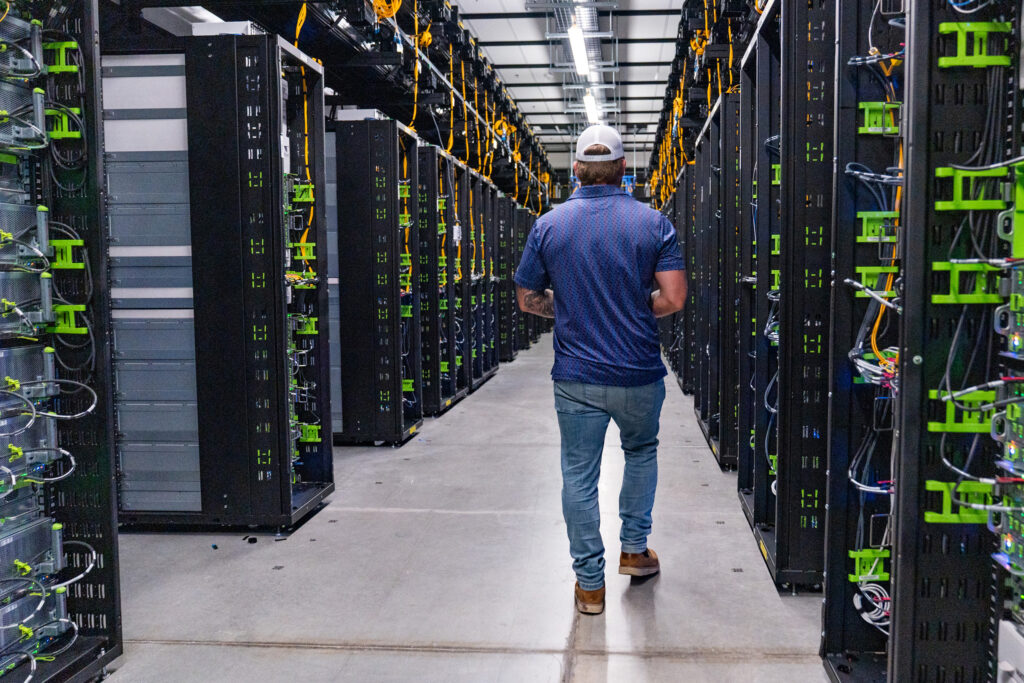
Meta plans to power a new data center in El Paso with a 366-megawatt gas-fired plant.
In a statement to Inside Climate News, Meta said natural gas options are part of its data center expansion plans for artificial intelligence but added that the decision to exit Climate Group’s RE100 renewable-energy initiative holds no bearing on its commitment to clean energy. The company said it has contributed more than 30 gigawatts of new clean energy to grids across the country to date and has retained its goal to match its electricity use with 100 percent “clean and renewable energy.”
As part of the new project, called Starling Solar, Meta will get to claim “all environmental attributes” from the energy production. That allows the company to offset some of the gas-fired energy powering its data centers when it tallies up its electricity use, but the gas power plants will have climate and local air-pollution impacts all the same.
Dennis Wamsted, energy analyst at the Institute for Energy Economics and Financial Analysis, said artificial intelligence development doesn’t have to come at the cost of renewable energy.
“I applaud Meta for trying. They have been very active in the past in building out or paying for the build-out of renewable energy across the United States,” he said.
But Wamsted sees problems with the speed of Meta’s AI build-out and its reliance on natural gas to do so.
“I think in some regards they’re taking what could be called the easy way out,” he said. “While I am positive about their past impact on renewables, I am increasingly critical about their current approach, which is to build anything they can get their hands on as fast as they possibly can, and I don’t think that we need AI quite that quickly.”
He added, “I think you can build wind and certainly solar very quickly and it can be used to power AI data servers and centers all across the country.”
Solar power has become an increasingly valuable resource in Texas. Apex expects the Starling Solar project to help bolster the state’s grid, which has encountered record-high demand this month that surpassed the record set in 2023. The state is grappling with high temperatures and an influx of data centers. Meta has three locations in Texas.
In August, Gov. Greg Abbott instructed utility regulators and the Texas grid operator to oversee an audit of every data center waiting to connect to the grid in ERCOT’s interconnection process, including their water consumption practices, local water supply sources and whether they use water-efficient technologies. Data centers that fail to comply with the audit will be denied interconnection.
Renewables made up about a third of Texas’ in-state electricity last year. That’s meant money for landowners, particularly farmers and ranchers, through lease payments for thousands of transactions like Meta’s power purchase agreement, Wamsted said.
Meta and Apex expect Starling to generate tax revenue of $27 million over the life of the project, $26.3 million in landowner payments and an estimated 400 to 450 jobs during the construction phase.
Starling is scheduled to begin operations next year.
About This Story
Perhaps you noticed: This story, like all the news we publish, is free to read. That’s because Inside Climate News is a 501c3 nonprofit organization. We do not charge a subscription fee, lock our news behind a paywall, or clutter our website with ads. We make our news on climate and the environment freely available to you and anyone who wants it.
That’s not all. We also share our news for free with scores of other media organizations around the country. Many of them can’t afford to do environmental journalism of their own. We’ve built bureaus from coast to coast to report local stories, collaborate with local newsrooms and co-publish articles so that this vital work is shared as widely as possible.
Two of us launched ICN in 2007. Six years later we earned a Pulitzer Prize for National Reporting, and now we run the oldest and largest dedicated climate newsroom in the nation. We tell the story in all its complexity. We hold polluters accountable. We expose environmental injustice. We debunk misinformation. We scrutinize solutions and inspire action.
Donations from readers like you fund every aspect of what we do. If you don’t already, will you support our ongoing work, our reporting on the biggest crisis facing our planet, and help us reach even more readers in more places?
Please take a moment to make a tax-deductible donation. Every one of them makes a difference.
Thank you,
