

Close Menu
NCIJ Network NCIJ Network
    What's Hot

    Why BAAJA Matters

    November 21, 2026

    After 8 years in space, a groundbreaking X-ray telescope finally opens its eyes

    November 21, 2026

    Court Delays Plan to Detonate Toxic Explosives in Iowa

    November 21, 2026
    Facebook X (Twitter) Instagram
    Trending
    • Why BAAJA Matters
    • After 8 years in space, a groundbreaking X-ray telescope finally opens its eyes
    • Court Delays Plan to Detonate Toxic Explosives in Iowa
    • Why is Shabana Mahmood tackling ‘two-tier policing’ if she doesn’t believe it exists? | Gaby Hinsliff
    • Baseten Releases Bison-1 and Groundhog-1, Topping Decision Model Index
    • The far right is menacing Europe – but it is fragile. What the extremists and voters want isn’t the same | Gordon Brown
    • NASA’s Voyager 1 is now so far away that light takes 24 hours to reach it
    • It’s time to put Africa’s forest communities on the map (commentary)
    • About
      • Our Team
      • Editorial Policy
      • Editorial Independence
      • International Support
    • Trust & Standards
      • AI Usage Policy
      • Conflict of Interest Policy
      • Corrections Policy
      • Ethics Policy
      • Fact-Checking Policy
      • Source Protection
    • Get Involved
      • Guide for Sources
      • Support Independent Journalism
    • Legal
      • Cookie Policy
      • Privacy Policy
      • Terms of Use
    Facebook X (Twitter) Instagram
    NCIJ Network NCIJ Network
    Saturday, November 21
    • Home
    • World
    • Ai
    • Business
    • Politics
    • Health
    • Crypto
    • Science
    • Technology
    • Cybersecurity
    • Defense & Security
    • Economy
    • Energy
    • Europe
    • More
      • Fact Check
      • Investigations
      • Opinion & Analysis
      • Environment
    NCIJ Network NCIJ Network
    Home»Technology

    Solving Math’s Greatest Problems Was an Art Form. Then Came AI

    NCIJ NETWNCIJ NETWORKBy NCIJ NETWNCIJ NETWORKSeptember 28, 2026 Technology No Comments3 Mins Read
    Share
    Facebook Twitter LinkedIn Pinterest Email

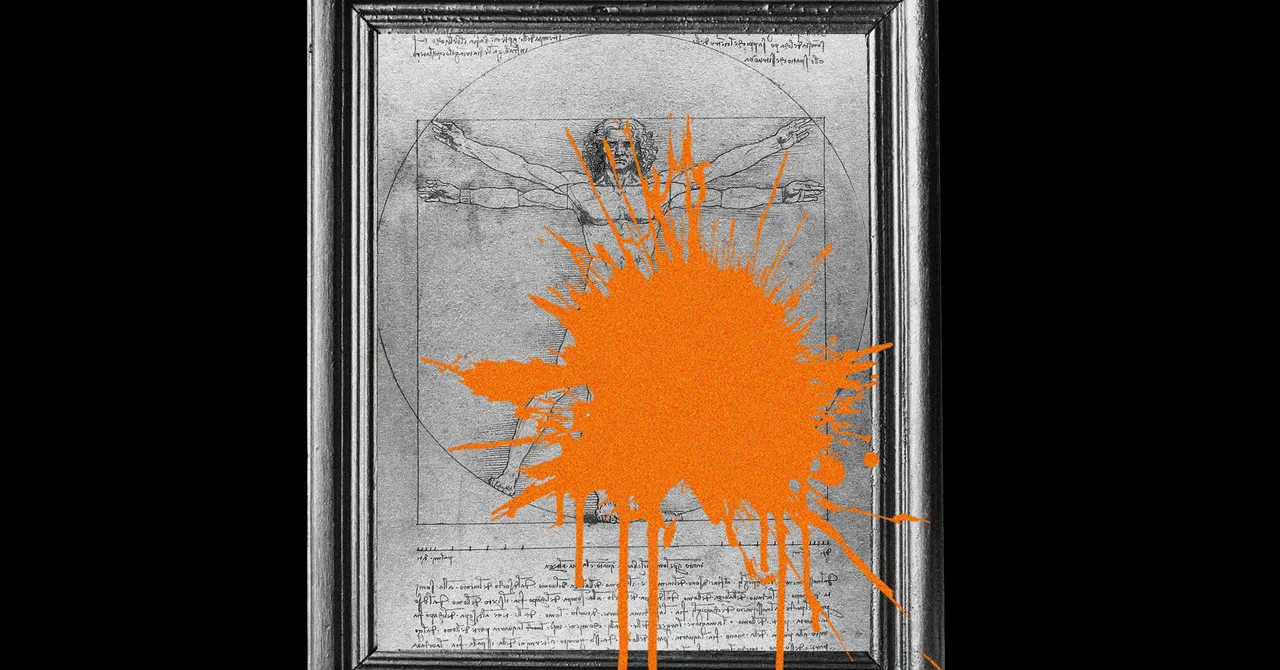
    From Suno composing uncanny elevator music to Tilly Norwood delivering customer-service-inflected one-liners, artificial intelligence has rattled creative industries. You can add math to the list after OpenAI said that, using thousands of agents, it had solved a decades-old puzzle known as the Navier-Stokes existence and smoothness problem.

    “The artists and the musicians have already gone through this,” says Juspreet Singh Sandhu, a mathematician at Colorado State University.

    Despite what timed high school exams might have you believe, mathematicians aren’t focused on getting the right answer as fast as possible. In fact, contrary to math’s image as a practical subject, the development of new mathematical ideas often resembles artistic exploration, akin to inventing a game or puzzle. Mathematicians typically follow a thoughtful, deliberate process to develop their ideas. In contrast, OpenAI approached the proof with brute force, which shortcut the process in a way that threatens to undermine human understanding.

    “A mathematician, like a painter or poet, is a maker of patterns,” wrote the English mathematician G. H. Hardy in his 1940 essay, A Mathematician’s Apology. As Hardy describes it, a painter uses shapes and colors, and a poet uses words, while a mathematician constructs patterns out of ideas.

    A pacifist, Hardy wrote the essay during World War II to argue that people should pursue mathematics for its own sake, separate from applications, particularly wartime ones. His essay promotes “useless” mathematics. He cites famed mathematician Carl Friedrich Gauss’ oft-quoted statement about number theory, the subfield of math which involves the study of integers, as the epitome of beautiful, useless math. While Hardy’s comparison of math to art holds up, he would turn out to be wrong on some of the specifics: After being useless for centuries, number theory would prove valuable for encryption protocols widely used today to secure your emails and bank accounts.

    At this point, though, useless is exactly what OpenAI’s proof is. The puzzle it solves is simply one that’s been interesting to mathematicians for decades.

    Its name comes from the Navier-Stokes equations, which 19th-century scientists developed to describe the flow of viscous fluids. Engineers use the equations to model airflow for airplane design. But mathematicians became enamored with the equations themselves, not their applications.

    “Mathematicians’ main interest in the equations was certainly not engineering,” says Jared Speck, a mathematician at Vanderbilt University. They pursued answers to the problem, he says, because of the “mathematical richness, the puzzle aspect of it.” The puzzle’s solution will not help anybody design a more aerodynamic airplane wing. Put another way: Many cakes are cylindrical, but studying the equations that describe a cylinder won’t necessarily help you bake a better cake.

    “When problems resist solution, they take on a bit of lore,” says Speck. The draw of Navier-Stokes is similar to why people play Sudoku or chess, both of which have no utility other than being fun and intellectually stimulating. The equations describe fluid flow, approximately, in the world we live in. But mathematicians imagined how the equations would apply in a fringe, almost sci-fi context, just because it intrigued them. They formulated a puzzle: They wanted to know whether the equations implied that in unrealistic conditions, a fluid could explode for no physical reason.

    Mathematicians expect approximate equations like Navier-Stokes to imply such nonsensical situations, which they find particularly interesting because sometimes they can lead to brand-new mathematical ideas. For years the community had been developing “a deep and beautiful theory” around the equations, says Speck. They were on the verge of cracking the problem before OpenAI’s proof found that yes, the Navier-Stokes equations did imply a sci-fi fluid explosion.

    Art form greatest maths Problems Solving
    NCIJ NETWNCIJ NETWORK
    • Website

    Keep Reading

    Scientists discover a hidden hereditary form of aggressive prostate cancer

    The single market is the EU’s greatest strength – POLITICO

    Nvidia, Spies, and the Art of Economic Espionage

    Participating in art and culture has measurable benefits on our wellbeing | Art

    Stone Age children left fingerprints on ancient art projects

    Is your gym attire setting you up for health problems?

    Add A Comment
    Leave A Reply Cancel Reply

    Editors Picks

    Why BAAJA Matters

    November 21, 2026

    After 8 years in space, a groundbreaking X-ray telescope finally opens its eyes

    November 21, 2026

    Court Delays Plan to Detonate Toxic Explosives in Iowa

    November 21, 2026

    Why is Shabana Mahmood tackling ‘two-tier policing’ if she doesn’t believe it exists? | Gaby Hinsliff

    November 21, 2026
    Latest Posts

    How ‘gentle power’ can preserve traditional biodiversity in Tokyo

    August 21, 2026

    This weight-loss hormone may protect the liver even without weight loss

    August 21, 2026

    Bitcoin Rally Lifts Crypto Stocks as Canaan Jumps 25%

    August 21, 2026

    Subscribe to News

    Get the latest sports news from NewsSite about world, sports and politics.

    NCIJ Network is an independent digital news platform delivering trusted investigative journalism, European and global news, in-depth analysis, and fact-based reporting with accuracy, transparency, and integrity.

    Facebook X (Twitter) Instagram Pinterest YouTube

    Why BAAJA Matters

    November 21, 2026

    After 8 years in space, a groundbreaking X-ray telescope finally opens its eyes

    November 21, 2026

    Court Delays Plan to Detonate Toxic Explosives in Iowa

    November 21, 2026

    Subscribe to Updates

    Get the latest creative news from FooBar about art, design and business.

    Type above and press Enter to search. Press Esc to cancel.