


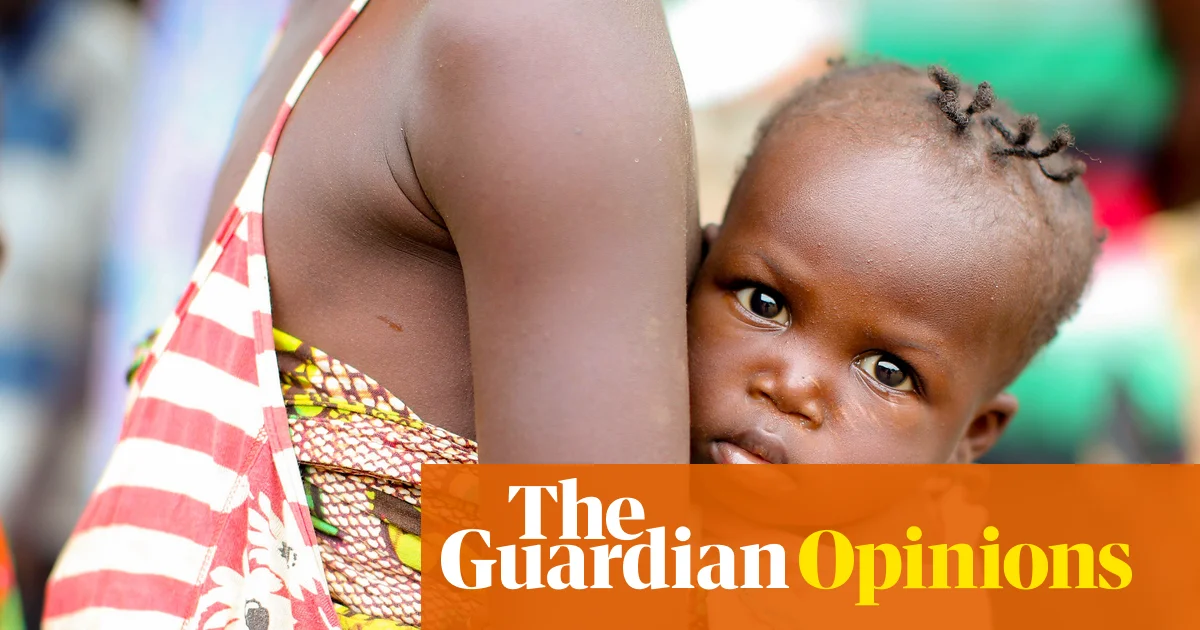
As Labour party conference approaches, politicians will debate spending priorities, fiscal pressures and the UK’s place in the world. Before those discussions begin, I want ministers to picture a hospital ward I visited in Sierra Leone with Unicef (United Nations Children’s Fund).
Inside the special-care baby unit at Makeni regional hospital were rows of tiny premature babies, some no bigger than my hand. Around them stood dedicated nurses and anxious parents, all willing these newborns to survive.
Then I saw something that stopped me in my tracks. It was 2019, and I noticed a UK aid sticker fixed above a tiny incubator. Inside was a premature baby fighting for breath. Nearby stood oxygen equipment that staff explained had been funded through UK support. I learned that when power outages struck the hospital, as they often did, that equipment helped keep vulnerable newborns alive.
Being in the presence of these sometimes inconceivably small children, seeing the UK aid sticker labelled across the incubators that were keeping them alive, emotion completely overcame me. It was not only sadness. It was pride. Pride that people in Britain, most of whom would never meet that baby or their family, had helped make survival possible. Seven years later, that moment remains one of the most impactful of my life.
When you are standing beside a newborn fighting for every breath, politics feels very far away. But the truth is that babies live or die because of political choices.
Since 2017, Unicef has supported Sierra Leone’s government to establish special-care baby units, providing sick and premature newborns with specialised treatment that was previously unavailable to many in the country.
I met doctors and nurses doing extraordinary work despite limited resources. I saw community health workers connecting families with health facilities, and mothers receiving advice and support.
One of them was Josephine, whose one-month-old daughter, also called Josephine, had been born dangerously premature at seven months. She told me she believed that without the special-care baby unit, both she and her daughter might have died during or after labour.
That is what aid means. It is not charity, and it is not an abstract number on a government spreadsheet.
The results in Sierra Leone show what that investment can achieve. Since the expansion of the special-care baby units began, annual admissions have risen from around 1,000 to 14,000, while survival rates had improved from 78% to 90% by the end of 2025.
But those gains are now under threat. Since the start of 2025, global aid funding has fallen sharply as major donors have scaled back support. The UK has already reduced spending on overseas development from 0.7% of national income to 0.3%. Around the world, programmes that help keep children healthy, safe and in school are facing growing uncertainty. In Sierra Leone, those cuts are no longer a future concern. They are already being felt.
I learned last week that the UK funding for Sierra Leone’s newborn care programme is now expected to end this December, two years earlier than planned.
I’m already hearing about the consequences. International paediatric support and specialist neonatal nurse training has ended. Reductions affecting the free healthcare programmes have also damaged the availability of lifesaving medicines for newborns, children and pregnant women.
The danger is not just that units such as Makeni might suddenly close. It is that the foundations supporting them are gradually eroded. Medical equipment needs spare parts and trained technicians. Oxygen must remain available. Nurses need continuing training and clinical mentorship. Medicines must reach hospitals. Infection prevention, referrals, outreach and follow-up for small and sick babies all require sustained investment.
Without that support, the progress I witnessed will be lost.
Sierra Leone is building national capacity. But transferring skills and building resilient health systems takes time. Ending support prematurely risks pulling away the scaffolding before the structure is strong enough to stand alone.
after newsletter promotion
The scale of the unmet need makes that risk even more alarming. About 45,000 newborns in Sierra Leone require specialised care each year, but existing services reach only about 31%. Approximately 31,000 small and sick babies are still left without access to the essential care they need.
This is not a programme that has finished its job. It is a programme that is working, but still reaches only a fraction of the children who need it. That is why I support Unicef UK’s No Choice But Childhood campaign.
The Guardian’s recent report suggests that ministers are looking for ways to make a smaller aid budget work harder. That is an important discussion. But the question should not only be how aid is spent: it should also be who it is spent for. If children bear the greatest consequences of poverty, conflict and climate shocks, they should be a clear priority in how aid is allocated.
The UK government should ringfence at least 25% of its overseas development spending for programmes that directly support children. The government must also set out a credible route back to spending 0.7% of national income on overseas development. Restoring that commitment will not happen overnight, but without a clear path, temporary reductions risk becoming a permanent retreat, with tragic consequences.
I understand the pressures on public finances: governments must make difficult choices. But we should be honest about what those choices mean.
In Makeni, they can mean whether oxygen is available when a premature baby cannot breathe. Whether a nurse has the training and equipment to act. Whether a mother goes home carrying her child.
The special-care baby unit I visited remains open, for now, but declining support is making it harder to sustain its quality, while extending the same care to thousands of newborns who are still not being reached.
No child chooses where they are born, and as Labour conference gets under way, I hope ministers think of children – like the tiny baby I saw in the incubator. That is what our choices can do.
