


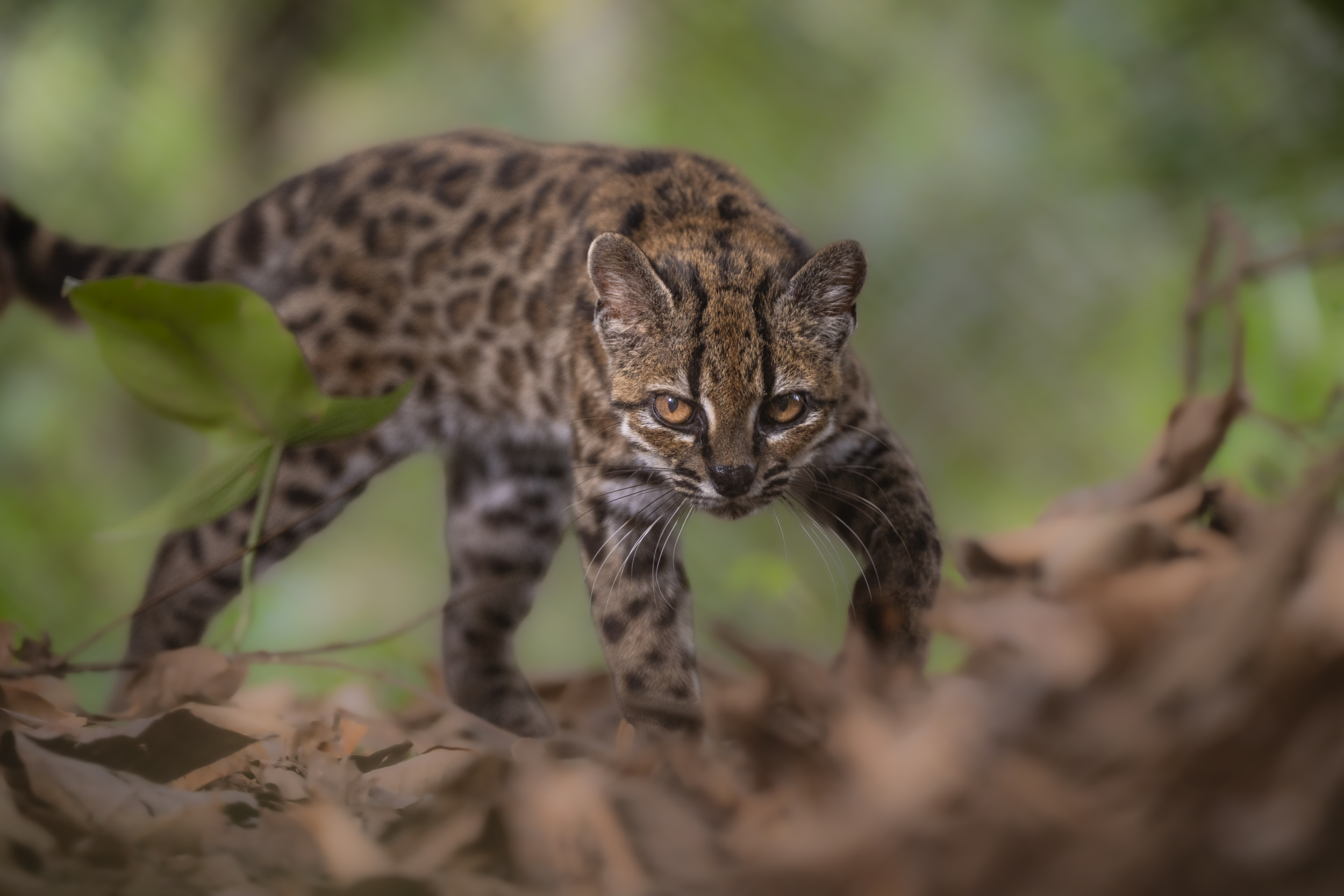
Scientists have described a species of tiger cat that was previously unknown to science. From Bolivia’s Yungas cloud forests, it is the first discovery of a living novel cat species in more than 100 years.
The tilcayo (Leopardus tilcayo) takes its species name from the name locals already had for it. Paola Nogales-Ascarrunz, a National Geographic explorer who discovered the species and co-author of the Current Biology paper that describes it, said the name honors traditional knowledge in the region.
The tilcayo is smaller than a domestic cat at 1.4 kilograms (3 pounds). It has rounded ears, a slender body and a coat with large spots.
“I have the honor of naming a cat, and that’s a really big thing,” Nogales-Ascarrunz, who is also a researcher at the Universidad Mayor de San Andrés in La Paz, Bolivia, told Mongabay by phone.
For decades, researchers lumped small spotted cats across South America under a single species name: Leopardus tigrinus or tiger cat. However, evidence had been mounting for years that the group might contain several species.
In the article published on Sept. 17, researchers unwound the species’ genetic web and confirmed at least four distinct species.
Many newly recognized small cat species result from this kind of taxonomic reshuffling: Researchers find a subspecies is actually a distinct species; or two different species that had been lumped together are separated.
But the tilcayo was different. Researchers knew a cat occurred in the Yungas cloud forests, but it had never been formally described.
Research had a breakthrough when a Bolivian family brought their pet tilcayo, named Tigrino, to the Senda Verde Wildlife Sanctuary near La Paz around 2017. The family had rescued Tigrino as a kitten, thinking it was a domestic cat, but began to suspect it was something more wild when the tiny feline started stalking their neighbor’s chickens.
Testing on Tigrino, and on one hair sample from a rescued tilcayo that had been rehabilitated and returned to the wild, showed that L. tilcayo was farther removed from other tiger cats than anyone had expected. Genetic analysis showed that the species had never been sampled before and matched no known species.

“We expected the tilcayo to maybe be a subspecies, or something like that, because it was different,” Nogales-Ascarrunz said. “Then we saw it was 1.4 million years ago that this cat separated from the others, and that was amazing because we didn’t expect that much separation.”
For reference, humans diverged from neanderthals around 800,000 years ago.
The last living cat species to be named and described before the tilcayo was the Uruguayan pampas cat (Leopardus fasciatus) in 1923.
Banner image: Leopardus tilcayo resides at Senda Verde Animal Refuge in Bolivia’s Yungas region. Photo © Fernando Faciole/National Geographic.

