


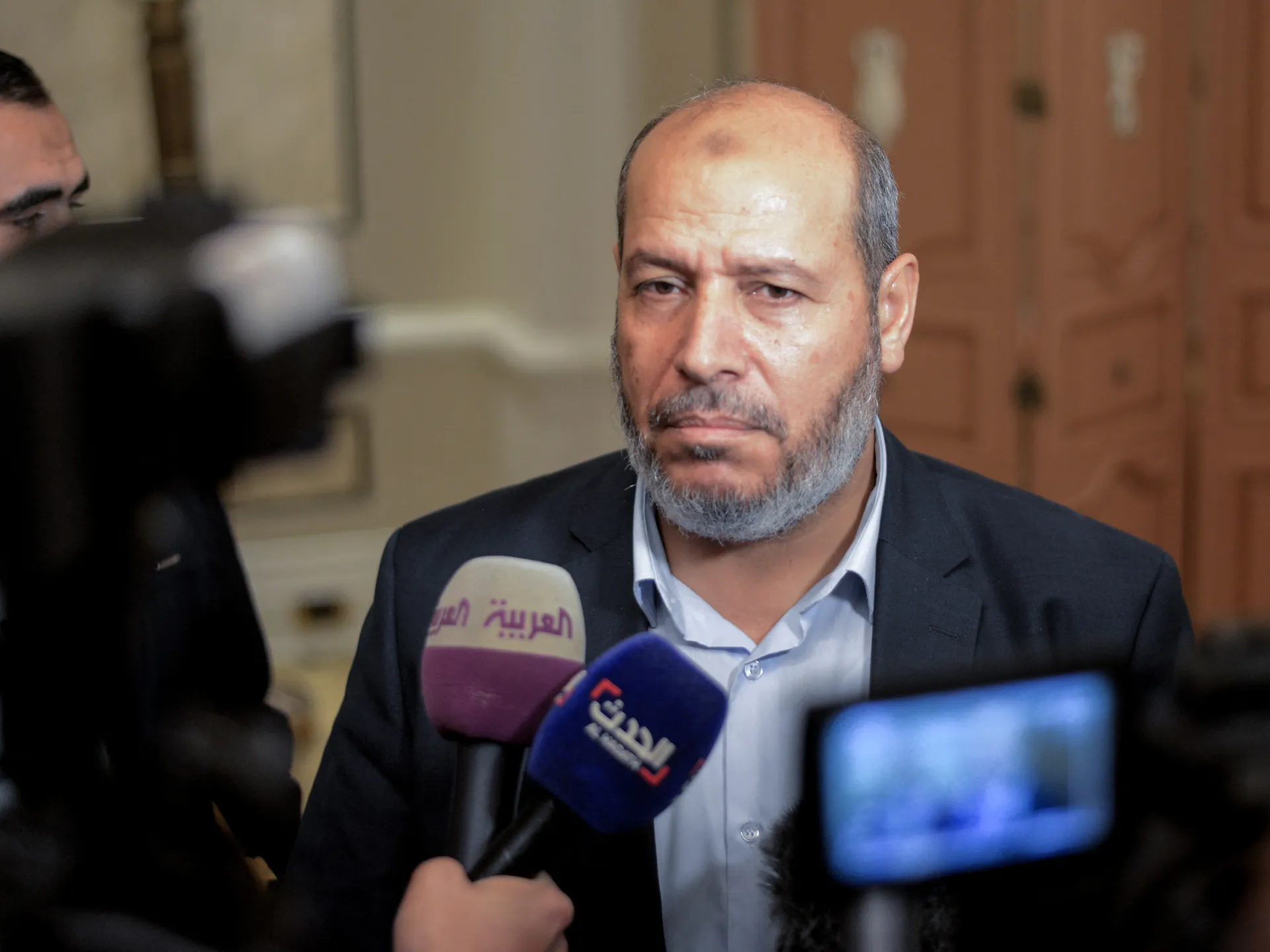
Khalil al-Hayya’s election as the new head of Hamas is far more than the filling of a position left vacant by war. Decided by a single vote after nearly two years of collective leadership, it reveals the divisions within a movement transformed by exile, regional upheaval and its increasingly consequential relationship with Iran.
Al-Hayya, Yahya Sinwar’s former deputy in Gaza and a member of the five-person council that has led Hamas since Sinwar’s killing in October 2024, defeated former political bureau chief Khaled Meshaal in a 35-34 vote. That razor-thin result encapsulates the central question now facing Hamas: whether it can reunite its competing currents or whether al-Hayya’s victory will consolidate the influence of the camp most closely aligned with Tehran.
From Gaza to the diaspora
When Hamas was established in December 1987, who stood at the head of the movement mattered far less than it does today. Its leadership structure was considerably simpler before growing more complex over the following two decades.
Although formally born in Gaza, the Islamic Resistance Movement, known by its Arabic acronym Hamas, was the joint project of several organisations operating under the umbrella of the Bilad al-Sham, or Levant, branch of the Muslim Brotherhood. These included Muslim Brotherhood organisations in Gaza, the occupied West Bank and Jordan as well as affiliates across the diaspora, particularly in Kuwait, Qatar and Saudi Arabia.
Initially, the leadership of the Muslim Brotherhood in Gaza exercised overall control. Like Muslim Brotherhood organisations elsewhere, it was governed by an elected Shura Council representing different parts of the Gaza Strip. The council, in turn, elected an executive office from among its members.
It was this executive office that met on December 9, 1987, and decided to transform the Muslim Brotherhood’s organisation in Gaza into the Islamic Resistance Movement. Its members were Sheikh Ahmed Yassin, Abdulaziz al-Rantissi, Salah Shihada, Abdulfattah Dukhan, Muhammad Sham’ah, Ibrahim al-Yazuri and Issa al-Nashar.
That leadership model was soon disrupted by Israeli repression. After Hamas declared responsibility for several resistance operations, the Israeli occupation forces launched a series of severe crackdowns against it. A mass detention campaign deprived the movement of virtually all its first- and second-tier leaders.
The crackdown alarmed Hamas’s support networks outside Palestine. Mousa Abu Marzouk, who had been studying for a doctorate in the United States, was sent to Gaza to salvage what remained of the badly battered organisation.
The growing role of Hamas’s external support apparatus in rebuilding the movement marked the beginning of a transfer of leadership from Gaza to the diaspora. Abu Marzouk later moved to Jordan and became the head of the movement’s political bureau, remaining in the position until he was arrested at John F Kennedy International Airport upon returning to the US in 1995. Khaled Meshaal succeeded him and was subsequently re-elected several times, remaining head of the political bureau until 2017.
A structure that deepened internal divisions
Under Meshaal, Hamas reorganised its leadership into three principal constituencies. Gaza, the West Bank and the diaspora. Each had an elected local Shura Council and its own executive leadership.
The intention was to decentralise decision-making and establish a clearer division of labour. Inevitably, however, the new structure also produced a growing bureaucracy, duplicated mandates, conflicting interests and recurring disputes between the movement’s different branches.
Hamas’s removal from Jordan in the late 1990s initially appeared to be a blessing in disguise. During the 11 years that followed when its leadership was based in Damascus, the movement considerably expanded its international relations.
It was during this period that the so-called axis of resistance, comprising Iran, Syria, Hezbollah and Palestinian groups, including Hamas and Islamic Jihad, began to take shape. With most Arab governments identifying with the opposing camp, commonly described at the time as the “axis of moderation”, Hamas’s alliance with and growing reliance on Iran appeared increasingly inevitable.
Since the early 1990s, Iran has sought, with limited success, to turn Hamas into a proxy similar to Hezbollah and, to some extent, Palestinian Islamic Jihad. Throughout the Meshaal era, however, Hamas maintained a significant degree of independence despite accepting Iranian financial and military assistance.
The Arab Spring rupture
That relationship was severely tested by the Arab Spring. Hamas welcomed and supported the popular uprisings and rejected Iranian demands that it side with the Syrian government as it moved to suppress the revolution. The movement instead left Damascus for Doha, abandoning what some of its members in Syria considered the considerable privileges and political gains it had accumulated during the previous decade.
The departure from Damascus coincided with the end of Meshaal’s second and supposedly final term as head of the political bureau. The movement’s rules did not permit him to stand for another term, and his Gaza-based deputy, Ismail Haniyeh, expected to succeed him.
Meshaal was nevertheless persuaded by allies inside and outside Hamas that the regional circumstances made a leadership change inadvisable. A campaign was mounted to amend the rules and allow him to stand for a third term.
The rules were changed, and Meshaal was re-elected. But the decision produced a serious internal crisis and opened a rift between competing leadership currents that continued to deepen in the years that followed.
After the coup in Egypt and the success of the counterrevolution in crushing much of the Arab Spring, Hamas found itself under pressure from both sides. Arab governments opposed to the uprisings punished the movement for having supported them so unequivocally. Iran, meanwhile, punished Hamas for refusing to stand by the Syrian government.
By the time Haniyeh eventually succeeded Meshaal as head of the political bureau, the movement’s financial difficulties had become more severe. The diaspora branch, which was then headed by Meshaal, was deprived of much of the funding it needed to sustain its extensive organisational structure.
Iran increasingly dictated which parts of Hamas should benefit from its financial support, insisting that funds should not be made available to Meshaal’s team. In practice, this allowed Tehran to strengthen a pro-Iran current within Hamas while weakening the opposing current led by Meshaal.
Neither Sinwar’s subsequent rise to the overall leadership nor the collective leadership established after his killing resolved this underlying struggle.
A victory without a decisive mandate
Against this background, al-Hayya’s narrow victory will inevitably be interpreted in some quarters as a victory for the pro-Iran camp. Until a few years ago, that current represented only a small minority within the movement. It has since been strengthened by the perception that Iran is the only state in the region willing to support Hamas as well as by the belief among its advocates that Iran is emerging from the current US war stronger and more determined.
Yet the closeness of the result also demonstrates that Hamas remains deeply divided. Al-Hayya may have won the leadership, but a one-vote margin does not amount to a decisive mandate for one current to marginalise the other.
For those who judge leadership principally by charisma, Meshaal remains the more commanding figure. Hamas, however, has historically depended less on individual charisma than on clarity of vision and unity within its ranks.
Al-Hayya’s defining challenge
Al-Hayya’s greatest challenge will, therefore, not simply be to lead Hamas through an exceptionally difficult regional moment. It will be to work with his comrades to repair an internal rift that has developed over more than a decade, reunite the movement’s competing currents and preserve the clarity and independence of its political vision.
Whether he succeeds will determine whether this election becomes the beginning of renewed cohesion or another stage in the consolidation of one camp at the expense of the movement as a whole.
The views expressed in this article are the author’s own and do not necessarily reflect Al Jazeera’s editorial stance.
