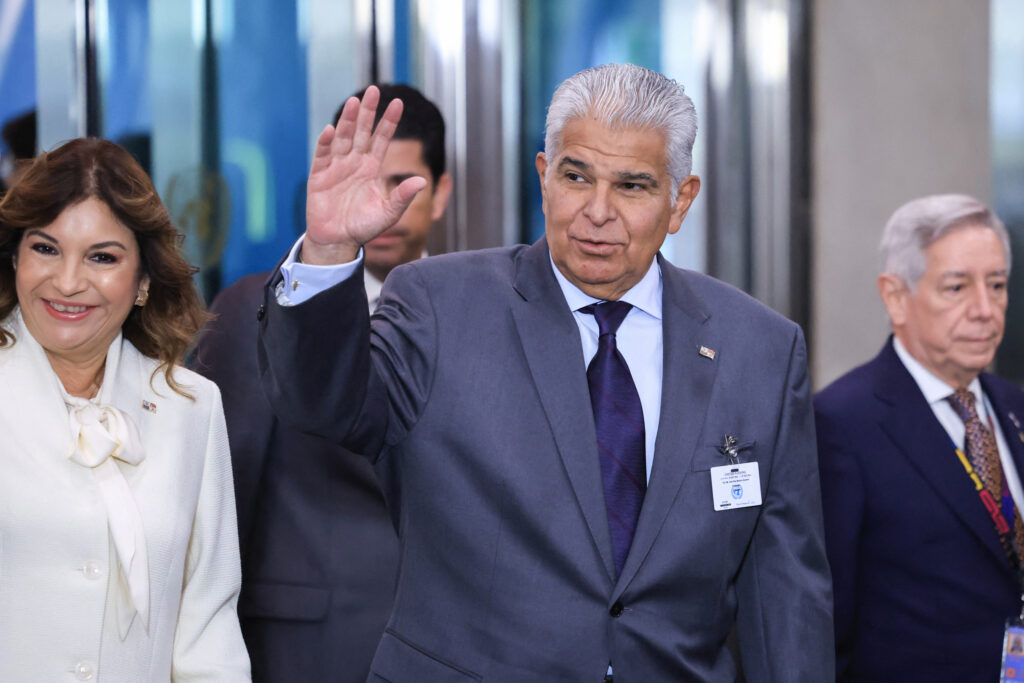
NEW YORK—From the podium of the United Nations General Assembly, Panamanian President José Raúl Mulino called on fellow leaders to support a treaty affirming that nature has inherent rights.
“Today I am announcing that Panama will lead internationally an effort to recognize the universal rights of nature. And I ask all of you to support us in this initiative,” Mulino said.
Panama’s center-right government is working within the longstanding U.N. Harmony with Nature program, proposing language in the triennial Harmony with Nature resolution that would formally open inter-governmental negotiations on a non-binding declaration asserting that nature has rights and articulating what those rights are.
If the resolution passes in December, two co-facilitators—one from a developed country and one from a developing country—would guide governments through drafting and negotiation, with Panama aiming for a proposal by 2030, according to Callie Veelenturf, a marine conservation biologist whose foundation forNature is supporting the initiative.
The contents of any declaration would depend on what is politically feasible. But the 2010 Universal Declaration on the Rights of Mother Earth, produced by thousands of Indigenous peoples, social movement leaders and environmentalists, provides a starting point. So too do hundreds of rights of nature declarations and laws that have proliferated across the world since about 2006.
Panama is one of more than a dozen countries—along with Spain, Ecuador, Bangladesh and New Zealand—that have national laws or court rulings recognizing the legal rights of nature as a whole, or specific ecosystems or species.
Those laws do not say that nature has the same rights as human beings. Rather, they tend to draw heavily on ecological science, articulating what a species or ecosystem needs to survive and have its biological needs met.
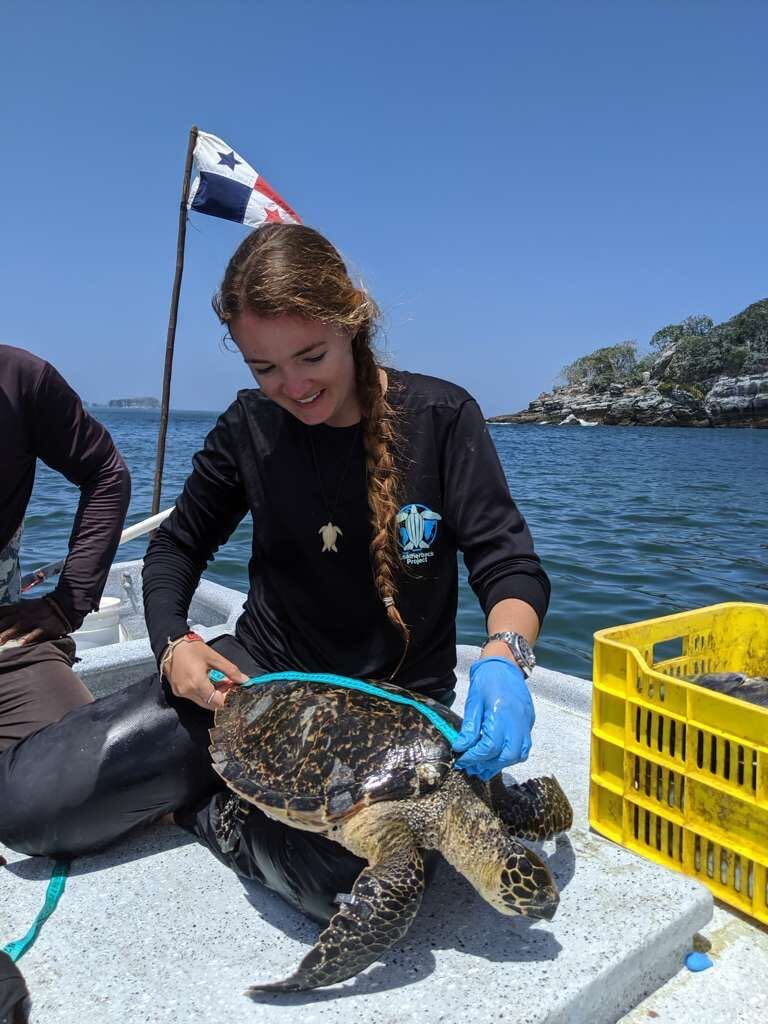
Panama’s sea turtle rights law, for example, recognizes the migratory species’ right to “free passage in a healthy environment.” Veelenturf, a leading sea turtle biologist, advised lawmakers on that 2023 legislation as well as on Panama’s earlier rights of nature law, passed in 2022.
Panama’s environment minister, Juan Carlos Navarro, frames his country’s pitch to the world as a pragmatic, values-driven model blending science, ethics and hard-nosed enforcement.
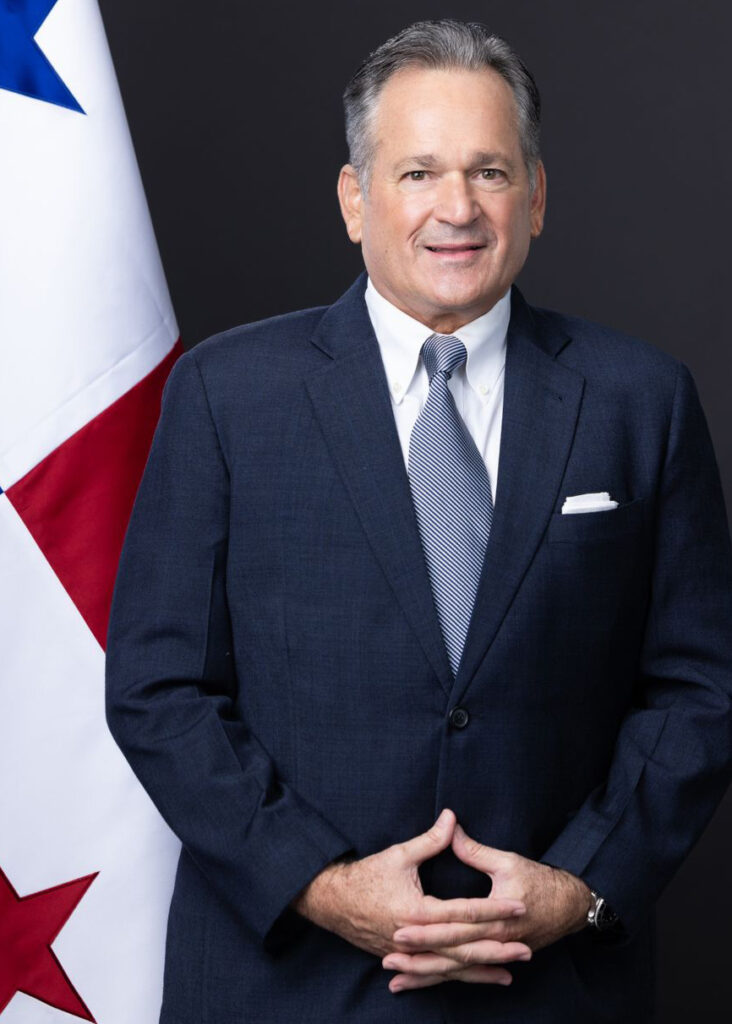
In his view, moving to protect nature is both logical and a moral imperative: “It’s not only a rational decision based on science—for me, it is also a personal decision based on ethics and based on what’s the right thing to do.”
Human-caused global environmental crises, from climate change to the extinction risk an estimated 1 million species face, have outpaced governments’ actions to address them. Navarro pointed to flaws in the way many existing laws are designed, including the treaty system that forms the U.N. Framework Convention on Climate Change. In general, decisions can only be taken when there is consensus, allowing major polluters to block more stringent action. Panama has proposed reforms to allow a simple majority, as the U.N. General Assembly does.
Navarro also criticized the lack of progress at global climate and biodiversity conferences more broadly.
“Please, let’s tell the truth to ourselves, let’s speak the truth to our own citizens—climate negotiations are not going anywhere,” Navarro said. “We continue to have destruction at a massive scale.”
Rights of nature laws, in the view of both its advocates and opponents, upend existing legal systems. Rather than designing environmental protection laws through the lens of human interest, the movement’s aim is to align human-made laws with the biophysical laws of the planet—human activity would need to conform to what science shows species and ecosystems need to thrive.
When Veelenturf approached Panama lawmakers about the rights of nature back in 2020, she led with scientific arguments.
“I brought it from a perspective of nature and nature’s needs,” she said. “I was using data in certain environmental crises in Panama and in the world to represent the threats nature is facing and how rights of nature could be the solution.”
Panama is “proof of concept” for the global push, having demonstrated that it’s possible to enforce nature’s rights while growing the economy, Navarro said.
Under the Mulino administration, which took office in July 2024, the nation slashed its fiscal deficit from 7.6 percent to 3.1 percent, reduced unemployment and is now ranked among Latin America’s fastest-growing economies. The country has paired financial momentum with an aggressive environmental agenda: expanding national parks, designating new wetlands of international importance, scaling park rangers from roughly 100 to 700 in two years and deploying high-tech surveillance to curb illegal fishing.
To ensure its environmental gains endure beyond political cycles, Panama is establishing the “Fondo Panamá Natural,” a public-private trust aimed at guaranteeing long-term, insulated funding for conservation.
The country has faced pushback on some of its environmental efforts.
This story is funded by readers like you.
Our nonprofit newsroom provides award-winning climate coverage free of charge and advertising. We rely on donations from readers like you to keep going. Please donate now to support our work.
In 2023, Panama’s Supreme Court struck down a billion-dollar copper mining contract, ruling that the government failed to properly consult local and Indigenous communities and violated the human right to a healthy environment. The court also noted the nation’s rights of nature law. The companies behind the mine then launched international arbitration claims against Panama, seeking tens of billions of dollars. Those arbitrations are still pending.
Navarro said the Mulino administration rejects the idea that protections for nature undermine economic growth. Inaction has been expensive, he said: Severe drought intensified by climate change in 2023 restricted traffic through the Panama Canal, costing the country $1 billion.
Pointing out that humans are the only species actively destroying their own home, he said he personally views the rights of nature as “nothing less and nothing more than defending God’s creation.”
He added: “Come at it from an ethical perspective. Come at it from a scientific perspective. Come at it from a social perspective, or the need for our own species’ survival. All of these roads lead to Rome, and Rome is: Protect nature now.”
About This Story
Perhaps you noticed: This story, like all the news we publish, is free to read. That’s because Inside Climate News is a 501c3 nonprofit organization. We do not charge a subscription fee, lock our news behind a paywall, or clutter our website with ads. We make our news on climate and the environment freely available to you and anyone who wants it.
That’s not all. We also share our news for free with scores of other media organizations around the country. Many of them can’t afford to do environmental journalism of their own. We’ve built bureaus from coast to coast to report local stories, collaborate with local newsrooms and co-publish articles so that this vital work is shared as widely as possible.
Two of us launched ICN in 2007. Six years later we earned a Pulitzer Prize for National Reporting, and now we run the oldest and largest dedicated climate newsroom in the nation. We tell the story in all its complexity. We hold polluters accountable. We expose environmental injustice. We debunk misinformation. We scrutinize solutions and inspire action.
Donations from readers like you fund every aspect of what we do. If you don’t already, will you support our ongoing work, our reporting on the biggest crisis facing our planet, and help us reach even more readers in more places?
Please take a moment to make a tax-deductible donation. Every one of them makes a difference.
Thank you,