


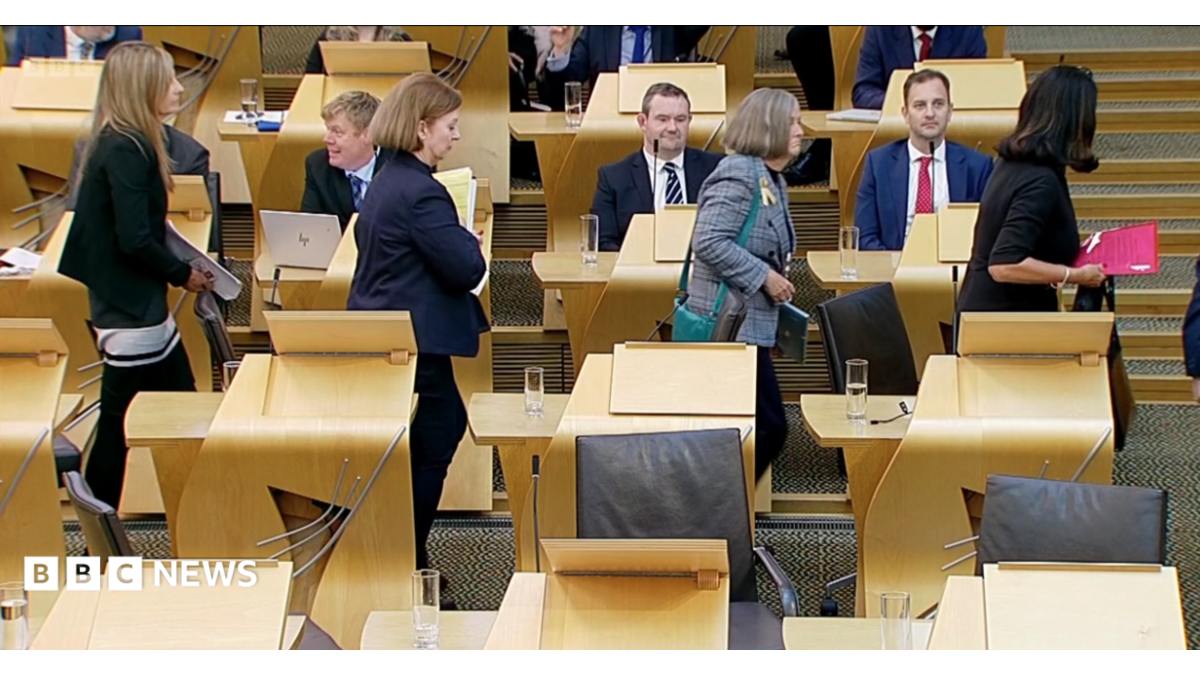
Michael Marra, the new leader of Scottish Labour, was among those backing the motion although he said it was more about SNP internal politics and less about practical action to make people’s lives better.
His amendment, which was passed, retained Swinney’s statement but added that efforts should be stepped up to tackle child poverty.
During the debate, Marra said there had “always been a route to another referendum”.
That route was to “build a consensus – the settled will of the Scottish people – and make it overwhelming”.
But he said he believed Scotland “can be a fairer and stronger nation without being a separate state”.
He added: “I don’t believe we have to risk our currency, our defence, our markets and our budgets to deliver a more equal and just Scotland.”
Scottish Conservative leader Russell Findlay said the SNP should accept the result of the “once in a generation” 2014 referendum – which saw Scotland vote by 55% to 45% to remain part of the UK.
“The SNP say that Scotland should decide. We did decide, more than two million Scots said no, and thank goodness for that,” he said.
Swinney insisted that a simple majority of pro-independence MSPs represented a mandate for a referendum.
“My party believes it is for the people of Scotland to decide when there is an independence referendum.”
Saying that Scotland needs the “fresh start” of independence, he told MSPs the “fundamental right to decide our nation’s future remains”.
Swinney also raised the demographic change in Scotland since the last independence referendum.
He claimed that by 2029 there would be more than one million people in Scotland who did not have the opportunity to vote because of their age, and by 2030 the youngest voters would not even have been born in 2014.
He added that Scotland’s place in the UK and the world “had changed beyond recognition” after Brexit.
