


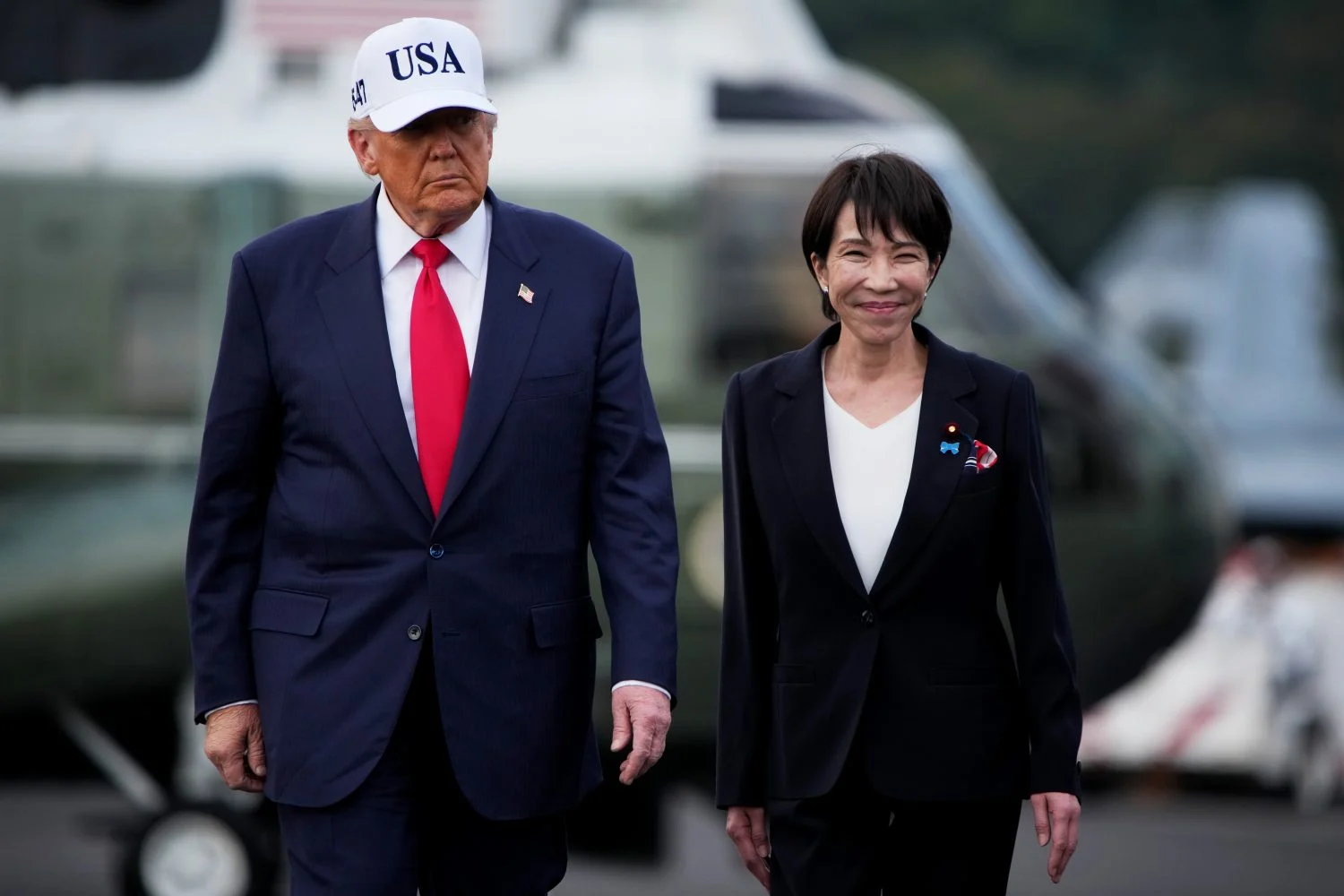
When Japanese Prime Minister Sanae Takaichi meets with U.S. President Donald Trump on the sidelines of the U.N. General Assembly today, she will have a new plan at her disposal to highlight how Tokyo will do more for the U.S.-Japan security alliance. Her government is undertaking the most substantial overhaul of Japan’s intelligence collection and analysis capabilities since 1945, with the ultimate goal of creating something Japan has never had: its own version of the CIA by 2028.
Although its final name and structure remain unsettled, Tokyo clearly intends for the new agency to conduct clandestine human intelligence (HUMINT) operations overseas against top security threats such as China, North Korea, and Russia. Since the end of World War II, Japan has conspicuously lacked a dedicated foreign intelligence service capable of systematically recruiting and running human sources overseas, in part because of the legacy of intelligence abuses during the imperial era. Yet Japan is hardly an intelligence novice. It has sophisticated technical collection capabilities, particularly in signals and geospatial intelligence. But technology cannot answer every question. Tokyo increasingly recognizes that it needs people on the ground who can penetrate foreign governments and organizations in order to uncover intentions and plans that satellites or intercepted communications cannot.
When Japanese Prime Minister Sanae Takaichi meets with U.S. President Donald Trump on the sidelines of the U.N. General Assembly today, she will have a new plan at her disposal to highlight how Tokyo will do more for the U.S.-Japan security alliance. Her government is undertaking the most substantial overhaul of Japan’s intelligence collection and analysis capabilities since 1945, with the ultimate goal of creating something Japan has never had: its own version of the CIA by 2028.
Although its final name and structure remain unsettled, Tokyo clearly intends for the new agency to conduct clandestine human intelligence (HUMINT) operations overseas against top security threats such as China, North Korea, and Russia. Since the end of World War II, Japan has conspicuously lacked a dedicated foreign intelligence service capable of systematically recruiting and running human sources overseas, in part because of the legacy of intelligence abuses during the imperial era. Yet Japan is hardly an intelligence novice. It has sophisticated technical collection capabilities, particularly in signals and geospatial intelligence. But technology cannot answer every question. Tokyo increasingly recognizes that it needs people on the ground who can penetrate foreign governments and organizations in order to uncover intentions and plans that satellites or intercepted communications cannot.
Japan already has the foreign ministry-led Counter Terrorism Unit-Japan, created in 2015 to collect terrorism-related intelligence overseas through personnel stationed abroad. The government is reportedly considering reorganizing and expanding that apparatus, broadening its mission beyond terrorism to national security intelligence generally and dramatically strengthening its HUMINT role.
Japan is hardly starting from scratch. During the Cold War, Japanese listening stations became highly capable at monitoring Soviet and Chinese military communications. In 1983, for example, Tokyo’s Wakkanai listening station intercepted Soviet fighter communications during the pursuit and shootdown of Korean Air Lines Flight 007. Tokyo eventually released the recordings, providing critical evidence of what had happened but also revealing Japan’s capabilities. The episode illustrated both Japan’s considerable technical intelligence prowess and the enduring dilemma of protecting sources and methods.
Today, North Korea illustrates both the strengths and limitations of Japan’s existing intelligence capabilities. Pyongyang’s 1998 launch of a Taepodong missile over Japan prompted Tokyo to develop its own intelligence satellites, and Japan has since built formidable capabilities for monitoring North Korean missiles and military activity. Yet some of the most consequential North Korean secrets have proved far more difficult to uncover. For decades, Pyongyang denied abducting Japanese citizens until Kim Jong Il finally admitted the practice in 2002. Satellites can photograph missile facilities, and signals intelligence can intercept communications, but neither necessarily reveals what the regime is privately planning or where an abducted Japanese citizen is being held. Those are precisely the kinds of questions human sources can sometimes answer.
Washington should expect that Takaichi and her government will make good on their pledge to establish a Japanese CIA because Tokyo has already invested significant time and resources in overhauling its intelligence apparatus and building the institutional foundation for a dedicated foreign intelligence service. In May, Japan’s parliament passed landmark legislation authorizing the establishment of two new pillars of Tokyo’s intelligence architecture. Sitting within the cabinet, the first new organization is called the National Intelligence Council—dubbed the “control tower” to essentially task and manage intelligence throughout the government—which will be chaired by the prime minister and attended by all ministers with intelligence matters in their portfolios. The other new organization, the National Intelligence Bureau (NIB), has replaced the old Cabinet Intelligence and Research Office—Japan’s relatively small and limited preexisting intelligence coordination and analysis body—and is tasked with coordinating collection across agencies and producing all-source analysis for national leaders. It is already operational with roughly 700 personnel, and its first director, Kazuya Hara, was previously director of cabinet intelligence and a longtime National Police Agency security official. In U.S. terms, the NIB is similar to the Office of the Director of National Intelligence.
Once operational, a foreign intelligence service will give Tokyo another way to demonstrate to Washington that it is taking its burden-sharing responsibilities within the security alliance seriously. Tokyo began fundamentally strengthening its military capabilities in 2022 but has accelerated these efforts since Trump’s return to office last year. In April, Takaichi’s government significantly loosened Japan’s long-standing restrictions on arms exports, opening the door to overseas sales of lethal weapons and greater defense-industrial cooperation with the United States and other partners. Tokyo is also revising its three core national security documents as it considers how Japan can shoulder a greater share of the regional security burden. Indeed, Japanese Defense Minister Shinjiro Koizumi and U.S. Defense Secretary Pete Hegseth spoke on Sept. 18, just days before the Trump-Takaichi meeting, to advance a range of initiatives aimed at strengthening deterrence and response capabilities.
A Japanese CIA could also bring Tokyo closer to another long-standing objective: deeper integration with the Five Eyes intelligence network of the United States, United Kingdom, Australia, Canada, and New Zealand. Japan has steadily strengthened its ability to protect classified information, including through its 2013 state secrets law, as well as a new security clearance system for sensitive economic and security information that took effect last year. But trust within Five Eyes ultimately depends on whether a partner can protect the intelligence it receives and whether it can contribute valuable intelligence of its own. By simultaneously strengthening counterintelligence protections and developing an overseas HUMINT capability, Japan is addressing weaknesses in these areas. Interestingly, Australia’s new ambassador to Japan, Andrew Shearer, is a former director-general of Australia’s Office of National Intelligence, and he is consulting with Japan on its intelligence reforms. This suggests that the end result could look similar to the Australian model, in which a central body coordinates the intelligence community and produces all-source assessments, while a separate agency under the foreign minister conducts clandestine HUMINT operations overseas. This could help make Tokyo’s intelligence apparatus more compatible with those of the rest of the Five Eyes.
Still, creating a Japanese CIA on paper will be far easier than building one capable of operating effectively overseas. Japan will need to recruit and train case officers, develop convincing cover, cultivate and protect foreign agents, and build an institutional culture comfortable with the risks inherent in clandestine operations. Tokyo also still needs to resolve difficult legal questions about precisely what intelligence officers will be authorized to do abroad, including whether they can pay agents, use false identities, or operate under nonofficial cover, as well as what mechanisms will oversee such activities. Building those capabilities—and the legal framework and institutional culture to support them—could take years even after the new agency becomes operational.
In the meantime, Takaichi has a good news story to convey to Trump. Japan is stepping up to meet his administration’s demands for allies to do more. Intelligence reform may generate fewer headlines than higher defense spending, new missiles, or arms deals, but it represents another consequential way Tokyo is assuming greater responsibility for its own security. Viewed through this lens, Japan’s version of the CIA is part and parcel of a broader effort to become the kind of more capable and self-reliant ally Trump has repeatedly demanded. When Takaichi sits down with him on Tuesday, she will have a strong case that Japan is answering his call.
