

Close Menu
NCIJ Network NCIJ Network
    What's Hot

    Russia’s ruling party on track to win election after Ukraine’s drone attacks on Moscow

    September 21, 2026

    World model companies are keeping a lot of secrets

    September 21, 2026

    This tiny organism can shrink to one quarter its size in milliseconds

    September 21, 2026
    Facebook X (Twitter) Instagram
    Trending
    • Russia’s ruling party on track to win election after Ukraine’s drone attacks on Moscow
    • World model companies are keeping a lot of secrets
    • This tiny organism can shrink to one quarter its size in milliseconds
    • Thousands protest in France against bill expanding protections for police use of force
    • A great new video game movie
    • Who Needs CLARITY Anyway? ARB Could See 70X Increase: Hodler’s Digest
    • This deep-sea enzyme survives heat that destroys most proteins
    • Our understanding of the slave trade is still evolving | Slavery
    • About
      • Our Team
      • Editorial Policy
      • Editorial Independence
      • International Support
    • Trust & Standards
      • AI Usage Policy
      • Conflict of Interest Policy
      • Corrections Policy
      • Ethics Policy
      • Fact-Checking Policy
      • Source Protection
    • Get Involved
      • Guide for Sources
      • Support Independent Journalism
    • Legal
      • Cookie Policy
      • Privacy Policy
      • Terms of Use
    Facebook X (Twitter) Instagram
    NCIJ Network NCIJ Network
    Monday, September 21
    • Home
    • World
    • Ai
    • Business
    • Politics
    • Health
    • Crypto
    • Science
    • Technology
    • Cybersecurity
    • Defense & Security
    • Economy
    • Energy
    • Europe
    • More
      • Fact Check
      • Investigations
      • Opinion & Analysis
      • Environment
    NCIJ Network NCIJ Network
    Home»Opinion & Analysis

    Our understanding of the slave trade is still evolving | Slavery

    NCIJ NETWNCIJ NETWORKBy NCIJ NETWNCIJ NETWORKSeptember 21, 2026 Opinion & Analysis No Comments4 Mins Read
    Share
    Facebook Twitter LinkedIn Pinterest Email

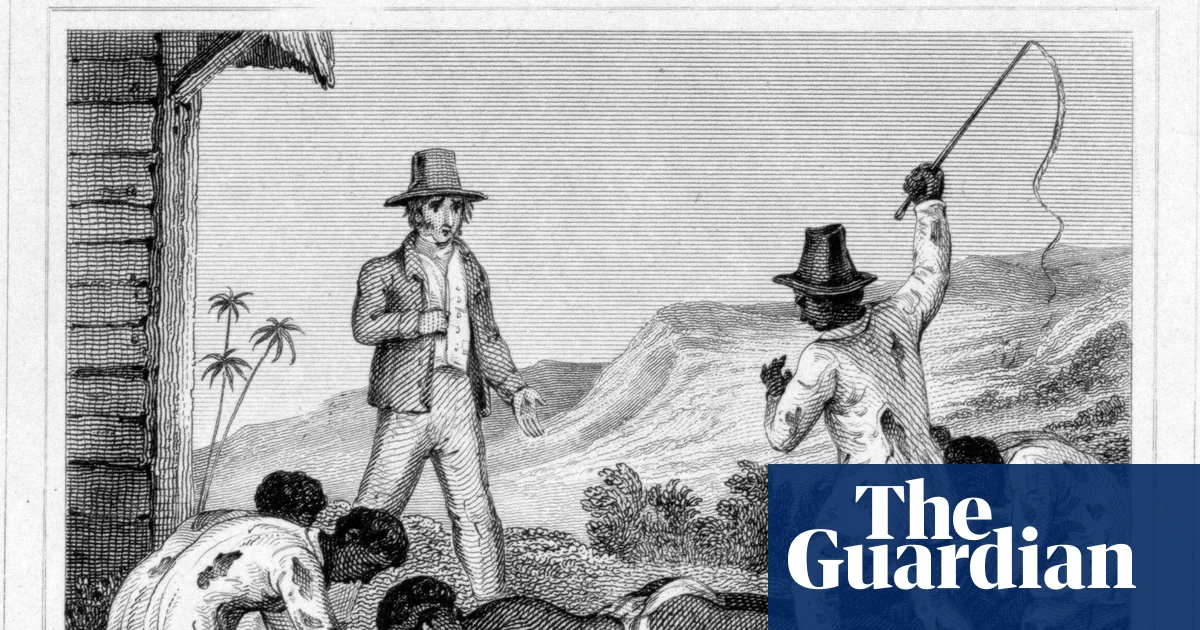
    William Pettigrew’s book, Britain’s Slave Traders: A Forgotten History, adds a further dimension and depth to our understanding of how entrenched and significant Britain’s involvement in the transatlantic slave trade was. The landmark University College London’s Legacies of British Slavery project previously documented the “compensation” payments to 46,000 persons who, at the time of its abolition in 1834, had a financial interest in slave ownership – the £20m paid out is generally reckoned to be worth around £17bn at 2019 prices, or 40% of total government expenditure in 1834 – a vast national debt that was only fully amortised in 2015.

    The earlier study thus highlighted the extensive involvement of sections of the British public in profiting from slavery, and the further financial benefit from “compensation”. The recent study tracks back into the prior history from the beginning of the transatlantic slave trade through the 18th century, and shows how its tentacles throughout that time reached out deep into the economy and society. The economic impact over this whole period should not be underestimated. As Pettigrew observes (Slavery was not a footnote to British history. It helped shape the nation, 14 September), the slave trade provided some of the seed funding for the Industrial Revolution. The flow of income back from the Caribbean sugar plantations provided capital surpluses to fund new industries, through an expanded banking system, not to mention personal wealth. Defending these assets in turn stimulated the growth of the British navy, and its eventual control of the seas.

    Until American independence in 1776, the colonists relying on enslaved people for their cotton and coffee plantations were British settlers, paying taxes to the British exchequer. In the 19th century, “compensation” payouts fed into investments in the new railways; into banking; and into the funding of stately homes and the arts. Taken together, it could therefore be reasonably argued it was the slave trade that made Britain the cradle of the Industrial Revolution.
    Chris Hendry
    Emeritus professor, City, University of London

    William Pettigrew is right that slavery was not a footnote to British history. His account powerfully demonstrates how the slave trade was entangled with the state, finance, politics and culture. But there is a further question: what about class? Pettigrew speaks of “Britain” and says “we are all – in some way – connected to it”. Yet Britain was never a single social actor. The slave owner, merchant and investor had a fundamentally different relationship to slavery from the growing cotton-mill proletariat whose labour helped turn slave-grown cotton into commodities.

    The danger is that “we are all connected” obscures the asymmetry of accumulation between those who owned capital and accumulated wealth from the system, and those who possessed only their labour and received wages. The question is not simply how slavery shaped Britain, but how its wealth entered an expanding capitalist economy – and was distributed through profoundly unequal class relations.
    David Eaton
    Sunderland

    The Guardian’s excellent presentation of the findings of the Register of British Slave Traders (What is the Register of British Slave Traders and whom does it identify?, 14 September) highlighted what has been long known. It is also timely if it persuades anyone to question the thinking that underlies the philosophy shared by most western leaders that “western democracy” shines out in a challenging world, representing the best of humanity.

    Historians know that this is based on contradictions. The world’s first known democracy, the dazzling civilisation of ancient Athens, was based both on slavery and on a thoroughly undemocratic empire, the Delian League. Slavery has been practised across history by all types of government from despotic monarchies to republics and democracies. Put this alongside the fact that the democratic rights we now enjoy had to be extracted, sometimes by force, from the ruling class, and we might have a more humble evaluation of the place of our civilisation in the world. As Gandhi famously said when asked what he thought of western civilisation, “It would be a good idea”.
    Dr Peter Purton
    Southall, London

    As slavery was abolished, poor laws were enacted across England. A distinction began to be established between those deemed to be worthy of charity and those who were not. The workhouse consolidated the form and substance of these differences. Distinctions established then persist today in ideas about the undeserving and deserving poor, scroungers and strivers, immigrant and indigenous labour.
    Rod Earle
    Guildford, Surrey

    Have an opinion on anything you’ve read in the Guardian today? Please email us your letter and it will be considered for publication in our letters section.

    Evolving slave slavery trade Understanding
    NCIJ NETWNCIJ NETWORK
    • Website

    Keep Reading

    The Guardian view on the last instalment of the Seven Up! series: growing up in public | Editorial

    The Guardian view on AI v mathematicians: humans are still vital to the field, but tech firms refuse to see that | Editorial

    From Lizzie Borden to Myra Hindley, why are we still so fascinated with female killers? | Rebecca Rideal

    An effective ban on disabled people leaving Britain? You read that right, and we will not settle for it | Frances Ryan

    The Guardian view on youth unemployment: too few jobs in too many places | Editorial

    Ed Sheeran thought fans didn’t want artists to be politically engaged. He’s finding out how wrong he was | Jason Okundaye

    Add A Comment
    Leave A Reply Cancel Reply

    Editors Picks

    Russia’s ruling party on track to win election after Ukraine’s drone attacks on Moscow

    September 21, 2026

    World model companies are keeping a lot of secrets

    September 21, 2026

    This tiny organism can shrink to one quarter its size in milliseconds

    September 21, 2026

    Thousands protest in France against bill expanding protections for police use of force

    September 21, 2026
    Latest Posts

    Primary Elections Live Updates: Race Too Close to Call in Democratic Primary for Michigan Senate Seat

    August 5, 2026

    Europe has the defense budget. The test now is delivery. – POLITICO

    August 5, 2026

    As Spain grieves, recurrent heatwaves stir fears of more wildfires | Weather News

    August 5, 2026

    Subscribe to News

    Get the latest sports news from NewsSite about world, sports and politics.

    NCIJ Network is an independent digital news platform delivering trusted investigative journalism, European and global news, in-depth analysis, and fact-based reporting with accuracy, transparency, and integrity.

    Facebook X (Twitter) Instagram Pinterest YouTube

    Russia’s ruling party on track to win election after Ukraine’s drone attacks on Moscow

    September 21, 2026

    World model companies are keeping a lot of secrets

    September 21, 2026

    This tiny organism can shrink to one quarter its size in milliseconds

    September 21, 2026

    Subscribe to Updates

    Get the latest creative news from FooBar about art, design and business.

    Type above and press Enter to search. Press Esc to cancel.