


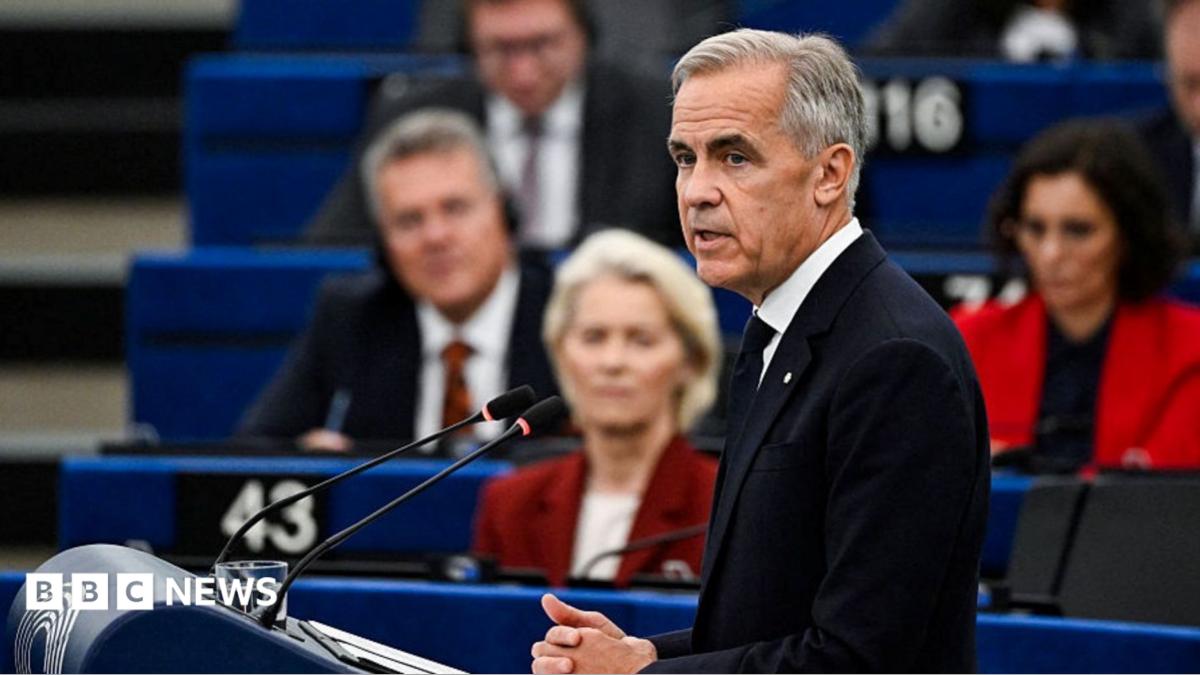
Canada is not alone among Europe’s far-flung allies, now seeking to cosy closer to the EU, as they worry the US is becoming too unpredictable a partner. Japan and South Korea show an interest in sheltering under the EU umbrella too.
For its part, the EU has recently hastened to secure a list of trade deals – with India, Indonesia and Japan for example – to intentionally diversify relationships.
But there is no guarantee Canada’s associate membership of the EU will ever get off the ground, never mind become a blueprint for other countries, like the UK wanting closer relations stopping short of full EU membership.
Any deal would have to be approved by each one of the EU’s 27 countries.
No legal precedent exists, negotiations would be lengthy and potential conflicts of interest loom, over steel tariffs for example.
A suggestion in May by Germany to make Ukraine – a country desperate for full membership of the European Union as soon as possible – an associate member was rejected by others in the EU.
Some, including France’s government, want to avoid EU non-members securing “too good” a deal. They fear eurosceptic forces at home and abroad could then encourage voters to clamour to leave the bloc.
In the end, “associate membership” is just a label. Buffeted by adverse winds – from China, the US and Russia, the normally rigid rules-based EU is coming under serious pressure to show more flexibility in accommodating countries wanting to stand by its side.
