


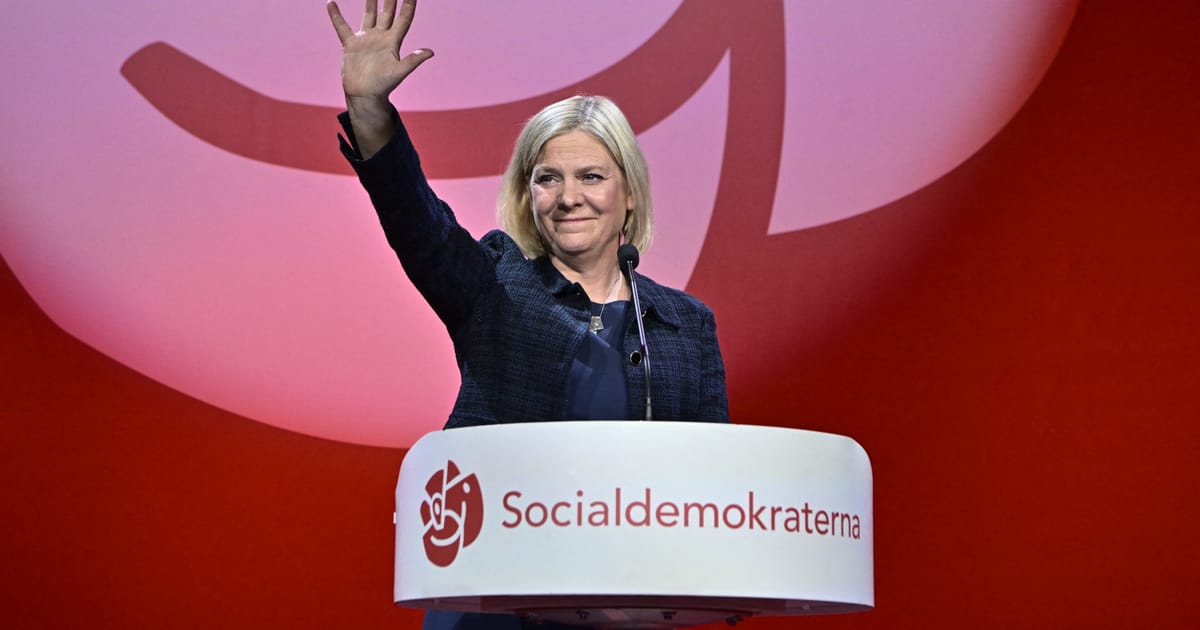
That may not be easy as two of these potential allies are at odds: The Left Party has named its price as having ministers in the government — and that’s something the liberal Center Party says it cannot accept.
Andersson said “a new era of cooperation between the political parties” would be needed.
In his resignation letter to the speaker of parliament, Kristersson, the conservative center-right leader, appealed for talks between “all parties” because pre-existing red lines would make finding a coalition hard. Although he didn’t name Andersson or the dispute between the Green and Left parties, it’s likely that he had these issues in mind.
“A constructive openness will now be needed from the parties in the Riksdag for a prime minister to be tolerated — and for a new government to gain support for its state budget,” Kristersson wrote. “Talks will need to be held with all parties to find ways around these deadlocks and create the conditions for a stable and effective government.”
One option sometimes discussed by commentators in Sweden is for the main center left and center right parties — Andersson’s Social Democrats and Kristersson’s Moderates — to come together to form a grand coalition, removing the need for support from either end of the political spectrum.
But even if they did agree to work together, these two parties would still need backing from a third to get a majority, and collaboration between the two rival camps is seen as highly unlikely by political insiders.
Negotiations could last weeks. The earliest a new prime minister can be sworn in is Sept. 29. Barring an unlikely unravelling of those negotiations, the result heralds the end of conservative Kristersson’s hopes of holding onto his job. He is expected to take a caretaker role until a new government is formed.
This article was updated.
