


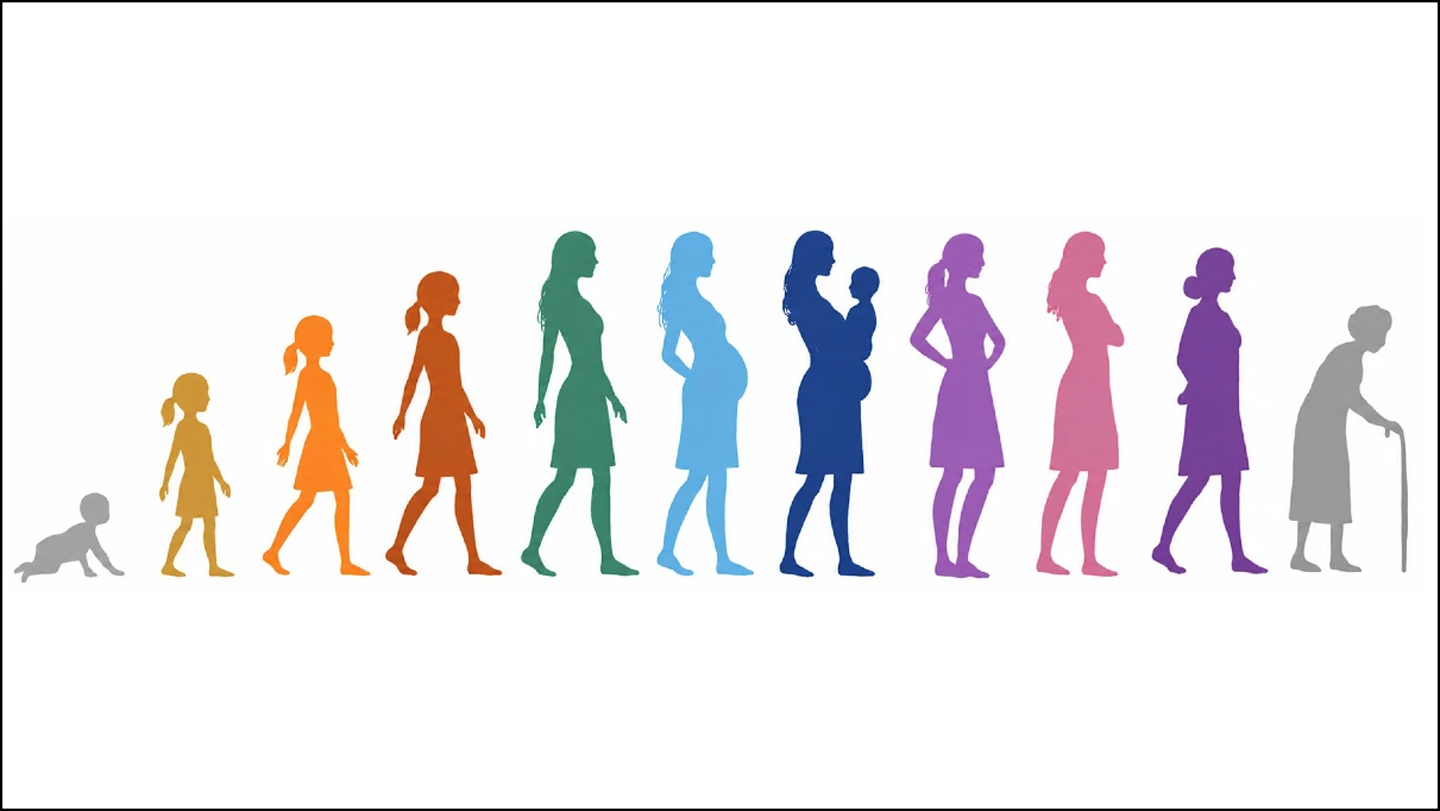
Major hormonal changes during pregnancy and the first menstrual period, known as menarche, are reflected in the brain. But during menopause, brain changes seem to take a break.
In a study of more than 1,000 female brains, brain gray matter volume decreased at menarche and again during pregnancy, changes that are permanent and distinct from age-related decline. There was no change during menopause, scientists report September 8 in Nature Communications. The results are surprising, but hint at how hormone ebbs and flows over the lifetime are reflected in brain structure.
“People often think the brain is just done when you’re an adult, but it changes throughout life,” says Sophie van ’t Hof, a cognitive neuroscientist at Amsterdam University Medical Centre. “We see these small gray matter reductions throughout the whole life,” she says.
In addition to age-related alterations, the brain reacts to hormone changes, particularly the extreme hormonal shifts in pregnancy and puberty. During pregnancy, overall brain volume will shrink by about 4 percent, something van ’t Hof describes as “neural fine-tuning.” The brain isn’t losing function; it is remodeling, preparing for parenthood.
Few studies have examined brain changes across menopause. van ’t Hof and her colleagues analyzed data from structural MRI studies at Leiden University and the UK Biobank. The researchers ended up with a set of 1,095 scans, including adolescent brains pre- and post-menarche, and adult brains pre- and post-pregnancy and pre- and post-menopause, compared with hormonally stable controls.
As expected, the scientists saw gray matter reductions in the cortex — the outer layer of the brain — associated with pregnancy and menarche. But they observed no decreases in gray matter during menopause. In fact, while there were expected age-related decreases in gray matter volume in brains before and after menopause, during menopause, that usual decrease ceased.
For both menarche and pregnancy, surges of hormones are associated with decreases in gray matter. So, it might make sense, in theory, that the hormonal decreases of menopause could do the opposite — boost gray matter. But “that’s neurobiologically not really plausible,” van ’t Hof says. Whether adult human brains can even make new neurons is controversial. Instead, “a pause in the decline is kind of in line with that theory.”
Because there’s so little research on the brain during menopause, “this is a much-needed piece of work,” says Susana Carmona, who studies maternal brain health at Instituto de Investigación Sanitaria Gregorio Marañón in Madrid. But the pre- and post- menopause scans are only two points in time after many years of perimenopause. During that period, “the dialogue between the ovary and the brain is already readjusting to the progressive decline of the ovarian reserve,” she says. “Capturing such a long, gradual transition with a single self-reported item is difficult.” The gray matter pause during menopause could be a valuable first step as scientists look more closely at hormonal declines in the years prior, and their potential effects on the brain.
The lack of change during menopause might seem surprising for those who have been through it and experienced the brain fog, sleep changes and mood alterations. “Just seeing that there’s a pause in gray matter is not an indication there’s nothing happening,” van ’t Hof says. “Do we see that it correlates with behavior, with cognition, with mental health? That’s all next steps.”
